
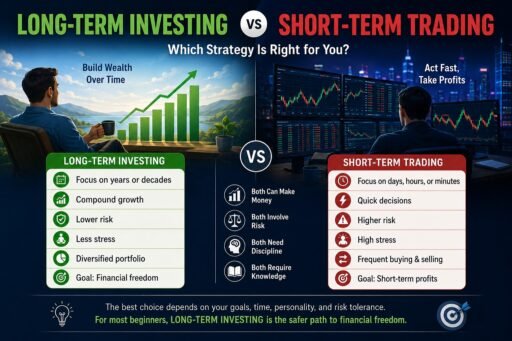
Many beginners enter the financial world without fully understanding the major differences between long-term investing and short-term trading. Learning long-term investing vs short-term trading can help beginners avoid unrealistic expectations created by social media stories that focus heavily on fast trading profits instead of long-term financial growth.
Learning long-term investing vs short-term trading can help beginners choose financial strategies that better match their goals, risk tolerance, and long-term financial priorities.
Both approaches involve financial markets, but they operate very differently in terms of risk, time, emotional pressure, and long-term expectations.
In this beginner-friendly guide, you will learn:
- The difference between investing and trading
- How long-term investing works
- How short-term trading works
- The risks of short-term trading
- Why long-term investing is popular
- How beginners should approach financial markets
- Common mistakes to avoid
What Does Long-Term Investing vs Short-Term Trading Mean?
Learning long-term investing vs short-term trading means understanding the difference between slowly building wealth over time and attempting to profit from short-term market movements.
Long-term investing usually focuses on:
- Years of growth
- Compound investing
- Diversification
- Financial discipline
Short-term trading focuses more on:
- Frequent buying and selling
- Short-term price movements
- Technical analysis
- Higher market activity
Why Long-Term Investing vs Short-Term Trading Matters
Many beginners underestimate how emotionally difficult short-term trading can become.
Understanding both approaches may help:
- Reduce unrealistic expectations
- Improve financial discipline
- Avoid unnecessary risk
- Create better long-term financial habits
According to Investor.gov, long-term investing is often associated with diversification and gradual wealth building.
What Is Long-Term Investing?
Long-term investing focuses on holding investments for extended periods while allowing compound growth to work over time.
Long-term investors often focus on:
- Index funds
- ETFs
- Retirement accounts
- Diversified portfolios
The goal is usually gradual long-term wealth building.
What Is Short-Term Trading?
Short-term trading involves buying and selling assets frequently to profit from short-term market movements.
Trading styles may include:
- Day trading
- Swing trading
- Momentum trading
Short-term trading often requires more time, emotional control, and market experience.
Why Long-Term Investing Is Popular
Many investors prefer long-term investing because it may:
- Reduce emotional pressure
- Support compound growth
- Require less daily monitoring
- Encourage financial discipline
Long-term investing often focuses more on patience than rapid profits.
Why Short-Term Trading Is Riskier
Short-term trading may involve:
- Higher volatility
- Emotional decision-making
- Frequent losses
- Increased stress
Many beginners underestimate how difficult consistent trading success can become.
How Compound Growth Supports Long-Term Investing
Long-term investing may benefit greatly from compound growth over many years.
If you want to understand this concept better, read our guide on How Compound Interest Builds Wealth.
Why Diversification Matters for Investors
Diversification may help reduce unnecessary investment risk.
If you want to learn more, read our article on Diversify Your Investments.
How Emotional Decisions Hurt Traders
Fear and greed often influence short-term trading decisions.
Emotional reactions may lead to:
- Panic selling
- Overtrading
- Chasing losses
- Risky speculation
Emotional discipline is extremely important in financial markets.
How Time Commitment Differs
Long-Term Investing
- Less daily monitoring
- Long-term focus
- Lower stress for many investors
Short-Term Trading
- Constant market attention
- Higher emotional pressure
- More active decision-making
How Beginners Should Approach Financial Markets
Many beginners benefit from:
- Learning investing basics first
- Building diversified portfolios
- Avoiding emotional trading
- Focusing on long-term financial goals
Strong financial habits usually matter more than chasing quick profits.
How Budgeting Supports Investing
Strong budgeting habits help create money available for investing.
Common Beginner Mistakes
1. Expecting Fast Wealth
Long-term financial growth usually requires patience.
2. Following Social Media Hype
Not all online investing advice is reliable.
3. Ignoring Risk Management
Risk control matters greatly in both investing and trading.
4. Overtrading
Too much market activity may increase losses.
5. Investing Without Education
Financial knowledge supports smarter decisions.
Best Beginner Habits for Financial Success
- Think long-term
- Stay diversified
- Avoid emotional decisions
- Invest consistently
- Focus on financial discipline
Simple habits repeated consistently often create stronger long-term results.
How Long-Term Investing Supports Financial Freedom
Long-term investing may eventually help create:
- Retirement savings
- Passive wealth growth
- Financial flexibility
- Long-term financial security
However, patience and consistency are usually necessary.
Related Articles
- Set Realistic Investment Goals
- Best Books to Learn Investing
- Emergency Fund vs Investing Which Comes First
Final Thoughts on Long-Term Investing vs Short-Term Trading
Learning long-term investing vs short-term trading can help beginners choose smarter financial strategies that match their goals and risk tolerance.
Both approaches involve financial markets, but they require very different mindsets and expectations.
Instead of chasing unrealistic profits, focus on:
- Financial education
- Long-term thinking
- Diversification
- Risk management
- Consistency
Most importantly, remember that strong financial habits usually create better long-term results than emotional short-term decisions.