
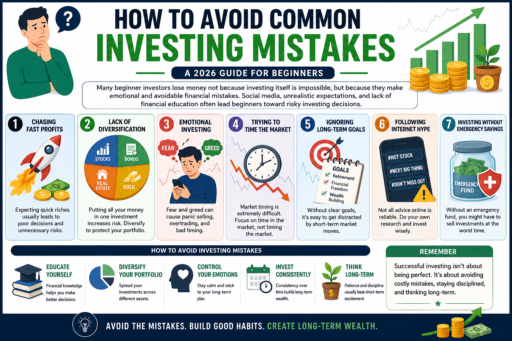
Many beginner investors lose money not because investing itself is impossible, but because they make emotional and avoidable financial mistakes. Learning how to avoid common investing mistakes can help beginners reduce risky financial decisions caused by social media hype, unrealistic expectations, and lack of financial education.
Learning how to avoid common investing mistakes can help beginners build stronger financial habits, reduce unnecessary risks, and improve long-term investing success.
Successful investing is usually less about finding perfect investments and more about avoiding costly long-term mistakes.
In this beginner-friendly guide, you will learn:
- Why investing mistakes happen
- The most common beginner investing mistakes
- How emotions affect investing decisions
- Why diversification matters
- How long-term thinking helps investors
- How to build smarter investing habits
- Ways to reduce financial risk
What Does How to Avoid Common Investing Mistakes Mean?
Learning how to avoid common investing mistakes means understanding the behaviors and decisions that often damage long-term investment performance.
Common investing mistakes may include:
- Emotional investing
- Chasing quick profits
- Ignoring diversification
- Following internet hype
- Trying to time the market
Recognizing these mistakes early may help investors make smarter long-term financial decisions.
Why How to Avoid Common Investing Mistakes Matters
Many investing mistakes become expensive over time.
Avoiding common mistakes may help:
- Reduce financial stress
- Improve investing discipline
- Support long-term portfolio growth
- Prevent emotional decision-making
According to Investor.gov, strong financial education and long-term planning help investors make smarter decisions.
1. Chasing Fast Profits
Many beginners enter financial markets expecting instant wealth.
Social media often promotes:
- Fast trading profits
- High-risk investments
- Unrealistic success stories
However, long-term investing usually requires patience and consistency.
2. Investing Without Diversification
Putting too much money into one investment increases financial risk significantly.
Diversification helps reduce concentration risk by spreading investments across multiple assets.
If you want to learn more, read our guide on Diversify Your Investments.
3. Emotional Investing Decisions
Fear and greed often influence investing behavior.
Emotional reactions may lead to:
- Panic selling
- Overtrading
- Risky speculation
- Poor timing decisions
Strong financial discipline helps reduce emotional investing mistakes.
4. Trying to Time the Market
Many investors attempt to predict short-term market movements perfectly.
However, market timing is extremely difficult even for experienced investors.
Long-term consistency often produces better results than emotional short-term predictions.
5. Ignoring Long-Term Goals
Without clear financial goals, many investors become distracted by short-term market volatility.
Clear investing goals may help improve discipline and long-term focus.
If you need help with goal setting, read our article on Set Realistic Investment Goals.
6. Following Internet Hype
Not all financial advice online is reliable.
Some content creators focus more on views and excitement than realistic investing education.
Strong financial research and education are extremely important.
7. Investing Without Emergency Savings
Financial emergencies may force investors to sell investments at bad times.
Emergency savings help provide financial stability during unexpected situations.
If you want to learn more, read our guide on Emergency Fund vs Investing Which Comes First.
How Compound Growth Supports Long-Term Investing
Long-term investing often benefits greatly from compound growth.
Why Long-Term Thinking Matters
Many successful investors focus on:
- Consistency
- Diversification
- Patience
- Long-term financial habits
Long-term investing usually focuses more on discipline than excitement.
How Budgeting Supports Investing
Strong budgeting habits help create money available for investing and financial growth.
How Beginners Can Reduce Investing Mistakes
1. Focus on Financial Education
Learning investing basics helps improve long-term decisions.
2. Stay Diversified
Diversification helps reduce unnecessary risk.
3. Avoid Emotional Decisions
Emotions often damage investing performance.
4. Invest Consistently
Consistency matters more than chasing quick profits.
5. Think Long-Term
Long-term investing often rewards patience.
Best Beginner Habits for Investing Success
- Stay disciplined
- Think long-term
- Invest consistently
- Avoid internet hype
- Focus on risk management
Simple financial habits repeated consistently often create stronger long-term investing results.
How Avoiding Investing Mistakes Supports Financial Freedom
Smarter investing habits may eventually help create:
- Long-term wealth
- Financial stability
- Reduced stress
- Financial freedom
However, successful investing usually requires patience and discipline.
Related Articles
- Long-Term Investing vs Short-Term Trading
- Best Books to Learn Investing
- Dollar-Cost Averaging Explained
Final Thoughts on How to Avoid Common Investing Mistakes
Learning how to avoid common investing mistakes can help beginners build stronger long-term investing habits and reduce unnecessary financial risks.
You do not need perfect investing decisions to succeed financially.
Instead, focus on:
- Consistency
- Diversification
- Financial education
- Patience
- Long-term thinking
Most importantly, remember that avoiding major investing mistakes is often more important than finding perfect investments.