
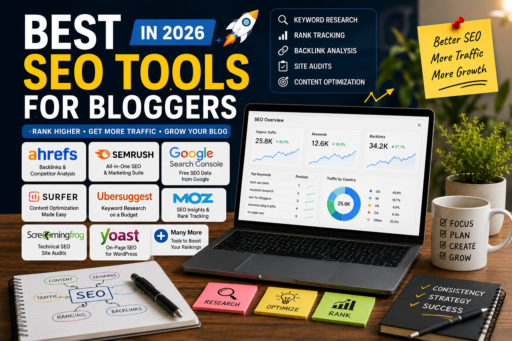
Search engine optimization continues to be one of the most important factors for building a successful blog. Regardless of how valuable your content may be, attracting consistent organic traffic becomes difficult without proper SEO. Fortunately, the Best SEO Tools for Bloggers in 2026 make it easier than ever to identify opportunities, optimize content, track rankings, and improve search visibility.
Modern blogging has become increasingly competitive. Millions of articles are published every day, making it essential for bloggers to use data-driven strategies instead of relying on guesswork. SEO tools help content creators understand search intent, discover valuable keywords, analyze competitors, monitor website performance, and improve overall rankings.
Whether you’re a beginner blogger launching your first website or an experienced publisher managing hundreds of articles, the right SEO tools can significantly accelerate your growth.
In this guide, we’ll explore the best SEO tools available in 2026, discuss their features, compare their strengths, and help you choose the right platform for your blogging goals.
Why Bloggers Need SEO Tools
Many bloggers attempt to optimize content manually. While this approach may work initially, it quickly becomes difficult as websites grow.
SEO tools simplify important tasks such as:
- Keyword research
- Content optimization
- Rank tracking
- Competitor analysis
- Backlink monitoring
- Technical SEO audits
- Website performance analysis
- Search visibility tracking
Instead of making assumptions, bloggers can make decisions based on real search data.
What Makes a Great SEO Tool?
The best SEO tools combine accuracy, usability, and actionable insights.
Important features include:
- Reliable keyword data
- Search volume estimates
- Keyword difficulty scores
- Competitor analysis
- Backlink monitoring
- Technical SEO audits
- Content optimization suggestions
- Rank tracking
- Site performance monitoring
The ideal platform depends on your blogging strategy, budget, and experience level.
1. Ahrefs: One of the Best SEO Tools for Bloggers in 2026
Ahrefs remains one of the most powerful SEO platforms available. Bloggers use Ahrefs to discover keywords, analyze backlinks, monitor competitors, and identify content opportunities.
Its keyword database is among the largest in the industry, making it particularly valuable for content creators targeting organic traffic.
Key Features
- Keyword Explorer
- Site Explorer
- Backlink Analysis
- Rank Tracking
- Content Gap Analysis
- Site Audit Tools
Pros
- Extensive database
- Excellent backlink analysis
- Strong competitor research
- Detailed reporting
Cons
- Premium pricing
- Learning curve for beginners
2. Semrush: One of the Best SEO Tools for Bloggers in 2026
Among the Best SEO Tools for Bloggers in 2026, Semrush continues to be one of the most comprehensive platforms available for keyword research, competitor analysis, rank tracking, content marketing, and overall digital marketing strategy.
Semrush continues to be one of the most comprehensive SEO and digital marketing platforms available in 2026.
Unlike some SEO tools that focus primarily on keywords, Semrush offers a complete marketing toolkit that includes SEO, PPC, content marketing, social media analytics, and competitor research.
Key Features
- Keyword Research
- Position Tracking
- Site Audit
- Content Marketing Tools
- Backlink Analysis
- Competitor Monitoring
Pros
- All-in-one solution
- Excellent reporting
- Strong keyword database
- Advanced competitor insights
Cons
- Higher pricing
- Can overwhelm beginners
3. Google Search Console
No list of the Best SEO Tools for Bloggers in 2026 would be complete without Google Search Console.
Unlike premium SEO platforms, Search Console provides direct insights from Google itself.
Bloggers can monitor impressions, clicks, click-through rates, average positions, indexing status, Core Web Vitals, and technical issues.
For content creators focused on organic traffic, Search Console remains absolutely essential.
Key Features
- Search performance reports
- Index coverage monitoring
- Core Web Vitals
- Sitemap submission
- Technical issue alerts
- Page indexing tools
Pros
- Completely free
- Direct Google data
- Essential for SEO
- Easy integration
Cons
- Limited competitor data
- No backlink database comparable to Ahrefs
To learn more about SEO best practices directly from Google, bloggers can visit Google Search Central.
4. Ubersuggest
Ubersuggest has become increasingly popular among beginner bloggers because it offers many valuable SEO features at a more affordable price point.
The platform provides keyword research, traffic estimates, competitor analysis, backlink monitoring, and content ideas.
For bloggers working with limited budgets, Ubersuggest offers excellent value.
Pros
- Affordable pricing
- Beginner-friendly interface
- Good keyword suggestions
- Useful content ideas
Cons
- Smaller database
- Less advanced than Ahrefs or Semrush
5. Surfer SEO
Surfer SEO focuses heavily on content optimization.
Instead of simply helping users discover keywords, Surfer analyzes top-ranking pages and provides recommendations that help content creators optimize articles for search engines.
This approach is particularly useful for bloggers who publish large amounts of content.
Bloggers who use AI writing tools may also benefit from reading our guide on Best AI Productivity Apps in 2026, which covers tools that improve content creation workflows.
Key Features
- Content Editor
- Keyword Recommendations
- Content Scoring
- SERP Analysis
- Optimization Suggestions
Pros
- Excellent content optimization
- Easy-to-follow recommendations
- Strong workflow integration
Cons
- Focused mainly on content optimization
- Limited backlink analysis
6. Moz Pro
Moz Pro has remained a trusted name in the SEO industry for many years. While newer competitors have emerged, Moz continues to provide valuable SEO insights for bloggers and website owners.
The platform offers keyword research, rank tracking, backlink analysis, and site auditing features that help bloggers improve search visibility.
Key Features
- Keyword Explorer
- Domain Authority Metrics
- Rank Tracking
- Site Crawl Audits
- Backlink Analysis
Pros
- Trusted SEO metrics
- User-friendly interface
- Strong educational resources
- Reliable reporting
Cons
- Smaller database than Ahrefs
- Fewer advanced features
7. Screaming Frog SEO Spider
Screaming Frog is one of the most powerful technical SEO tools available.
Unlike keyword-focused platforms, Screaming Frog analyzes website structure and identifies technical issues that may impact rankings.
Bloggers with larger websites often use this tool to find broken links, redirect chains, duplicate content, missing meta descriptions, and indexing issues.
Key Features
- Website Crawling
- Technical SEO Audits
- Broken Link Detection
- Redirect Analysis
- Duplicate Content Reports
Pros
- Excellent technical analysis
- Highly detailed reports
- Trusted by SEO professionals
- Useful for large websites
Cons
- Can be overwhelming initially
- Requires some technical knowledge
8. Yoast SEO
For WordPress bloggers, Yoast SEO remains one of the most widely used optimization plugins.
The plugin helps content creators optimize titles, meta descriptions, internal links, keyword placement, readability, and structured data.
Many bloggers rely on Yoast as their first layer of on-page SEO optimization.
Key Features
- SEO Analysis
- Readability Analysis
- Schema Integration
- XML Sitemaps
- Internal Linking Suggestions
Pros
- Easy to use
- Excellent WordPress integration
- Strong beginner support
- Improves content optimization
Cons
- Limited keyword research
- Requires external SEO tools for deeper analysis
How Bloggers Should Choose an SEO Tool
Choosing the right platform depends on your goals and budget.
New bloggers often benefit from starting with free tools such as Google Search Console and Yoast SEO.
As traffic grows, more advanced platforms like Ahrefs, Semrush, and Surfer SEO become increasingly valuable.
The best solution isn’t necessarily the most expensive one. Rather, it’s the tool that best matches your current stage of growth.
Best Free SEO Tools for Bloggers
Not every blogger has a large budget available for SEO software.
Fortunately, several free tools provide significant value.
- Google Search Console
- Google Analytics
- Google Trends
- Keyword Planner
- Yoast SEO
- Bing Webmaster Tools
Combined together, these tools provide enough data for many bloggers to begin growing organic traffic successfully.
How SEO Tools Improve Content Strategy
SEO tools do much more than help bloggers discover keywords.
They also reveal content opportunities, identify traffic trends, uncover competitor strategies, and highlight topics that readers are actively searching for.
For example, keyword research tools can show which questions users ask most frequently. Bloggers can then create content specifically designed to answer those questions.
This process significantly improves the chances of ranking in search results.
The Importance of Competitor Analysis
One of the most valuable features offered by modern SEO tools is competitor analysis.
Rather than guessing what works, bloggers can examine successful competitors and learn from their strategies.
Useful competitor insights include:
- Top-performing pages
- High-traffic keywords
- Backlink sources
- Content gaps
- Ranking opportunities
These insights often reveal opportunities that would otherwise remain hidden.
How AI Is Changing SEO in 2026
Artificial intelligence is transforming search engine optimization.
Many SEO platforms now use AI to generate keyword recommendations, analyze search intent, identify optimization opportunities, and automate reporting.
Bloggers who embrace these technologies can often save time while improving content quality.
Similarly, content creators who regularly publish guides and tutorials may benefit from reading Best Free PDF Tools Online in 2026, especially when creating downloadable resources for readers.
Common SEO Mistakes Bloggers Make
Even with access to powerful SEO tools, many bloggers continue making avoidable mistakes.
Common examples include:
- Targeting overly competitive keywords
- Ignoring search intent
- Poor internal linking
- Publishing thin content
- Neglecting technical SEO
- Not updating old articles
- Ignoring Core Web Vitals
SEO tools help identify these issues before they significantly impact rankings.
Tracking SEO Success
SEO success should be measured using data rather than assumptions.
Important metrics include:
- Organic traffic
- Keyword rankings
- Click-through rate
- Impressions
- Backlink growth
- Pages indexed
- User engagement
Monitoring these metrics regularly allows bloggers to adjust strategies and continue improving performance.
Internal Linking and SEO
Internal linking remains one of the simplest yet most effective SEO techniques.
By connecting related content, bloggers improve user experience while helping search engines understand site structure.
For example, bloggers who manage business or personal finance websites may also find value in our guide on Best Budgeting Tools for Families in 2026.
Strategic internal linking distributes authority throughout a website and helps readers discover additional content.
The Future of SEO Tools
The SEO industry continues evolving rapidly.
Future SEO platforms will likely provide even more automation, predictive analytics, AI-powered recommendations, and integrated content optimization workflows.
As search engines become more sophisticated, SEO tools will continue helping bloggers adapt to changing algorithms and user behavior.
Those who leverage the best tools effectively will maintain a significant competitive advantage.
Final Thoughts
Choosing the Best SEO Tools for Bloggers in 2026 can dramatically improve content performance, search visibility, and organic traffic growth.
Ahrefs and Semrush remain industry leaders for comprehensive SEO analysis. Google Search Console continues to be an essential free resource. Meanwhile, Surfer SEO, Moz Pro, Screaming Frog, Ubersuggest, and Yoast SEO each provide valuable functionality for different blogging needs.
The most successful bloggers combine multiple tools rather than relying on a single platform. By leveraging keyword research, technical audits, competitor analysis, and content optimization tools together, bloggers can build stronger websites and achieve sustainable organic growth.
As SEO continues evolving throughout 2026 and beyond, investing time in the right tools will remain one of the smartest decisions any blogger can make.