
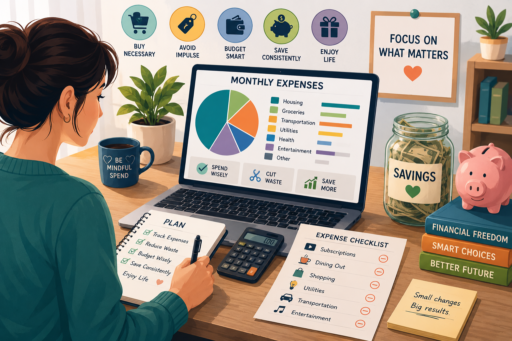
If you want to cut monthly expenses without feeling deprived, you are approaching money management in a sustainable and realistic way. The goal is not to eliminate everything you enjoy. Instead, it is to spend intentionally so you can keep what matters most while reducing wasteful costs.
Many people assume that saving money requires extreme sacrifice. However, lasting financial progress usually comes from small, thoughtful changes rather than harsh restrictions. As a result, you can lower your expenses while still enjoying a comfortable lifestyle.
In this comprehensive guide, you will learn how to cut monthly expenses without feeling deprived, identify unnecessary spending, and build habits that improve your finances in 2026 and beyond.
To strengthen your overall financial system, you may also want to read How to Save Money on Groceries Without Coupons (2026 Guide), Build a Money Routine That Sticks (2026 Guide), 50 Money Habits That Improve Your Finances in 2026, and Best Budget Categories for Families in 2026.
Why Traditional Frugality Often Fails
Extreme budgeting can feel restrictive. Consequently, many people abandon their plans after a few weeks. A balanced approach is far more sustainable because it focuses on optimizing spending rather than eliminating joy.
According to the Consumer Financial Protection Bureau, identifying spending priorities is one of the most effective ways to improve financial stability.
What It Means to Spend Intentionally
Intentional spending means directing money toward the things that add the most value to your life while reducing expenses that provide little satisfaction.
Step 1: Track Your Current Spending
Before cutting expenses, understand exactly where your money goes each month.
Step 2: Identify Low-Value Expenses
Look for subscriptions, impulse purchases, and habits that do not significantly improve your life.
Step 3: Protect Your Priorities
Keep spending on the categories that matter most to you and your family.
Step 4: Reduce Waste, Not Happiness
The most sustainable savings come from eliminating inefficiency rather than removing everything enjoyable.
Step 5: Automate Your Savings
Redirect the money you save toward meaningful financial goals.
Best Areas to Reduce Monthly Expenses
Housing Costs
Review maintenance, insurance, and utility usage.
Groceries
Meal planning and store brands can lower food costs significantly.
Dining Out
Reduce frequency rather than eliminating restaurants completely.
Subscriptions
Cancel services you rarely use.
Transportation
Combine errands and maintain your vehicle proactively.
Insurance
Compare rates periodically.
Utilities
Lower electricity and water usage through simple habits.
Shopping
Delay non-essential purchases and compare prices.
How to Cut Grocery Costs Without Feeling Restricted
Focus on meal planning, buying store brands, and reducing food waste.
How to Reduce Subscription Costs
Audit every recurring service and keep only the ones you genuinely value.
How to Spend Less on Dining Out
Set a realistic limit instead of banning restaurants entirely.
How to Lower Utility Bills
Small efficiency improvements can create meaningful savings over time.
How Families Can Reduce Expenses Comfortably
Involving everyone in the process makes cost-cutting more effective and less stressful.
How to Reallocate Your Savings
Use the money you save to build an emergency fund, pay off debt, or invest for the future.
How to Cut Monthly Expenses Without Feeling Deprived on a Low Income
If your income is limited, you can still cut monthly expenses without feeling deprived by focusing on the categories that offer the greatest savings with the least impact on your quality of life.
How to Reduce Expenses with Irregular Income
Freelancers and self-employed professionals can benefit by lowering fixed expenses and maintaining flexible spending categories.
How to Use Zero-Based Budgeting
Zero-based budgeting helps ensure every dollar is assigned a purpose and every expense is evaluated intentionally.
How Sinking Funds Prevent Budget Stress
Sinking funds allow you to prepare for irregular expenses instead of treating them as emergencies.
Common Cost-Cutting Mistakes
- Eliminating all enjoyable spending
- Setting unrealistic restrictions
- Ignoring major expenses
- Failing to track progress
- Not redirecting savings toward goals
Psychological Benefits of Intentional Spending
- Less guilt
- Greater satisfaction
- Reduced stress
- More confidence
- Stronger financial control
How Technology Supports Smarter Spending
Budgeting apps, automatic transfers, and financial dashboards help you monitor spending and maintain progress.
Protecting Your Financial Information
Digital security is an essential part of modern money management.
For additional protection, read:
- Protect Your Online Payments From Fraud (2026 Guide)
- Manage Passwords Securely Without Forgetting Them (2026)
- Secure Your Files on Cloud Storage (Google Drive & More) 2026
30-Day Expense Reduction Challenge
- Track all spending.
- Identify low-value expenses.
- Cancel one subscription.
- Reduce dining out.
- Plan meals weekly.
- Automate savings.
- Review results monthly.
Frequently Asked Questions
How can I cut monthly expenses without feeling deprived?
Focus on reducing wasteful spending while preserving the categories that matter most to you.
What expenses should I cut first?
Subscriptions, impulse purchases, and underused services are excellent starting points.
How much can I realistically save?
Many people save hundreds of dollars per month through intentional spending.
Should I eliminate all entertainment spending?
No. Sustainable budgeting works best when enjoyable spending remains within reasonable limits.
What should I do with the money I save?
Use it to build an emergency fund, pay off debt, or invest for the future.
Final Thoughts
Learning how to cut monthly expenses without feeling deprived is one of the most practical ways to improve your finances. Rather than focusing on sacrifice, you focus on intentional spending and smarter decisions.
By tracking expenses, reducing low-value costs, protecting your priorities, and automating your savings, you create a balanced financial system that is both effective and sustainable.
Remember that financial progress does not require perfection. Instead, it comes from consistent improvements and thoughtful choices made over time.
Start with one or two changes this week. Then continue refining your spending habits until saving money feels natural and rewarding.
Over time, this approach can help you achieve lasting financial stability and greater freedom in 2026 and beyond.