
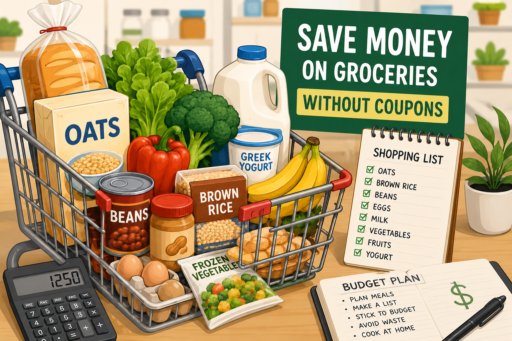
If you want to save money on groceries without coupons, you are not alone. Grocery prices have increased significantly in recent years, and many families are searching for practical ways to reduce food expenses without spending hours clipping coupons or chasing complicated discounts.
The good news is that you do not need coupons to lower your grocery bill. In fact, some of the most effective money-saving strategies involve better planning, smarter shopping habits, and intentional meal preparation.
Learning how to save money on groceries without coupons can have a surprisingly large impact on your monthly budget. Even reducing your grocery spending by $100 to $300 per month can free up money for savings, debt repayment, and investing.
In this comprehensive guide, you will discover practical strategies that work for individuals, couples, and families. By applying these techniques consistently, you can cut your grocery bill dramatically while still eating healthy and enjoying your favorite meals.
To strengthen your overall financial system, you may also want to read Best Monthly Budget Template for Beginners (2026), How to Stop Living Paycheck to Paycheck in 2026, Zero-Based Budgeting for Beginners (2026 Guide), and Simple Personal Finance System That Actually Works (2026).
Why Grocery Spending Matters So Much
Groceries are one of the largest variable expenses in most household budgets. Unlike rent or insurance, food spending can change significantly depending on your shopping habits and planning.
Small improvements can create meaningful savings. For example, saving just $150 per month on groceries adds up to $1,800 per year. Over time, that money can help build an emergency fund, pay off debt, or fund investments.
Why Coupons Are Not Necessary
Coupons can be useful, but they are not required to reduce grocery costs. Many shoppers save substantial amounts simply by avoiding impulse purchases and focusing on value.
In addition, coupons sometimes encourage buying products you do not need. Therefore, a disciplined shopping strategy often produces better results.
Step 1: Create a Grocery Budget
The first step in learning how to save money on groceries without coupons is setting a monthly grocery budget.
When you establish a clear spending limit, every shopping decision becomes more intentional.
According to the Consumer Financial Protection Bureau, creating a written budget is one of the most effective ways to control spending and improve financial stability.
Step 2: Plan Your Meals Before Shopping
Meal planning is one of the most powerful grocery-saving techniques available.
- Reduces food waste
- Prevents duplicate purchases
- Minimizes impulse buying
- Makes cooking easier
- Helps you stick to your budget
Step 3: Shop with a Detailed List
A shopping list keeps you focused and reduces unnecessary spending. In fact, entering the store without a list often leads to buying items you never intended to purchase.
Step 4: Never Shop While Hungry
Shopping on an empty stomach increases impulse buying and encourages expensive snack purchases.
Step 5: Buy Store Brands
Generic and store-brand products often offer nearly identical quality at significantly lower prices.
Step 6: Compare Unit Prices
Always check the price per ounce, pound, or liter. This simple habit helps identify the best value regardless of package size.
Step 7: Buy Staple Foods in Bulk
Purchasing frequently used items such as rice, oats, pasta, and beans in larger quantities can reduce costs substantially.
Step 8: Focus on Simple Meals
Complicated recipes often require many expensive ingredients. Simple meals are easier to prepare and typically cost much less.
Step 9: Reduce Processed Foods
Pre-packaged and convenience foods usually cost more than basic ingredients.
Step 10: Cook More at Home
Home cooking is almost always less expensive than takeout or restaurant meals.
Step 11: Use What You Already Have
Before shopping, review your pantry, refrigerator, and freezer to avoid buying duplicates.
Step 12: Limit Food Waste
Using leftovers, freezing excess food, and rotating ingredients can significantly reduce waste.
Step 13: Shop Less Frequently
Fewer shopping trips usually mean fewer impulse purchases.
Step 14: Choose Seasonal Produce
Seasonal fruits and vegetables are often fresher and more affordable.
Step 15: Freeze Extra Portions
Freezing meals and ingredients extends shelf life and reduces spoilage.
Step 16: Reduce Meat Consumption
Incorporating beans, lentils, eggs, and other lower-cost proteins can cut food expenses considerably.
Step 17: Prepare Lunch at Home
Packing your own lunches reduces both grocery and restaurant spending over time.
Step 18: Set a Price Book
Tracking the normal prices of frequently purchased items helps you recognize genuine bargains.
Step 19: Use Cash or a Separate Grocery Account
Dedicated spending limits improve awareness and prevent overspending.
Step 20: Review Your Grocery Spending Monthly
Regular reviews help identify patterns and opportunities for improvement.
Best Low-Cost Grocery Staples
Stocking your kitchen with affordable staples makes it much easier to save money on groceries without coupons. These foods are versatile, nutritious, and cost-effective.
- Rice
- Oats
- Pasta
- Beans
- Lentils
- Eggs
- Potatoes
- Frozen vegetables
- Peanut butter
- Bananas
Sample Weekly Budget-Friendly Meal Plan
- Monday: Rice and chicken with vegetables
- Tuesday: Lentil soup and bread
- Wednesday: Pasta with homemade sauce
- Thursday: Egg and potato skillet
- Friday: Bean burritos
- Saturday: Homemade pizza
- Sunday: Leftover night
How Families Can Save Hundreds Per Month
Families often spend a large portion of their income on food. By meal planning, buying in bulk, reducing waste, and limiting convenience foods, many households can save hundreds of dollars each month.
How Singles Can Reduce Grocery Costs
Individuals can save by purchasing versatile ingredients, freezing portions, and avoiding oversized packages that may spoil before they are used.
How to Save Money on Healthy Foods
Healthy eating does not have to be expensive. Focus on whole foods such as oats, beans, eggs, frozen vegetables, and seasonal produce.
Common Grocery Shopping Mistakes
- Shopping without a list
- Buying too much fresh produce
- Ignoring unit prices
- Purchasing convenience foods
- Wasting leftovers
- Shopping too frequently
How Technology Can Help
Budgeting apps and spreadsheets make it easier to track grocery spending and compare results month after month.
Psychological Benefits of Lower Grocery Spending
Reducing food expenses not only improves your finances but also increases confidence and reduces money-related stress.
How Grocery Savings Support Bigger Financial Goals
The money saved on groceries can be redirected toward:
- Emergency savings
- Debt repayment
- Retirement investing
- Travel funds
- Major purchases
30-Day Grocery Savings Challenge
- Create a grocery budget.
- Plan all meals for the week.
- Shop with a list.
- Cook at home more often.
- Track every grocery purchase.
- Reduce food waste.
- Review your savings at month-end.
Frequently Asked Questions
Can I really save money on groceries without coupons?
Yes. Planning meals, buying store brands, and reducing waste are often more effective than coupons.
How much can I save each month?
Many households save $100 to $300 or more by improving shopping habits.
What is the most effective strategy?
Meal planning is one of the most powerful ways to lower grocery costs.
Are store brands worth buying?
In many cases, store brands offer similar quality at lower prices.
Should I buy in bulk?
Yes, especially for frequently used staple foods with a long shelf life.
Final Thoughts
Learning how to save money on groceries without coupons is one of the most practical ways to improve your financial life. You do not need complicated systems or hours of coupon research to reduce food costs significantly.
Instead, focus on meal planning, shopping with a list, buying store brands, reducing waste, and cooking more meals at home. These simple habits can save hundreds of dollars each month.
Over time, those savings can strengthen your budget, accelerate debt repayment, and help you achieve larger financial goals.
Remember that every dollar you save on groceries is a dollar you can use to build financial freedom. Small changes made consistently can create extraordinary results.
Start with one or two strategies this week. Then continue refining your grocery habits until saving money becomes second nature.