
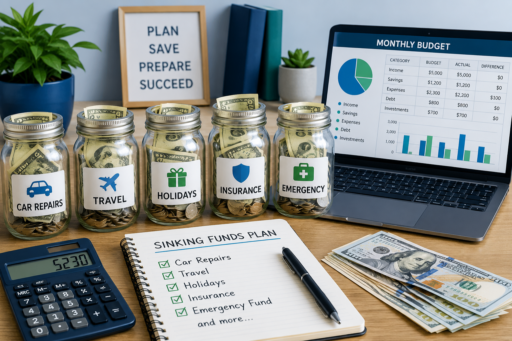
If you are looking for the best sinking funds to start in 2026, you are taking one of the smartest steps toward financial stability. Sinking funds help you prepare for predictable expenses before they happen, allowing you to avoid debt and reduce financial stress.
Many people are surprised by expenses such as car repairs, holiday shopping, insurance premiums, and home maintenance. However, these costs are not truly unexpected. They are simply irregular expenses that occur throughout the year.
A sinking fund is a dedicated savings category where you set aside a small amount each month for a specific future expense. As a result, when the bill arrives, you already have the money available.
In this complete guide, you will discover the best sinking funds to start in 2026, how they work, and how they can transform your budgeting system.
To strengthen your financial foundation, you may also want to read Best Monthly Budget Template for Beginners (2026), Zero-Based Budgeting for Beginners (2026 Guide), How to Stop Living Paycheck to Paycheck in 2026, and How to Save Money on Groceries Without Coupons (2026 Guide).
What Is a Sinking Fund?
A sinking fund is money saved gradually for a planned future expense. Instead of paying a large cost all at once, you save small amounts over time until the expense arrives.
For example, if you expect to spend $600 on holiday gifts, you can save $50 per month for 12 months. By the time the holidays arrive, the money is ready.
Sinking Funds vs Emergency Funds
Although both involve saving money, they serve different purposes.
| Sinking Fund | Emergency Fund |
|---|---|
| Used for planned expenses | Used for unexpected emergencies |
| Specific savings goals | General financial protection |
| Predictable costs | Unpredictable events |
Why Sinking Funds Are So Powerful
Sinking funds reduce financial stress by turning large irregular expenses into manageable monthly savings goals.
- Prevent debt
- Reduce money anxiety
- Protect your emergency fund
- Improve budgeting accuracy
- Increase financial confidence
- Help you plan ahead
According to the Consumer Financial Protection Bureau, setting aside money for future expenses is one of the most effective ways to reduce financial stress and avoid debt.
How to Create a Sinking Fund
- Choose a specific expense.
- Estimate the total cost.
- Set a target date.
- Divide the cost by the number of months remaining.
- Save consistently each month.
Example of a Sinking Fund
If your annual car insurance premium is $1,200 and it is due in 12 months, save $100 per month.
Best Sinking Funds to Start in 2026
1. Emergency Fund Replenishment
If you have used part of your emergency fund, create a sinking fund to rebuild it steadily.
2. Car Maintenance Fund
Oil changes, tires, and repairs are predictable over time.
3. Home Maintenance Fund
Repairs and appliance replacements are inevitable for homeowners.
4. Holiday Gifts Fund
Saving throughout the year makes holiday shopping far less stressful.
5. Travel Fund
Vacations become more enjoyable when fully funded in advance.
6. Medical Expenses Fund
Deductibles, prescriptions, and routine care can be planned for.
7. Insurance Premium Fund
Annual or semiannual premiums are ideal sinking fund candidates.
8. Education Fund
Books, courses, and certifications can be funded gradually.
9. Technology Replacement Fund
Phones, laptops, and tablets eventually need replacement.
10. Clothing Fund
Seasonal clothing and footwear costs can be spread across the year.
11. Pet Expenses Fund
Veterinary care and supplies can be significant and predictable.
12. Birthday Fund
Birthdays occur every year, making them perfect for planned savings.
13. Wedding Fund
Special events are easier to afford when saved for in advance.
14. Appliance Replacement Fund
Household appliances eventually wear out and need replacement.
15. Tax Fund
Freelancers and business owners should save for taxes monthly.
16. Furniture Fund
Home upgrades become manageable with consistent savings.
17. Child Expenses Fund
School supplies, activities, and seasonal costs can be anticipated.
18. Subscription Renewal Fund
Annual software and membership fees are easy to plan for.
19. Charity Fund
Intentional giving becomes easier when included in your budget.
20. Opportunity Fund
This flexible fund allows you to take advantage of unexpected opportunities.
How Much Should You Save?
The amount depends on your goals and timeline. Start small if necessary. Even $10 to $50 per month can make a significant difference over time.
Where to Keep Your Sinking Funds
- High-yield savings accounts
- Separate bank subaccounts
- Budgeting apps
- Spreadsheets
Why Sinking Funds Work So Well with Zero-Based Budgeting
Sinking funds fit naturally into zero-based budgeting because every dollar is assigned a specific purpose.
How Sinking Funds Help You Stop Living Paycheck to Paycheck
One of the most practical benefits of using the best sinking funds to start in 2026 is that they eliminate many of the “surprise” expenses that keep people trapped in the paycheck-to-paycheck cycle.
When expenses such as car repairs, holidays, school supplies, or insurance premiums are fully funded in advance, you no longer need to rely on credit cards or drain your emergency fund.
Sinking Funds for Families
Families often benefit the most from sinking funds because they face frequent irregular expenses throughout the year.
- Back-to-school costs
- Children’s activities
- Medical expenses
- Birthday parties
- Vacation planning
Sinking Funds for Singles
Individuals can use sinking funds to prepare for travel, professional development, technology upgrades, and personal goals without disrupting their regular budget.
Sinking Funds for Freelancers
Freelancers should prioritize taxes, equipment replacement, software renewals, and business expenses. This approach creates stability despite irregular income.
Sinking Funds vs Credit Cards
Credit cards shift expenses into the future and often add interest charges. Sinking funds, by contrast, allow you to pay cash and avoid debt entirely.
How to Organize Multiple Sinking Funds
Many people maintain several sinking funds simultaneously. You can organize them using:
- Separate savings accounts
- Bank subaccounts
- Budgeting apps
- Spreadsheets
How to Prioritize Your First Sinking Funds
If you are just getting started, focus on the most predictable and financially impactful categories.
- Car maintenance
- Insurance premiums
- Holiday gifts
- Medical expenses
- Travel
Common Mistakes to Avoid
- Saving without a clear target
- Using the money for unrelated purchases
- Ignoring irregular expenses
- Trying to fund too many categories at once
- Stopping after one missed contribution
Technology and Digital Organization
Modern budgeting tools make it easy to track sinking funds and monitor progress automatically.
To protect your financial information, read:
- Protect Your Online Payments From Fraud (2026 Guide)
- Manage Passwords Securely Without Forgetting Them (2026)
- Secure Your Files on Cloud Storage (Google Drive & More) 2026
30-Day Sinking Fund Challenge
- List your irregular expenses.
- Select three sinking funds to start.
- Estimate annual costs.
- Calculate monthly contributions.
- Automate transfers.
- Track progress weekly.
- Review and adjust monthly.
Frequently Asked Questions
What are the best sinking funds to start in 2026?
Car maintenance, insurance premiums, holiday gifts, medical expenses, and travel are among the most practical choices.
How many sinking funds should I have?
Start with two to five important categories and expand gradually.
Where should I keep sinking funds?
High-yield savings accounts, subaccounts, and budgeting apps are excellent options.
Are sinking funds better than credit cards?
Yes. They allow you to pay cash and avoid interest charges.
Can I use sinking funds with irregular income?
Absolutely. They are especially useful for freelancers and self-employed individuals.
Final Thoughts
Learning about the best sinking funds to start in 2026 can dramatically improve your financial stability. Instead of being surprised by predictable expenses, you prepare for them intentionally and confidently.
Sinking funds reduce stress, prevent debt, and make your budget more accurate. Whether you are saving for car repairs, holidays, travel, or insurance premiums, these targeted savings categories create greater financial peace of mind.
Start with a few essential sinking funds and contribute consistently each month. Over time, you will notice fewer financial emergencies and much stronger control over your money.
Remember, financial success is built through preparation. By saving for future expenses before they arrive, you create a more stable and secure financial life.
Every sinking fund you build is another step toward long-term financial freedom in 2026 and beyond.