
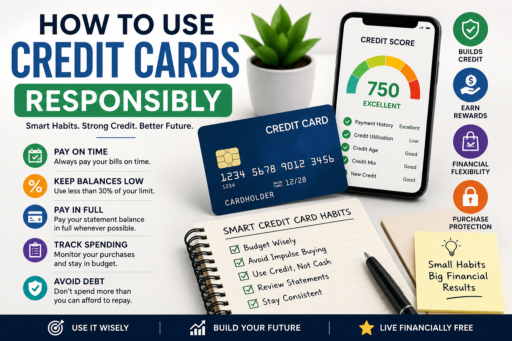
Credit cards can be powerful financial tools when used correctly. Learning how to use credit cards responsibly can help you build credit, earn rewards, improve financial flexibility, and even protect your purchases. However, if used irresponsibly, credit cards can quickly lead to debt, high interest charges, and financial stress.
Many beginners get their first credit card without fully understanding how it works. As a result, they may overspend, miss payments, or carry balances that become difficult to repay later.
Fortunately, responsible credit card use is not complicated. Once you understand the basics, you can enjoy the benefits of credit cards while avoiding the most common financial mistakes.
In this complete beginner-friendly guide, you will learn:
- How credit cards actually work
- Why responsible usage matters
- How to avoid debt problems
- The best habits for building strong credit
- Common mistakes beginners make
- Smart ways to manage spending
- How to maximize rewards safely
What Does Using Credit Cards Responsibly Mean?
Using credit cards responsibly means borrowing money carefully and paying it back on time without creating unnecessary debt.
Responsible credit card users typically:
- Pay bills on time
- Keep balances low
- Avoid overspending
- Track purchases regularly
- Understand interest charges
- Use cards within their budget
In contrast, irresponsible usage often includes:
- Missing payments
- Maxing out cards
- Paying only minimum balances
- Ignoring statements
- Using cards for unnecessary purchases
The difference between these habits can completely change your financial future.
How Credit Cards Work
A credit card allows you to borrow money from a bank or financial institution up to a certain limit.
Every month:
- You make purchases
- Your balance increases
- You receive a statement
- You repay all or part of the balance
If you pay the full balance before the due date, you usually avoid interest charges completely.
However, if you carry a balance, interest begins accumulating on the remaining amount.
This is why understanding repayment is extremely important.
Why How to Use Credit Cards Responsibly Matters
Using credit cards properly affects several parts of your financial life.
1. Builds Your Credit Score
Responsible card usage helps establish a positive credit history.
Factors such as:
- Payment history
- Credit utilization
- Account age
- Credit mix
all influence your credit score.
If you want to understand utilization better, read our guide on Credit Utilization Explained for Beginners.
2. Helps You Qualify for Loans
Good credit habits can improve your chances of approval for:
- Auto loans
- Mortgages
- Personal loans
- Apartment rentals
3. Reduces Financial Stress
Managing cards wisely prevents overwhelming debt and late payment problems.
As a result, you gain more financial confidence and stability.
4. Provides Emergency Flexibility
Credit cards can help during emergencies when cash is temporarily unavailable.
However, emergency spending should still be handled carefully.
Always Pay on Time
Payment history is usually the biggest factor affecting your credit score.
Even one missed payment can damage your score and remain on your credit report for years.
Therefore, paying on time should always be your highest priority.
Tips to Never Miss a Payment
- Enable automatic payments
- Use calendar reminders
- Pay early instead of waiting
- Track due dates weekly
- Use banking notifications
Even paying the minimum amount is better than missing a payment completely.
How to Use Credit Cards Responsibly by Paying Your Balance in Full
One of the smartest credit card habits is paying your statement balance in full every month.
This allows you to:
- Avoid interest charges
- Reduce debt risk
- Keep utilization lower
- Maintain financial control
Many credit cards have very high interest rates. Carrying balances for long periods can become extremely expensive.
For example:
- $2,000 balance
- 24% APR interest
- Minimum payments only
could take years to repay while costing hundreds in interest.
Understand Credit Utilization
Your credit utilization ratio measures how much of your available credit you are using.
Example:
- Credit limit = $5,000
- Balance = $1,000
- Utilization = 20%
Experts generally recommend staying below 30% utilization.
However, below 10% is even better for excellent credit scores.
Learn more in our detailed article on How to Improve Your Credit Score Faster.
Avoid Spending More Than You Can Afford
One of the biggest mistakes beginners make is treating credit cards like free money.
In reality, every purchase must eventually be repaid.
A good rule is:
If you cannot afford it with cash today, avoid buying it with a credit card.
This mindset helps prevent unnecessary debt accumulation.
Create a Monthly Budget
Budgeting helps you control credit card spending before problems begin.
A simple budget should include:
- Income
- Essential expenses
- Savings goals
- Debt payments
- Optional spending
If you need help organizing finances, check out our guide on How to Create a Monthly Budget That Actually Works.
Track Your Purchases Regularly
Many people overspend because they stop monitoring small purchases.
Daily coffee, food delivery, subscriptions, and online shopping can add up quickly.
Therefore, reviewing transactions regularly is essential.
You can track spending using:
- Banking apps
- Budget spreadsheets
- Expense tracking apps
- Weekly financial reviews
Know the Difference Between Statement Balance and Minimum Payment
Statement Balance
The full amount you owe for the billing cycle.
Minimum Payment
The smallest required payment to keep your account in good standing.
Paying only the minimum may:
- Increase interest costs
- Extend repayment time
- Create long-term debt
Therefore, paying the full statement balance is usually the best option.
Use Rewards Carefully
Many credit cards offer rewards such as:
- Cash back
- Travel points
- Airline miles
- Purchase discounts
Rewards can be valuable, but only if you avoid overspending.
Never buy unnecessary items simply to earn rewards.
The interest charges may cost far more than the rewards earned.
Be Careful With Buy Now Pay Later Mentality
Modern online shopping often encourages installment payments and impulse buying.
While small payments may seem harmless, multiple installment purchases can become difficult to manage together.
Before buying:
- Ask whether the purchase is necessary
- Check your current balances
- Review your monthly budget
- Avoid emotional spending
Avoid Cash Advances
Cash advances allow you to withdraw cash using your credit card.
However, they usually come with:
- High fees
- Immediate interest charges
- Higher APR rates
In most cases, cash advances should only be used during serious emergencies.
Do Not Max Out Your Card
Using all available credit can hurt your score and create repayment stress.
High balances also increase your credit utilization ratio.
Instead, try to:
- Keep balances low
- Make payments early
- Spread spending carefully
Review Your Statements Every Month
Always review your monthly statement carefully.
This helps you:
- Catch fraudulent charges
- Monitor subscriptions
- Track spending patterns
- Avoid billing mistakes
Ignoring statements can lead to financial surprises later.
Protect Your Credit Card Information
Credit card security is extremely important.
To stay safe:
- Avoid suspicious websites
- Use secure passwords
- Enable transaction alerts
- Monitor accounts regularly
- Avoid sharing card details publicly
For extra online safety, read our guide on How to Protect Your Online Payments From Fraud.
How Many Credit Cards Should Beginners Have?
Beginners usually only need one credit card initially.
Managing one card responsibly is much easier than juggling multiple accounts.
As experience grows, additional cards may help:
- Increase total available credit
- Improve rewards options
- Build stronger credit history
However, too many cards can increase spending temptation.
Should You Close Old Credit Cards?
Closing older cards can sometimes hurt your credit score.
This is because closing accounts may:
- Reduce available credit
- Increase utilization
- Shorten account history
If a card has no annual fee, keeping it open may be beneficial.
How to Recover From Credit Card Mistakes
Almost everyone makes financial mistakes occasionally.
The important thing is correcting them quickly.
A / If You Miss a Payment
- Pay immediately
- Contact your issuer
- Request fee forgiveness politely
B / If Your Balance Is Too High
- Pause unnecessary spending
- Increase payments temporarily
- Create a debt repayment plan
C / If You Overspend Frequently
- Reduce card usage
- Use cash temporarily
- Improve budgeting habits
Best Beginner Credit Card Habits
Here are some simple habits that can help you succeed long-term:
- Pay on time every month
- Keep balances below 30%
- Track spending weekly
- Avoid emotional purchases
- Use automatic payments
- Pay balances in full whenever possible
- Review statements carefully
- Stay within your budget
Small consistent habits often create the strongest financial results over time.
According to Consumer Financial Protection Bureau, paying your balance in full can help you avoid expensive interest charges and manage credit responsibly.
Final Thoughts
Learning how to use credit cards responsibly is one of the most important financial skills beginners can develop. Credit cards are neither good nor bad by themselves — their impact depends entirely on how they are used.
When managed properly, credit cards can help you build excellent credit, improve financial flexibility, and even earn valuable rewards. However, careless spending and missed payments can create long-term financial problems.
The key is simple:
- Spend carefully
- Pay on time
- Keep balances low
- Avoid unnecessary debt
- Track your finances regularly
Most importantly, remember that responsible credit card use is about discipline, not income level. Even small financial habits can make a huge difference over time.