
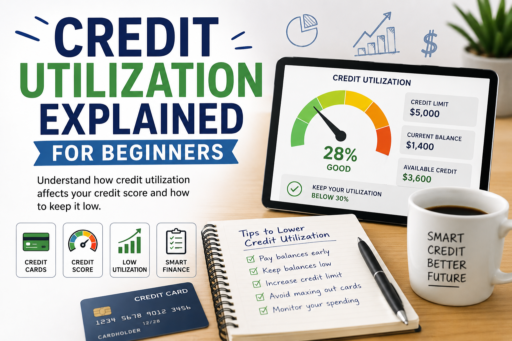
Credit utilization is one of the most important factors that affects your credit score, yet many beginners do not fully understand how it works. You may pay your credit card bill on time every month and still have a lower credit score than expected because of high credit utilization.
In simple terms, credit utilization measures how much of your available credit you are currently using. The percentage may seem small, but it plays a major role in how lenders, banks, and credit bureaus evaluate your financial behavior.
Fortunately, understanding credit utilization is not difficult. Once you learn how it works, you can improve your credit score faster, avoid common mistakes, and manage your money more confidently.
In this complete beginner-friendly guide, you will learn:
- What credit utilization means
- How credit utilization is calculated
- Why it affects your credit score
- What percentage is considered good
- How to lower your utilization quickly
- Common mistakes beginners make
- How to use credit cards responsibly
What Is Credit Utilization?
Credit utilization refers to the amount of credit you use compared to your total available credit limit.
For example, if your credit card limit is $1,000 and your current balance is $300, your credit utilization ratio is 30%.
The formula is simple:
Current Balance ÷ Credit Limit × 100 = Credit Utilization Percentage
Credit bureaus use this percentage to determine whether you are managing your credit responsibly or relying too heavily on borrowed money.
Even if you always make payments on time, using too much of your available credit can still lower your score.
Why Credit Utilization Matters
Credit utilization is one of the largest factors in most credit scoring models. According to myFICO, amounts owed can play a major role in how credit scores are calculated. In fact, it is usually the second most important factor after payment history.
Lenders want to see that you can use credit responsibly without depending too much on it.
If your utilization is consistently high, lenders may think:
- You are struggling financially
- You rely heavily on debt
- You may miss future payments
- You are a higher-risk borrower
On the other hand, low utilization shows:
- You manage debt carefully
- You spend within your limits
- You have better financial control
- You are less risky to lenders
Therefore, lowering your credit usage can improve your credit score surprisingly fast.
What Is Considered a Good Credit Utilization Ratio?
Most financial experts recommend keeping your utilization below 30%.
However, lower is usually better.
| Credit Utilization | Rating |
|---|---|
| 0%–10% | Excellent |
| 11%–30% | Good |
| 31%–50% | Average |
| 51%–75% | Poor |
| 76%–100% | Very Risky |
For example:
- If your limit is $2,000, try to keep your balance below $600
- If your limit is $5,000, stay below $1,500
- If your limit is $10,000, keep balances below $3,000
Many people mistakenly believe that maxing out a card and paying it off later is harmless. Unfortunately, high balances can still hurt your score before payments are processed.
How Credit Utilization Is Calculated Across Multiple Cards
If you have multiple credit cards, usage can be calculated in two ways:
1. Individual Card Utilization
Each card has its own utilization ratio.
Example:
- Card A: $500 balance on $1,000 limit = 50%
- Card B: $200 balance on $2,000 limit = 10%
2. Total Utilization
All balances and limits are combined together.
Example:
- Total balances = $700
- Total limits = $3,000
- Total utilization = 23%
Both numbers matter. Even if your total utilization is low, maxing out one specific card may still negatively affect your score.
How Credit Card Reporting Works
Many beginners assume credit utilization is measured after the payment due date. However, most credit card companies report balances to credit bureaus before your payment date.
This means:
- You may pay your bill in full every month
- But your reported balance could still appear high
- Your score may temporarily decrease
For example:
- Your card limit = $1,000
- You spend $900 during the month
- The issuer reports the balance before payment
- Your utilization becomes 90%
Even if you pay everything later, the high utilization may already affect your score temporarily.
How to Lower Credit Utilization Quickly
1. Pay Your Balance Early
One of the fastest ways to lower utilization is paying part of your balance before the statement closing date.
This reduces the amount reported to credit bureaus.
For example:
- You spend $1,000
- You pay $700 early
- Only $300 may be reported
This strategy can improve your score quickly.
2. Request a Higher Credit Limit
Increasing your limit lowers your utilization ratio automatically if spending stays the same.
Example:
- Balance = $1,000
- Old limit = $2,000 → Utilization = 50%
- New limit = $5,000 → Utilization = 20%
However, avoid increasing spending after receiving a higher limit.
3. Use Multiple Cards Carefully
Instead of placing all purchases on one card, spreading expenses across several cards may help keep individual utilization lower.
Still, organization is important. Too many cards can become difficult to manage.
4. Make Multiple Payments Per Month
Some people pay their credit card weekly instead of monthly.
This method helps keep balances consistently low throughout the month.
5. Reduce Unnecessary Spending
Although this sounds obvious, lowering spending is one of the best long-term solutions.
Focus on:
- Reducing impulse purchases
- Avoiding emotional spending
- Cutting unnecessary subscriptions
- Creating a monthly budget
Does 0% Credit Utilization Help?
Many beginners think never using credit cards is the safest strategy.
However, having 0% utilization all the time may not always be ideal.
Credit scoring systems prefer seeing responsible activity rather than zero activity.
A small utilization percentage — often between 1% and 10% — may actually be better than no usage at all.
This shows lenders that:
- You actively use credit
- You manage it responsibly
- You pay balances consistently
Common Credit Utilization Mistakes
1. Maxing Out Credit Cards
Using nearly all available credit is one of the worst mistakes for your score.
Even temporary maxed-out balances can hurt your credit profile.
2. Closing Old Credit Cards
Closing cards reduces your total available credit, which may increase utilization instantly.
Example:
- Total limits before closing = $10,000
- Total balances = $2,000
- Utilization = 20%
After closing a $5,000 card:
- Total limits = $5,000
- Balances still = $2,000
- Utilization jumps to 40%
This is why keeping old accounts open can sometimes help your score.
3. Ignoring Statement Dates
Many people only focus on payment due dates.
However, statement closing dates are equally important because balances are often reported at that time.
4. Applying for Too Many Cards
Although more credit limits can lower usage, opening too many accounts quickly may hurt your score temporarily due to hard inquiries.
5. Carrying a Balance for No Reason
Some people believe carrying debt improves credit scores.
That is false.
You do not need to pay interest to build good credit.
Paying balances in full is usually the best strategy.
How Fast Can Credit Utilization Affect Your Score?
Credit utilization can impact your score very quickly.
Unlike some credit factors that take months or years to change, utilization updates whenever card issuers report balances.
This means:
- Your score can drop quickly after high spending
- Your score can improve quickly after paying balances down
For many people, lowering utilization is one of the fastest ways to increase a credit score.
Best Credit Utilization Strategy for Beginners
If you are new to credit cards, follow this simple strategy:
- Use less than 30% of your limit
- Pay balances before statement dates
- Never miss payments
- Avoid unnecessary debt
- Track spending weekly
- Keep older accounts open
- Use automatic payments if possible
This approach helps build healthy credit habits early.
How Credit Utilization Affects Loan Approvals
Your utilization ratio can influence more than just your credit score.
Lenders may review utilization directly when deciding:
- Credit card approvals
- Personal loans
- Auto loans
- Mortgage applications
- Credit limit increases
High utilization may signal financial stress, even if your score appears decent.
Therefore, lowering utilization before applying for major loans is usually smart.
Can Debit Cards Affect Credit Utilization?
No.
Debit cards are linked directly to your bank account and do not involve borrowed money.
Therefore, debit card spending does not affect credit utilization or credit scores.
Only revolving credit accounts, such as credit cards and some lines of credit, are included in utilization calculations.
Credit Utilization vs Credit Limit
Beginners often confuse these two terms.
Credit Limit
The maximum amount you are allowed to borrow.
Credit Utilization
The percentage of your limit currently being used.
Example:
- Limit = $5,000
- Balance = $500
- Utilization = 10%
Understanding the difference is essential for managing credit wisely.
Should You Use Credit Cards Every Month?
Yes — but responsibly.
Using your card for small everyday purchases and paying the balance in full each month can help build strong credit habits.
Many people use credit cards for:
- Gas
- Groceries
- Subscriptions
- Online purchases
- Travel rewards
However, avoid spending more than you can afford to repay immediately.
How to Monitor Your Credit Utilization
You can track utilization using:
- Banking apps
- Credit card dashboards
- Credit monitoring services
- Monthly statements
Checking regularly helps you avoid accidentally exceeding healthy utilization levels.
Related Articles
- Best Credit Cards for Building Credit in 2026
- How to Improve Your Credit Score Faster
- How to Choose the Right Credit Card
Final Thoughts
Credit utilization may seem like a small percentage, but it has a huge impact on your financial life. Understanding how it works can help you improve your credit score faster, qualify for better loans, and avoid unnecessary financial stress.
The good news is that credit usage is completely manageable. By keeping balances low, paying early, and spending responsibly, you can build strong credit habits that benefit you for years.
Remember:
- Lower utilization is generally better
- Below 30% is recommended
- Below 10% is excellent
- Paying early can help your score
- You do not need debt to build credit
Most importantly, focus on consistency. Responsible credit habits over time are what truly build excellent financial health.