
Many beginner investors feel nervous about investing because they worry about buying investments at the “wrong” time. Market prices constantly move up and down, which makes investing feel stressful for many people. However, dollar-cost averaging is a simple investing strategy designed to reduce emotional decision-making and encourage consistent investing habits.
Learning this investing strategy in simple terms can help beginners invest more confidently while focusing on long-term financial growth instead of short-term market timing.
This investing strategy is popular because it encourages discipline, consistency, and gradual long-term investing habits.
In this beginner-friendly guide, you will learn:
- What dollar-cost averaging means
- How this investing strategy works
- Why beginners use this strategy
- The benefits and risks of this investing strategy
- How consistency supports investing
- Common mistakes to avoid
- How beginners can start using this strategy
What Does Dollar-Cost Averaging Explained Mean?
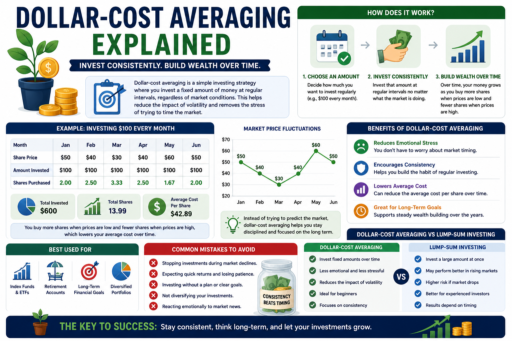
Learning dollar-cost averaging explained means understanding how investors regularly invest fixed amounts of money over time instead of investing everything at once.
For example, an investor may choose to:
- Invest monthly
- Invest weekly
- Use automatic investing
This strategy continues regardless of whether markets rise or fall.
Why Dollar-Cost Averaging Explained Matters
Many beginners struggle emotionally with investing during market volatility.
This strategy may help:
- Reduce emotional investing
- Create investing discipline
- Encourage long-term consistency
- Lower stress during market fluctuations
According to Investor.gov, dollar-cost averaging involves investing fixed amounts regularly regardless of market conditions.
How Dollar-Cost Averaging Works
Instead of trying to predict the perfect market entry point, investors contribute money consistently over time.
When prices are:
- Higher → fewer shares may be purchased
- Lower → more shares may be purchased
This creates an average investment cost over time.
Why Beginners Like Dollar-Cost Averaging
Many beginners prefer this strategy because it simplifies investing.
Benefits include:
- Consistency
- Reduced emotional pressure
- Simple investing habits
- Long-term focus
Beginners do not need to constantly predict market movements.
Why Timing the Market Is Difficult
Trying to predict short-term market movements consistently is extremely difficult.
Many investors make emotional decisions during:
- Market crashes
- Rapid price increases
- Financial news events
Dollar-cost averaging reduces pressure to “time the market.”
How Automatic Investing Supports Consistency
Automatic investing helps investors contribute regularly without relying on motivation.
Automation may help:
- Build discipline
- Reduce procrastination
- Create long-term investing habits
Many investors combine automation with consistent long-term investing habits to reduce emotional decision-making and stay disciplined.
How Compound Growth Helps Investors
Long-term investing may benefit from compound growth as earnings begin generating additional future earnings.
If you want to understand this concept better, read our guide on How Compound Interest Builds Wealth.
What Investments Work With Dollar-Cost Averaging?
This strategy is commonly used with:
- Index funds
- ETFs
- Retirement accounts
- Diversified portfolios
If you are new to index funds, read our article on Index Funds Explained in Simple Terms.
This Strategy vs Lump-Sum Investing
Dollar-Cost Averaging
- Gradual investing
- Lower emotional pressure
- Consistent investing habits
Lump-Sum Investing
- Investing a large amount immediately
- May benefit faster during strong markets
- Can feel emotionally stressful for beginners
Both strategies have advantages depending on investor goals and risk tolerance.
How Budgeting Supports Investing
Strong budgeting habits help create money available for consistent investing.
Why Long-Term Thinking Matters
This strategy usually works best with consistent long-term investing habits and patient financial planning.
Long-term investing focuses on:
- Patience
- Consistency
- Discipline
- Reduced emotional trading
Short-term market movements become less important over long periods.
Common Beginner Mistakes With Dollar-Cost Averaging
1. Stopping During Market Declines
Many beginners panic when markets fall.
However, consistency is an important part of this strategy.
2. Expecting Instant Results
Long-term investing usually requires patience.
3. Investing Without Goals
Clear financial goals improve investing discipline.
4. Ignoring Diversification
Diversification helps reduce unnecessary risk.
5. Overreacting to Financial News
Short-term news may create emotional investing decisions.
Best Beginner Habits for Investing Success
- Invest consistently
- Stay diversified
- Automate investing
- Think long-term
- Avoid emotional decisions
Simple investing habits practiced consistently often produce stronger long-term results.
How Dollar-Cost Averaging Supports Financial Freedom
Consistent investing may eventually help create:
- Long-term wealth
- Retirement savings
- Financial flexibility
- Passive growth opportunities
However, patience and discipline are usually necessary.
Related Articles
- Build a Beginner Investment Portfolio
- Best Saving Strategies for Long-Term Goals
- Best Credit Card for Your Needs
Final Thoughts Explained
Learning dollar-cost averaging explained can help beginners invest more confidently without constantly worrying about short-term market movements.
You do not need perfect timing to become a successful long-term investor.
Instead, focus on:
- Consistency
- Diversification
- Long-term thinking
- Automatic investing
- Financial discipline
Most importantly, remember that investing success is often built gradually through patience, smart habits, and consistent long-term investing.