
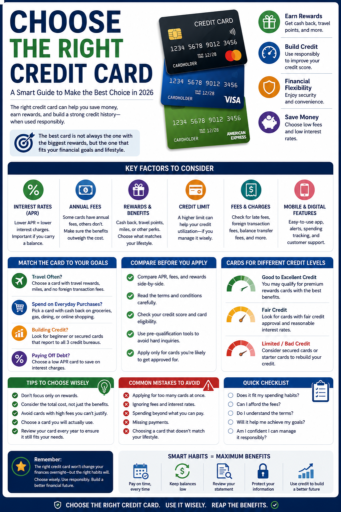
Choosing a credit card may seem simple at first, but learning how to choose the right credit card becomes important because with so many options available, many beginners quickly become overwhelmed. Different cards offer different rewards, fees, interest rates, and benefits, which makes selecting the right one an important financial decision.
Learning how to choose the right credit card can help you avoid unnecessary debt, improve your credit score, and maximize financial benefits based on your personal lifestyle and spending habits.
The best credit card is not always the one with the biggest rewards. Instead, it is the card that fits your financial goals, budget, and ability to manage credit responsibly.
In this beginner-friendly guide, you will learn:
- How credit cards work
- What features matter most
- How to compare credit cards
- What beginners should avoid
- How rewards and interest work
- How to choose a card based on your goals
- Common mistakes to avoid in 2026
What Does How to Choose the Right Credit Card Mean?
Learning how to choose the right credit card means understanding which card best matches your financial habits, spending style, income, and long-term goals.
The right card for one person may not be the right card for someone else.
Some people prioritize:
- Cash back rewards
- Travel benefits
- Low interest rates
- Building credit
- No annual fees
Understanding your personal financial needs is the first step toward making the best decision.
Why How to Choose the Right Credit Card Matters
The wrong credit card may lead to:
- High interest costs
- Unnecessary fees
- Overspending
- Debt problems
Meanwhile, the right card may help:
- Build credit
- Earn rewards
- Improve financial flexibility
- Reduce borrowing costs
According to Consumer Financial Protection Bureau, understanding credit card terms and costs is essential for making smarter financial decisions.
Understand Your Financial Goals First
Before comparing cards, ask yourself:
- Do I want to build credit?
- Do I plan to carry balances?
- Do I want rewards?
- Am I trying to avoid fees?
- Will I travel frequently?
Your goals should guide your decision.
Types of Credit Cards
1. Starter Credit Cards
Designed for beginners with limited credit history.
These cards usually offer:
- Easier approval
- Lower limits
- Basic rewards
If you are new to credit, read our guide on Best Starter Credit Cards for Young Adults.
2. Secured Credit Cards
Require a refundable deposit and help build credit.
3. Cash Back Cards
Offer rewards based on spending categories.
4. Travel Rewards Cards
Designed for travelers who want miles or travel perks.
5. Low APR Cards
Focus on lower interest rates for carrying balances.
Check Annual Fees Carefully
Some cards charge annual fees while others do not.
Annual fees may make sense if:
- Rewards exceed the fee
- You use premium benefits regularly
However, beginners often benefit more from simple no-annual-fee cards.
Understand APR and Interest Rates
APR stands for Annual Percentage Rate.
Higher APR rates increase borrowing costs if you carry balances.
If you usually pay balances fully every month, APR matters less.
However, if you may carry balances occasionally, lower APR cards become more important.
Learn more in our article on How to Avoid Credit Card Interest.
Look at Rewards Programs Carefully
Rewards can provide value if used responsibly.
Common rewards include:
- Cash back
- Travel points
- Airline miles
- Dining rewards
- Gas rewards
However, rewards should never encourage unnecessary spending.
Choose Rewards Based on Your Lifestyle
The best rewards card depends on your spending habits.
Examples:
- Frequent travelers may prefer travel rewards
- Families may prefer grocery rewards
- Beginners may prefer simple flat-rate cash back
If you want to maximize rewards wisely, read our article on Best Cash Back Strategies to Maximize Rewards.
Review Credit Score Requirements
Some cards require excellent credit, while others are designed for beginners.
Applying for cards far above your credit level may:
- Reduce approval chances
- Create unnecessary hard inquiries
Choose cards that match your current credit profile.
Understand Credit Limits
Your credit limit affects:
- Spending flexibility
- Credit utilization
- Financial risk
Higher limits may help utilization ratios, but they may also tempt overspending.
Check Foreign Transaction Fees
If you travel internationally, foreign transaction fees matter.
Some cards charge extra fees for purchases made outside your home country.
Travel-focused cards often waive these fees.
Mobile Banking Features Matter
Modern banking apps help users:
- Track spending
- Monitor balances
- Pay bills
- Freeze cards instantly
- Receive alerts
Strong mobile tools improve financial organization significantly.
Read the Terms and Conditions
Many people ignore important details hidden in card agreements.
Always review:
- Interest rates
- Late fees
- Penalty APR rules
- Rewards limitations
- Annual fees
Understanding terms helps prevent surprises later.
Avoid Applying for Too Many Cards Quickly
Each application may create a hard inquiry on your credit report.
Too many applications in a short period may:
- Lower your score temporarily
- Reduce approval odds
Apply carefully and strategically.
How Beginners Should Choose Their First Card
Beginners should usually prioritize:
- No annual fee
- Simple rewards
- Easy approval
- Credit-building opportunities
- Strong mobile tools
Simplicity is often the safest starting point.
How to Use Your Credit Card Responsibly
Even the best credit card becomes dangerous if used irresponsibly.
Healthy habits include:
- Paying on time
- Keeping balances low
- Avoiding unnecessary debt
- Tracking spending carefully
If you want stronger financial habits, read our article on Best Credit Card Habits for Good Credit.
Common Mistakes When Choosing Credit Cards
1. Focusing Only on Rewards
Interest charges may erase reward benefits quickly.
2. Ignoring Fees
Annual fees and penalties can become expensive.
3. Applying for Premium Cards Too Early
Beginners may not qualify for advanced cards.
4. Overspending Because of Rewards
Rewards are not free money.
5. Not Reading Terms Carefully
Important costs are often hidden in details.
Best Beginner Strategy for Choosing a Credit Card
If you are new to credit cards, focus on:
- Simple beginner-friendly cards
- No annual fee options
- Responsible spending habits
- Building positive payment history
- Keeping balances low
Once you gain experience, you can explore more advanced reward strategies later.
Final Thoughts on How to Choose the Right Credit Card
Learning how to choose the right credit card can help you build stronger financial habits, avoid unnecessary debt, and improve your long-term financial health.
The best card is not always the flashiest option with the biggest rewards.
Instead, the right card is the one that fits your financial situation, spending habits, and long-term goals responsibly.
Focus on:
- Low costs
- Manageable limits
- Responsible habits
- Clear financial goals
- Smart spending behavior
Most importantly, remember that responsible credit management matters far more than owning the “perfect” card.