
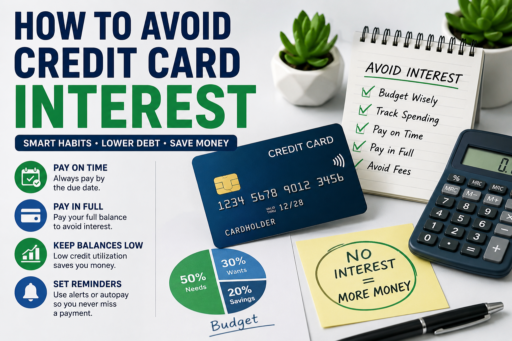
Credit cards can offer convenience, rewards, fraud protection, and financial flexibility. Learning how to avoid credit card interest is essential because if balances are not managed carefully, credit card interest can quickly become expensive and difficult to control.
Many people unknowingly pay high interest charges simply because they do not fully understand how credit card billing works. Fortunately, learning how to avoid credit card interest is much easier than most beginners think.
With the right habits, you can use credit cards regularly while paying little or even zero interest.
In this complete beginner guide, you will learn:
- How credit card interest works
- Why interest charges become expensive
- How grace periods work
- The best ways to avoid paying interest
- Common mistakes beginners make
- Smart repayment strategies
- How to protect your credit score

What Is Credit Card Interest in How to Avoid Credit Card Interest?
Credit card interest is the extra money charged when you carry a balance instead of paying your statement in full.
Credit card companies charge interest as a percentage of your unpaid balance. This percentage is commonly called APR (Annual Percentage Rate).
For example:
- Balance = $1,000
- APR = 24%
If you do not repay the balance fully, interest begins accumulating over time.
Although the percentage may appear small initially, interest can grow quickly when balances remain unpaid for months.
Why How to Avoid Credit Card Interest Matters
Avoiding interest charges can save significant money over time.
For example:
- You earn $20 in rewards
- But pay $80 in interest
In this situation, the rewards become meaningless because interest costs exceed the benefits earned.
According to Consumer Financial Protection Bureau, paying balances in full can help consumers avoid expensive interest charges and manage debt more effectively.
Learning how to avoid credit card interest also helps:
- Reduce debt stress
- Improve financial flexibility
- Protect your credit score
- Increase savings opportunities
- Build healthier financial habits
How Credit Card Interest Works
Interest is usually calculated daily based on your unpaid balance.
If you carry a balance after the due date:
- The issuer calculates daily interest
- Interest is added to your balance
- Future interest grows on the larger amount
This process is called compound interest.
As a result, debt can grow surprisingly fast if balances are not managed carefully.
Understand the Grace Period
The grace period is one of the most important concepts for avoiding interest.
A grace period is the time between:
- Your statement closing date
- Your payment due date
If you pay the full statement balance during this period, you usually avoid interest completely.
Most grace periods last around:
- 21 to 25 days
However, grace periods may disappear if you begin carrying balances regularly.
Always Pay Your Full Statement Balance
The best strategy for how to avoid credit card interest is paying your full statement balance every month.
This simple habit allows you to:
- Avoid interest entirely
- Reduce debt risk
- Maintain financial control
- Protect your credit score
Even small unpaid balances can trigger interest charges.
Therefore, paying in full is usually the safest approach.
Avoid Paying Only the Minimum Payment
The minimum payment is the smallest required amount needed to keep your account current.
While minimum payments prevent late fees, they often allow interest to continue growing.
For example:
- $3,000 balance
- 24% APR
- Minimum payment only
This debt could take years to repay while generating hundreds or even thousands in interest charges.
Therefore, minimum payments should only be temporary emergency solutions.
Track Your Spending Carefully
Many people accumulate interest simply because they lose track of spending.
Small purchases can build up quickly over time.
Examples include:
- Food delivery
- Subscriptions
- Online shopping
- Impulse purchases
Tracking expenses regularly helps prevent balances from becoming unmanageable.
Create a Monthly Budget
A monthly budget helps you control spending before interest problems begin.
Your budget should include:
- Income
- Fixed bills
- Savings goals
- Debt payments
- Flexible spending
If you want better organization, read our guide on How to Create a Monthly Budget That Actually Works.
Use Automatic Payments
Automatic payments can help prevent missed due dates.
Missing payments may lead to:
- Late fees
- Penalty APR increases
- Credit score damage
- Additional interest costs
Many experienced credit card users automate at least the minimum payment for safety.
Keep Credit Utilization Low
High balances increase financial stress and may lead to interest problems.
Keeping balances low makes repayment easier and protects your credit score.
Experts generally recommend staying below 30% utilization.
Learn more in our article on Credit Utilization Explained for Beginners.
Avoid Cash Advances
Cash advances are one of the most expensive credit card features.
Unlike regular purchases, cash advances often:
- Start charging interest immediately
- Have higher APR rates
- Include additional fees
Because of these costs, cash advances should usually be avoided except during serious emergencies.
Understand Promotional APR Offers
Some cards offer promotional rates such as:
- 0% APR for 12 months
These promotions can be useful when managed responsibly.
However, it is important to understand:
- When the promotion expires
- What the regular APR becomes
- Whether deferred interest applies
Failing to repay balances before promotional periods end can become expensive quickly.
Pay Early Instead of Waiting
You do not need to wait until the due date to make payments.
Paying earlier can:
- Reduce balances faster
- Improve utilization ratios
- Lower financial stress
- Prevent accidental overspending
Some people prefer making weekly payments instead of monthly payments.
Avoid Emotional Spending
Emotional spending is one of the biggest causes of unnecessary debt.
People often overspend due to:
- Stress
- Boredom
- Social pressure
- Impulse shopping
Before using your card, ask yourself:
Would I still buy this if I had to pay cash today?
This simple question can prevent many poor financial decisions.
Use Rewards Carefully
Cash back and reward programs can be valuable.
However, rewards should never encourage unnecessary spending.
Interest charges can easily exceed rewards earned.
If you want to maximize rewards responsibly, read our guide on Best Cash Back Strategies to Maximize Rewards.
Monitor Your APR Regularly
Your APR may change over time.
Reasons may include:
- Missed payments
- Market rate changes
- Promotional period expiration
Checking statements regularly helps you stay informed about interest costs.
How to Recover if You Already Owe Interest
If you already carry balances, do not panic.
You can still regain control with a clear repayment strategy.
1. Stop Adding New Debt
Reduce unnecessary card usage temporarily.
2. Pay More Than the Minimum
Higher payments reduce balances faster and lower future interest.
3. Focus on High-Interest Cards First
This strategy reduces total interest costs faster.
4. Create a Debt Repayment Plan
Consistency matters more than perfection.
Common Mistakes That Cause Interest Charges
1. Paying Only Minimum Payments
This allows balances to grow slowly over time.
2. Missing Due Dates
Late payments can trigger fees and higher APR rates.
3. Overspending for Rewards
Rewards are not valuable if interest exceeds rewards earned.
4. Ignoring Statements
Monitoring statements helps you spot problems early.
5. Using Cards Without a Budget
Budgeting reduces the risk of uncontrolled debt.
Best Beginner Strategy for How to Avoid Credit Card Interest
If you are new to credit cards, keep your strategy simple:
- Spend only what you can afford
- Pay balances in full monthly
- Track spending carefully
- Use automatic payments
- Avoid unnecessary debt
These simple habits can save large amounts of money long-term.
Final Thoughts on How to Avoid Credit Card Interest
Learning how to avoid credit card interest is one of the most valuable financial skills beginners can develop. Credit cards themselves are not dangerous — problems usually come from poor spending habits and unpaid balances.
The good news is that avoiding interest is often very simple:
- Pay balances in full
- Track spending carefully
- Avoid unnecessary purchases
- Use a monthly budget
- Pay on time consistently
Most importantly, remember that responsible credit card habits can improve your financial flexibility while helping you avoid unnecessary debt and financial stress.