
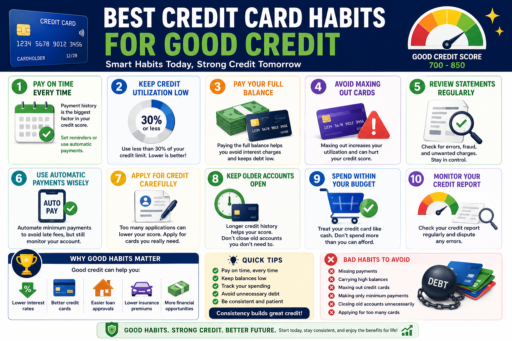
Building a strong credit score does not happen overnight. Instead, good credit is usually the result of consistent financial habits practiced over time. Fortunately, learning the best credit card habits for good credit is much easier than many beginners think.
Credit cards can either strengthen your financial future or create long-term debt problems depending on how they are used. Responsible habits such as paying on time, keeping balances low, and monitoring spending regularly can significantly improve your credit profile.
The good news is that even small habits can make a major difference over time.
In this beginner-friendly guide, you will learn:
- The best credit card habits for good credit
- How payment history affects your score
- Why credit utilization matters
- How to avoid common mistakes
- How to build strong long-term credit habits
- Ways to protect your financial future
What Are Best Credit Card Habits for Good Credit?
The best credit card habits for good credit are financial behaviors that help improve and protect your credit score over time.
These habits show lenders that you can manage borrowed money responsibly.
Many people develop these habits after getting their first credit card. Choosing one of the best starter credit cards for young adults can provide a simple way to begin building credit while learning responsible card management.
Examples include:
- Paying on time
- Keeping balances low
- Avoiding unnecessary debt
- Monitoring statements regularly
- Using cards within your budget
Even one negative habit — such as missing payments repeatedly — can damage your credit profile significantly.
Why Best Credit Card Habits for Good Credit Matter
Good credit habits can improve many areas of your financial life.
A strong credit score may help you qualify for:
- Lower loan interest rates
- Better credit cards
- Higher credit limits
- Apartment rentals
- Auto loans
- Mortgages
According to Experian, payment history and credit utilization are among the most important factors affecting credit scores.
Always Pay On Time
Payment history is usually the single biggest factor affecting your credit score.
Even one missed payment may:
- Lower your score
- Create late fees
- Increase interest charges
- Stay on your credit report for years
Therefore, paying on time should always be your highest priority.
Tips for Paying On Time
- Use automatic payments
- Set calendar reminders
- Pay early instead of waiting
- Monitor due dates weekly
Keep Credit Utilization Low
Credit utilization measures how much of your available credit you are using.
Experts generally recommend staying below 30% utilization.
However, below 10% is often even better for excellent credit scores.
Example:
- Credit limit = $5,000
- Balance = $500
- Utilization = 10%
Learn more in our article on Credit Utilization Explained for Beginners.
Pay Your Full Balance Whenever Possible
Paying your full statement balance each month helps:
- Avoid interest charges
- Reduce debt risk
- Improve financial control
- Keep balances manageable
If you want to reduce interest costs, read our guide on How to Avoid Credit Card Interest.
Avoid Maxing Out Your Credit Cards
Using all available credit may hurt your score and increase financial stress.
High balances signal higher risk to lenders.
Even if you pay later, maxed-out cards can temporarily lower your credit score.
Review Your Statements Monthly
Reading statements regularly helps you:
- Track spending
- Catch fraud quickly
- Monitor subscriptions
- Identify billing mistakes
If you want help understanding statements, read our article on How to Read a Credit Card Statement.
Use Automatic Payments Carefully
Automatic payments reduce the risk of missing due dates.
However, you should still review statements manually each month to monitor spending and billing activity.
Avoid Applying for Too Many Cards Quickly
Each application may create a hard inquiry on your credit report.
Too many applications in a short period may:
- Lower your score temporarily
- Reduce approval chances
- Make lenders cautious
Apply only for cards you genuinely need.
Keep Older Accounts Open
Older accounts may strengthen your credit history length.
Closing old cards can sometimes:
- Reduce available credit
- Increase utilization
- Shorten account age
If a card has no annual fee, keeping it open may help your credit profile.
Use Credit Cards Within Your Budget
One of the healthiest habits is treating credit cards like cash.
A simple rule:
If you cannot afford it with cash today, avoid charging it to your card.
This mindset helps prevent unnecessary debt accumulation.
Track Your Spending Regularly
Small purchases can add up quickly.
Tracking spending weekly helps prevent:
- Overspending
- Impulse shopping
- Budget problems
- High balances
Many people use:
- Budgeting apps
- Spreadsheets
- Banking notifications
- Expense trackers
Avoid Emotional Spending
Emotional purchases often lead to regret and debt.
Common triggers include:
- Stress
- Boredom
- Social pressure
- Online shopping temptation
Before buying something, ask yourself:
Do I truly need this purchase?
Use Rewards Responsibly
Rewards programs can be valuable if used carefully.
However, rewards should never encourage unnecessary spending.
Interest charges can easily exceed rewards earned.
To maximize rewards wisely, read our article on Best Cash Back Strategies to Maximize Rewards.
Monitor Your Credit Report
Checking your credit report regularly helps identify:
- Errors
- Fraudulent activity
- Unauthorized accounts
- Incorrect balances
Monitoring reports can help protect your financial identity long-term.
Use Secured Cards Responsibly if Needed
Beginners with limited credit history may benefit from secured credit cards.
Responsible secured card usage can help build credit over time.
Learn more in our guide on Secured Credit Cards vs Unsecured Cards.
Create a Long-Term Credit Mindset
Good credit habits are most effective when practiced consistently for years.
Focus on:
- Patience
- Consistency
- Financial discipline
- Responsible borrowing
Building strong credit is usually a marathon, not a sprint.
Common Bad Credit Card Habits to Avoid
1. Missing Payments
Late payments can damage your score quickly.
2. Carrying High Balances
High utilization increases financial risk.
3. Overspending for Rewards
Rewards are not valuable if debt becomes expensive.
4. Ignoring Statements
Monitoring activity helps detect problems early.
5. Applying for Too Many Cards
Too many inquiries may lower approval chances.
Best Beginner Strategy for Building Good Credit
If you are new to credit cards, focus on these simple habits:
- Pay on time every month
- Keep balances below 30%
- Track spending weekly
- Use automatic payments
- Avoid unnecessary debt
- Review statements monthly
These habits may seem simple, but they are extremely powerful over time.
Final Thoughts on Best Credit Card Habits for Good Credit
Learning the best credit card habits for good credit can help you build a stronger financial future with less stress and fewer financial mistakes.
The most important habits are often the simplest:
- Pay on time
- Keep balances low
- Track spending carefully
- Avoid unnecessary debt
- Stay financially organized
Most importantly, remember that good credit is built through consistency. Small responsible habits repeated over time can create excellent long-term financial results.