
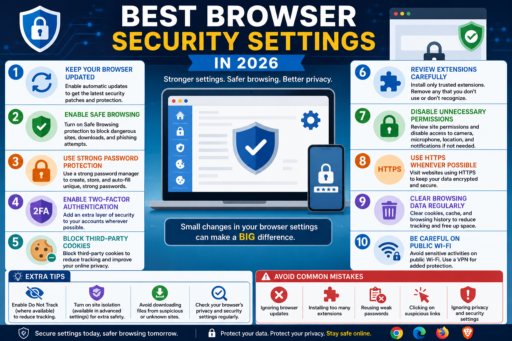
Modern web browsers store large amounts of personal information including passwords, browsing activity, saved payment details, and account logins. Learning about the best browser security settings in 2026 can help users reduce tracking risks, block scams, avoid malware threats, and improve overall online privacy and cybersecurity protection.
Learning about the best browser security settings in 2026 can help users improve online privacy, reduce cybersecurity risks, and protect sensitive personal information while browsing the internet.
Many people use browsers every day without reviewing their security settings, even though simple adjustments may significantly improve digital safety.
In this beginner-friendly guide, you will learn:
- Why browser security matters
- The best browser security settings in 2026
- How to improve online privacy
- How to reduce tracking risks
- How to protect accounts and passwords
- Common browser security mistakes
- Ways to stay safer online
What Does Best Browser Security Settings in 2026 Mean?
Learning about the best browser security settings in 2026 means configuring your web browser to improve cybersecurity, privacy, and protection against online threats.
Browser security settings may help:
- Block malicious websites
- Reduce online tracking
- Protect saved passwords
- Prevent phishing attacks
- Improve browsing privacy
Strong browser security habits are becoming increasingly important as cyber threats continue evolving.
Why Best Browser Security Settings in 2026 Matters
Cybercriminals often target browsers because they contain valuable personal data and account access information.
Improving browser security settings may help:
- Protect personal accounts
- Reduce malware risks
- Improve online privacy
- Prevent phishing scams
According to the Federal Trade Commission (FTC), online privacy and cybersecurity awareness remain important for protecting personal information online.
1. Keep Your Browser Updated
Browser updates often include important security patches that fix vulnerabilities and improve protection against cyber threats.
Popular browsers usually update automatically, but users should still verify updates regularly.
2. Enable Safe Browsing Protection
Most modern browsers include built-in security features that warn users about:
- Dangerous websites
- Malware downloads
- Phishing attacks
- Suspicious web pages
Safe browsing protection should usually remain enabled.
3. Use Strong Password Protection
Weak passwords increase cybersecurity risks significantly.
Browser password managers may help users:
- Create stronger passwords
- Store passwords securely
- Reduce password reuse
However, users should still use strong master passwords and account protection.
4. Enable Two-Factor Authentication
Two-factor authentication adds extra account protection beyond passwords alone.
Even if passwords are stolen, 2FA may help prevent unauthorized access.
If you want to improve account security further, read our guide on Detect Phishing Emails Instantly.
5. Block Third-Party Tracking Cookies
Third-party tracking cookies may collect browsing behavior across multiple websites.
Blocking unnecessary tracking cookies may improve online privacy significantly.
6. Review Browser Extensions Carefully
Some browser extensions may:
- Track browsing activity
- Collect personal data
- Display malicious ads
- Reduce browser security
Only install trusted browser extensions from reputable developers.
7. Disable Unnecessary Permissions
Many websites request access to:
- Camera
- Microphone
- Location data
- Notifications
Reviewing permissions regularly may help reduce privacy risks.
8. Use HTTPS Whenever Possible
HTTPS encrypts communication between users and websites.
Secure websites usually display:
- HTTPS in the URL
- A padlock icon
Avoid entering sensitive information on unsecured websites.
9. Clear Browsing Data Periodically
Clearing cookies and browsing data may help:
- Reduce tracking
- Remove stored session data
- Improve privacy
However, clearing cookies may sign users out of websites.
10. Be Careful With Public Wi-Fi
Public Wi-Fi networks may increase cybersecurity risks.
Common Browser Security Mistakes
1. Ignoring Browser Updates
Outdated browsers may contain security vulnerabilities.
2. Installing Too Many Extensions
Some extensions may reduce browser security.
3. Reusing Weak Passwords
Password reuse increases account risks.
4. Clicking Suspicious Links
Phishing scams often target browser users.
5. Ignoring Privacy Settings
Default settings may not always provide strong privacy protection.
How Beginners Can Improve Browser Security
- Keep browsers updated
- Use strong passwords
- Enable 2FA
- Limit unnecessary extensions
- Review privacy settings regularly
Simple browser security habits may greatly improve online safety.
Why Browser Privacy Matters More in 2026
Modern websites collect large amounts of user data.
Improving browser privacy settings may help reduce:
- Tracking
- Targeted profiling
- Privacy risks
- Cybersecurity threats
Privacy awareness continues becoming increasingly important online.
Related Articles
- How to Build Wealth Slowly but Consistently
- How to Avoid Common Investing Mistakes
- Long-Term Investing vs Short-Term Trading
Final Thoughts on Best Browser Security Settings in 2026
Learning about the best browser security settings in 2026 can help users improve online safety, reduce cybersecurity risks, and protect sensitive personal information.
You do not need advanced technical knowledge to improve browser security.
Instead, focus on:
- Strong passwords
- Regular updates
- Privacy settings
- Safe browsing habits
- Cybersecurity awareness
Most importantly, remember that small security improvements can significantly reduce online risks over time.