
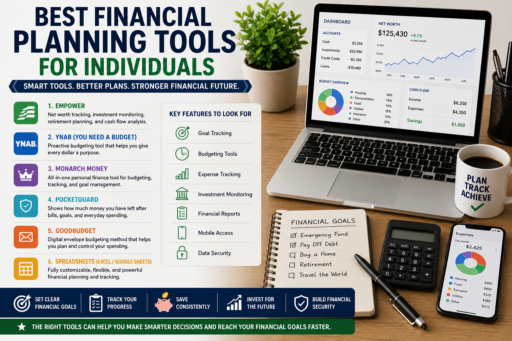
Financial planning has become increasingly important as people face rising living costs, growing financial responsibilities, and more complex money decisions. Whether your goal is saving for retirement, building an emergency fund, reducing debt, or increasing investments, the right tools can simplify the process. The Financial Planning Tools for Individuals help users organize finances, track progress, and make better financial decisions.
In 2026, financial planning tools offer a wide range of features including budgeting, expense tracking, goal management, investment monitoring, and net worth tracking. These tools can provide valuable insights that improve financial awareness and long-term financial success.
While no tool can replace good financial habits, the right software can make financial planning significantly easier and more efficient.
This guide explores some of the best financial planning tools available for individuals and explains how they can support financial growth.
Why Financial Planning Matters
Financial planning helps individuals take control of their money and work toward meaningful goals.
Benefits include:
- Improved budgeting
- Increased savings
- Better investment decisions
- Reduced financial stress
- Greater long-term security
Without a financial plan, it becomes much harder to make consistent progress.
What Makes a Good Financial Planning Tool?
The Best Financial Planning Tools for Individuals typically offer:
- Easy-to-use interfaces
- Goal tracking
- Budgeting features
- Expense monitoring
- Financial reporting
- Mobile access
Tools should simplify financial management rather than make it more complicated.
Tool #1: Empower Personal Dashboard
Empower is one of the most popular personal finance platforms.
Key Features
- Net worth tracking
- Investment monitoring
- Retirement planning tools
- Cash flow analysis
Many users appreciate its comprehensive financial overview.
Tool #2: YNAB (You Need A Budget)
YNAB focuses on proactive budgeting and financial awareness.
Advantages
- Strong budgeting system
- Financial education resources
- Goal-focused planning
YNAB is especially useful for individuals who want to gain better control over spending.
Tool #3: Monarch Money
Monarch Money has become increasingly popular due to its modern interface and powerful financial planning features.
Capabilities include:
- Expense tracking
- Budgeting tools
- Goal tracking
- Financial account aggregation
Its user-friendly design makes financial planning easier for many individuals.
Tool #4: PocketGuard
PocketGuard focuses on helping users understand how much money is available after bills and savings obligations.
Key benefits include:
- Spending awareness
- Simple budgeting
- Cash flow visibility
- Goal tracking
Its simplicity appeals to beginners.
Tool #5: Goodbudget
Goodbudget uses a digital envelope budgeting approach.
Users allocate money to spending categories before purchases occur.
This method encourages intentional spending and stronger budgeting habits.
Tool #6: Spreadsheet-Based Planning
Some individuals prefer spreadsheets instead of dedicated apps.
Benefits include:
- Full customization
- No subscription fees
- Detailed financial tracking
- Flexible reporting
Spreadsheets remain a powerful option for organized users.
How Financial Planning Tools Improve Financial Habits
Financial tools often encourage:
- Budget discipline
- Regular reviews
- Goal tracking
- Expense awareness
- Long-term planning
Over time, these habits can significantly improve financial outcomes.
Choosing the Right Financial Planning Tool
The best tool depends on your needs.
- Need budgeting support? Consider YNAB.
- Want investment tracking? Consider Empower.
- Prefer simplicity? Consider PocketGuard.
- Want flexibility? Consider spreadsheets.
The ideal solution is one that you can use consistently over the long term.
Common Financial Planning Mistakes
Even with access to the Financial Planning Tools for Individuals, many people make mistakes that limit financial progress.
Common mistakes include:
- Not setting clear financial goals
- Ignoring monthly budgets
- Failing to track expenses
- Neglecting emergency savings
- Reviewing finances too infrequently
Avoiding these mistakes can dramatically improve financial outcomes.
Why Goal Tracking Is Important
Financial planning becomes much more effective when goals are clearly defined and regularly monitored.
Goal tracking features help users measure progress toward:
- Emergency funds
- Debt repayment
- Retirement savings
- Investment growth
- Major purchases
Seeing progress visually often increases motivation and consistency.
Track Multiple Financial Goals Simultaneously
Many individuals have several financial priorities at the same time.
Examples include:
- Building savings
- Paying off debt
- Growing investments
- Preparing for retirement
Good financial planning tools help organize these goals and keep them aligned with available resources.
Create Monthly Financial Reviews
Financial planning should not be a one-time activity.
A monthly review process helps maintain financial awareness and supports better decision-making.
Monthly reviews should include:
- Budget performance
- Expense analysis
- Savings progress
- Investment performance
- Debt reduction updates
Regular reviews help identify opportunities for improvement.
Monitor Net Worth Growth
Many advanced financial planning tools include net worth tracking.
Net worth represents:
- Total assets
- Minus total liabilities
Monitoring net worth provides a broader view of long-term financial progress than income alone.
Plan for Financial Emergencies
Unexpected expenses can disrupt even the best financial plans.
Financial planning tools can help users:
- Build emergency funds
- Track savings targets
- Prepare for irregular expenses
Emergency preparation improves financial resilience and stability.
Support Long-Term Wealth Building
The Financial Planning Tools for Individuals are not only useful for managing current finances.
They also support long-term wealth-building strategies such as:
- Retirement planning
- Investment management
- Asset accumulation
- Financial independence planning
Long-term planning often benefits from consistent tracking and regular adjustments.
Use Financial Reports Effectively
Most financial planning tools generate reports that provide valuable insights.
Reports can help identify:
- Spending trends
- Savings opportunities
- Budget weaknesses
- Financial progress
Understanding financial data often leads to better decisions.
Build Strong Financial Habits
Technology is most effective when combined with strong financial habits.
Helpful habits include:
- Tracking expenses regularly
- Reviewing goals monthly
- Saving consistently
- Monitoring investments
- Avoiding unnecessary debt
Good habits often matter more than any specific financial tool.
Use Trusted Financial Resources
People interested in improving financial planning skills can benefit from trusted educational resources. The Consumer Financial Protection Bureau provides practical guidance on budgeting, saving, debt management, and financial planning.
Combining financial education with effective planning tools often produces better long-term results.
Additional Resources for Better Financial Planning
To strengthen your financial strategy, consider reading Organize Your Personal Finances Efficiently, Set Realistic Financial Goals, and Save Money on Everyday Purchases.
Together, these resources provide a strong foundation for financial organization, budgeting, and long-term success.
The Long-Term Benefits of Financial Planning Tools
Using financial planning tools consistently can provide:
- Greater financial clarity
- Improved budgeting accuracy
- Better savings habits
- Increased financial confidence
- Stronger long-term wealth-building opportunities
Small improvements repeated consistently often create significant financial benefits over time.
Final Thoughts
The Financial Planning Tools for Individuals can simplify money management, improve financial awareness, and help users achieve meaningful financial goals.
Whether you choose a budgeting app, a goal-tracking platform, an investment dashboard, or a customized spreadsheet, the key is consistent use and regular financial reviews.
Remember that financial success is built through informed decisions, strong habits, and a clear plan. The right tools can make that journey much easier and more effective.