
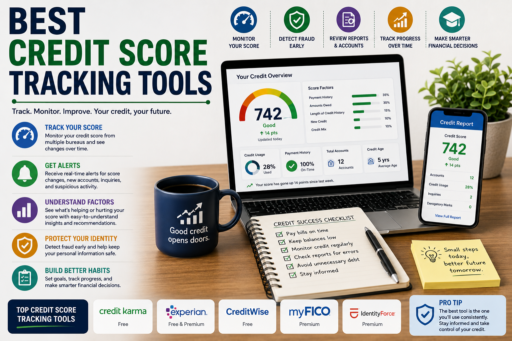
Imagine spending months paying bills on time, reducing credit card balances, and making smarter financial decisions. Naturally, you want to know whether those efforts are actually improving your credit profile. Credit Score Tracking Tools can help you monitor your progress and see the results of your financial habits.
Many consumers only check their credit information when applying for a loan, mortgage, or credit card. Unfortunately, that approach often means important changes go unnoticed for months or even years.
This is where modern credit tracking tools become valuable.
The best Credit Score Tracking Tools help consumers stay informed about their financial progress, monitor changes in their credit profiles, identify potential issues early, and maintain awareness of the factors influencing their credit health.
Years ago, monitoring credit often required ordering reports manually and waiting for updates. Today, technology has made the process significantly easier. Many tools provide score updates, alerts, educational resources, and credit monitoring features directly from a smartphone or computer.
However, not all tools offer the same value.
Some focus on score tracking. Others emphasize identity protection. Some provide educational insights, while others offer detailed monitoring features designed for long-term credit management.
In this guide, we’ll explore the best credit score tracking tools available today, explain their strengths and limitations, and help you choose the option that best fits your financial goals.
Why Credit Score Tracking Matters
Many people assume that checking their credit score occasionally is enough.
In reality, credit profiles change continuously.
Balances fluctuate.
Utilization percentages rise and fall.
Accounts age.
New information appears on credit reports.
Without regular monitoring, important changes may go unnoticed.
Imagine noticing a sudden score drop only after being denied financing. By then, the underlying issue may have existed for months.
Regular tracking allows consumers to identify changes earlier and respond more effectively.
People who monitor their credit consistently often feel more confident making financial decisions because they understand where they stand financially.
Related Article: How to Monitor Your Credit Effectively
What Makes a Good Credit Score Tracking Tool?
Before comparing tools, it’s important to understand what features actually matter.
A useful credit tracking tool should do more than simply display a number.
Strong tools often provide:
- Score updates.
- Credit monitoring alerts.
- Report insights.
- Educational resources.
- Identity protection features.
- User-friendly dashboards.
- Mobile accessibility.
The best tool for one person may not be ideal for another.
Someone focused on credit improvement may value educational content. Another consumer may prioritize fraud monitoring and identity protection.
The goal is finding a tool that supports your specific financial objectives.
Credit Karma
Credit Karma remains one of the most widely recognized credit monitoring platforms.
Many consumers appreciate its accessibility and easy-to-understand interface.
The platform provides:
- Credit score tracking.
- Credit report monitoring.
- Account insights.
- Educational content.
- Financial product recommendations.
For beginners, Credit Karma often serves as a practical introduction to credit monitoring because it simplifies complex financial information.
However, consumers should remember that different scoring models may produce different scores depending on the lender and situation.
Experian
Experian offers one of the most recognized credit monitoring ecosystems available today.
Many users appreciate the platform’s focus on credit education and report visibility.
Features commonly include:
- Score tracking.
- Report access.
- Monitoring alerts.
- Identity protection options.
- Credit education resources.
For consumers actively working to improve credit health, Experian often provides useful educational tools that help explain why scores change over time.
Credit Sesame
Credit Sesame focuses heavily on credit awareness and monitoring.
The platform is designed to help users understand factors influencing their credit profiles while providing ongoing tracking capabilities.
Many consumers appreciate its simplified presentation of credit information and recommendations.
The platform is particularly useful for individuals who want straightforward monitoring without feeling overwhelmed by technical financial terminology.
myFICO
For consumers who want a deeper look into their credit profiles, myFICO is often considered one of the most comprehensive options available.
Many lenders use FICO scoring models when making lending decisions, which is one reason some consumers prefer monitoring tools connected to FICO data.
Common features may include:
- FICO score tracking.
- Credit report access.
- Monitoring alerts.
- Identity monitoring features.
- Detailed credit insights.
myFICO is often most useful for individuals preparing for major financial events such as applying for a mortgage, refinancing a loan, or making significant borrowing decisions.
CreditWise
CreditWise has become popular because it provides a simple and beginner-friendly approach to credit monitoring.
Many users appreciate its clean interface and straightforward explanations.
The platform typically focuses on:
- Credit score tracking.
- Credit monitoring alerts.
- Identity monitoring features.
- Educational resources.
For consumers who are new to credit management, simplicity can be a major advantage.
One of the biggest obstacles to financial improvement is feeling overwhelmed by complicated information. Tools that present information clearly often encourage consistent monitoring habits.
Which Credit Score Tracking Tool Is Right for You?
The best Credit Score Tracking Tools are not necessarily the most expensive or the most feature-rich.
The best tool is usually the one you will actually use consistently.
For example:
- Beginners may prefer simple dashboards.
- Experienced users may want more detailed reports.
- Identity theft concerns may increase the importance of monitoring alerts.
- Mortgage preparation may justify more comprehensive tracking options.
Choosing the right tool depends on your financial goals, experience level, and monitoring needs.
Free vs Paid Credit Monitoring Tools
This is one of the most common questions consumers ask.
Do you really need a paid service?
For many people, free tools provide enough information to stay informed about general credit health.
However, paid services often offer additional features such as:
- More comprehensive monitoring.
- Identity theft protection.
- Additional alerts.
- Expanded report access.
- Advanced tracking features.
The decision should be based on value rather than price alone.
If a free tool helps you maintain awareness and improve financial habits, it may be sufficient for your needs.
How Often Should You Check Your Credit Score?
Many people fall into one of two extremes.
Some rarely check their credit at all.
Others check it obsessively.
Neither approach is ideal.
Imagine weighing yourself several times every day while trying to improve your fitness. The constant monitoring would likely create stress without providing meaningful insights.
Credit monitoring works similarly.
For most consumers, monthly reviews provide enough information to identify trends while avoiding unnecessary anxiety over normal fluctuations.
The goal is awareness, not obsession.
Warning Signs Credit Monitoring Tools Can Reveal
One of the biggest benefits of tracking tools is their ability to highlight problems early.
Examples include:
- Unexpected score decreases.
- New account activity.
- Unusual inquiries.
- Rapid utilization increases.
- Potential reporting errors.
- Possible identity theft indicators.
The earlier these issues are identified, the easier they are often to address.
This is why many financially responsible individuals view credit monitoring as preventive maintenance rather than a reaction to problems.
Common Mistakes People Make When Tracking Credit
Even consumers who use monitoring tools sometimes make avoidable mistakes.
Focusing Only on the Score
Your score is important, but it does not tell the entire story.
Understanding the factors behind score changes often provides more value than watching the number itself.
Ignoring Credit Reports
Reports often contain information that score summaries do not fully explain.
Reviewing reports periodically helps create a more complete understanding of your credit profile.
Expecting Instant Results
Many consumers become discouraged when improvements take longer than expected.
Credit health is usually built gradually through consistent financial habits.
Related Article: Credit Score Improvement Strategies
How Credit Tracking Supports Better Financial Decisions
When you understand your credit profile, financial decisions become easier.
You can better evaluate:
- Whether you’re ready for new credit.
- How utilization affects your profile.
- Progress toward financial goals.
- Potential borrowing opportunities.
- Areas requiring improvement.
Knowledge reduces uncertainty.
Reduced uncertainty often leads to more confident and responsible financial decisions.
Related Article: How to Build Credit Responsibly]
Related Article: Best Ways to Maintain a Healthy Credit Profile
Frequently Asked Questions
Do credit monitoring tools improve my score?
No. Monitoring tools do not directly improve credit scores. However, they can help identify issues and support better financial decisions that may improve credit over time.
Are free credit monitoring tools accurate?
Many free tools provide useful information and can help consumers track general credit trends. However, different scoring models may produce different results.
Should I check my credit score every day?
For most people, daily checks are unnecessary. Monthly reviews are generally sufficient for monitoring progress and identifying significant changes.
Can monitoring tools help detect fraud?
Yes. Many tools provide alerts regarding unusual account activity, inquiries, or other changes that may indicate potential fraud.
What is the most important feature in a credit monitoring tool?
The answer depends on individual needs. Some consumers prioritize score tracking, while others value fraud alerts, report access, or identity protection features.
Additional Resources for Credit Tracking
Financial education remains one of the most effective ways to strengthen long-term credit health.
For more information about credit score resources, the Consumer Financial Protection Bureau provides educational tools covering credit reports, credit scores, and responsible credit management.
Related Article: How to Monitor Your Credit Effectively
Related Article: Best Credit Habits for Better Financial Health
Final Thoughts
The best Credit Score Tracking Tools help consumers stay informed, recognize problems early, and maintain awareness of the factors influencing their financial health.
While no tool can replace responsible financial habits, the right monitoring solution can make it easier to understand your progress and avoid unpleasant surprises.
The most important factor is consistency. A simple tool used regularly often provides more value than an advanced platform that is rarely opened. By monitoring your credit thoughtfully and staying engaged with your financial profile, you can make smarter decisions and build a stronger financial future.