
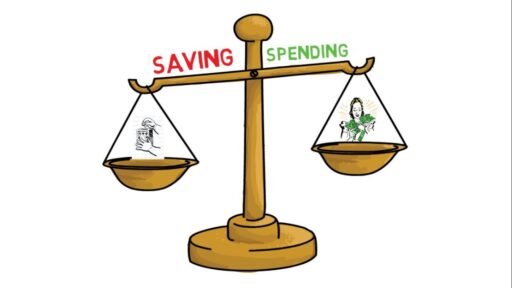
Unstable income budgeting is one of the biggest challenges for freelancers and people with irregular income. When your earnings change every month, it becomes difficult to plan your finances, control spending, and build consistent savings. However, learning how to balance saving and spending with unstable income is completely possible if you use the right strategy.
Why Unstable Income Feels So Hard to Manage
Managing irregular income is challenging because your expenses are fixed, but your income is not. Rent, bills, and food costs don’t change just because you earned less this month. As a result, many people either overspend during high-income months or panic during low-income months.
Additionally, traditional budgeting advice often assumes you have a stable monthly paycheck. That’s why many budgeting methods fail for freelancers and people with unpredictable income streams.
To succeed, you need to think differently. Instead of forcing a fixed system, you should build a flexible one that adapts to your income.
For a deeper understanding of budgeting fundamentals, you can check resources from Investopedia which explains financial concepts in a simple way.
With a clear unstable income budgeting system, you can manage both saving and spending effectively.
Step 1: Know Your Minimum Survival Budget
The first step is to calculate the minimum amount of money you need each month to survive. This includes only essential expenses such as rent, groceries, utilities, and transportation.
For example, if your basic monthly expenses total $1,500, then this is your survival number. Every month, your first financial goal is to cover this amount.
Knowing this number gives you clarity and removes uncertainty. Even during low-income months, you’ll know exactly what you need to stay stable.
How to Budget With Irregular Income (Freelancers Guide 2026)
Step 2: Use Income-Based Budgeting
Instead of having one fixed budget, divide your financial plan into three scenarios:
During low-income months, focus only on essentials. Avoid unnecessary spending and pause saving if needed.
During average months, cover essentials, save a small portion, and allow limited spending.
During high-income months, increase your savings rate, pay off debt, and invest in your future.
How to Save Money During Low-Income Months (2026 Guide
Step 3: Pay Yourself First (Reverse Budgeting)
One of the most effective ways to balance saving and spending is to save first, not last. This method is known as reverse budgeting.
When you receive income, immediately set aside a percentage for savings. Then, use the remaining money for expenses.
For example, if you earn $2,000, you might save $400 and spend $1,600. This guarantees that saving becomes consistent, even if your income is unpredictable.
Step 4: Build a Financial Buffer
Before focusing on large savings or investments, create a buffer fund. This is a small safety net equal to one or two months of expenses.
A buffer fund helps you handle low-income months without stress. It prevents you from using credit cards or going into debt when your earnings drop.
For official financial advice, you can refer to Consumer Financial Protection Bureau which provides practical saving strategies.
Step 5: Control Lifestyle Inflation
When your income increases, it’s tempting to spend more. However, this is one of the biggest financial mistakes.
Instead of upgrading your lifestyle immediately, increase your savings rate first. Keep your expenses stable and reward yourself in moderation.
Best Free Budgeting Apps for Beginners 2026
In the end, unstable income budgeting is about flexibility, discipline, and smart financial decisions.
Step 6: Separate Your Money
Keeping all your money in one account can lead to overspending. Instead, divide your money into separate accounts for different purposes.
For example, use one account for bills, another for daily spending, and a third for savings. This system makes it easier to manage your cash flow and avoid confusion.
Step 7: Understand Your Income Patterns
Even if your income is irregular, it still follows patterns over time. Track your earnings for a few months and identify your lowest, average, and highest income levels.
Always plan your expenses based on your lowest income month, not your highest. This keeps you financially safe and prevents risky decisions.
Step 8: Use Flexible Saving Percentages
Instead of saving a fixed amount every month, use percentages that adjust based on your income.
For example, you might save 10% during low-income months, 20% during average months, and up to 40% during high-income months.
This approach keeps your saving habit consistent without putting pressure on your finances.
Common Mistakes to Avoid
Many people struggle because they make simple but costly mistakes. One of the biggest mistakes is spending money based on expected future income. If that income doesn’t come, it creates financial stress.
Another common mistake is ignoring low-income months and not preparing for them. Without a buffer, even a small drop in income can cause serious problems.
Finally, relying on a fixed budget instead of a flexible one often leads to failure when income is unpredictable.
The Mindset You Need
Balancing saving and spending with unstable income is not just about numbers—it’s about mindset.
Instead of seeing irregular income as a disadvantage, see it as flexibility. You have the opportunity to earn more during good months and optimize your savings strategy.
In the end, unstable income budgeting is all about flexibility, discipline, and making smarter financial decisions over time.
Final Thoughts
Learning how to balance saving and spending with unstable income takes time, but it’s completely possible. The key is to stay flexible, prioritize saving, and prepare for low-income periods.
Start by understanding your minimum expenses, build a buffer, and use a percentage-based saving strategy. Over time, these habits will give you control, confidence, and financial peace of mind.