
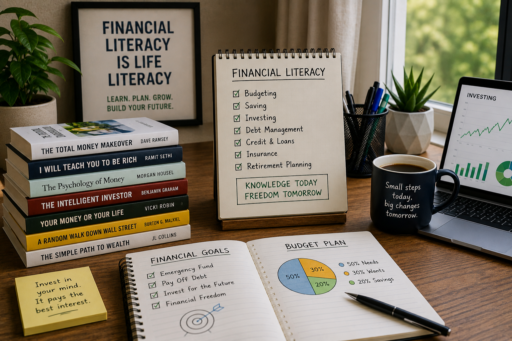
Financial literacy is one of the most valuable life skills, yet many people reach adulthood without receiving formal education about money. Schools often teach mathematics, science, and history, but they rarely explain how to create a budget, build savings, invest for the future, or avoid unnecessary debt. As a result, millions of people learn about personal finance only after making expensive financial mistakes.
Learning how to build financial literacy from scratch does not require a degree in finance or years of experience. It begins with understanding a few essential concepts and gradually building knowledge through consistent learning and practical experience. Every small lesson you learn today can improve the financial decisions you make for years to come.
Financial literacy is not about becoming wealthy overnight. Instead, it helps you understand how money works, how to manage it responsibly, and how to create long-term financial stability. Whether you are just starting your financial journey or looking to strengthen your existing knowledge, building a strong financial foundation can help you make better decisions with greater confidence.
In this guide, you’ll learn the key principles of financial literacy, practical ways to improve your knowledge, and habits that can help you build lasting financial confidence.
What Is Financial Literacy?
Financial literacy is the ability to understand and effectively manage your personal finances.
It includes knowledge about:
- Budgeting
- Saving
- Investing
- Credit
- Debt
- Insurance
- Taxes
- Retirement planning
The goal is not simply knowing financial terms but using that knowledge to make informed decisions throughout your life.
Learning how to build financial literacy from scratch begins with understanding these core concepts one step at a time.
Why Financial Literacy Matters
Every financial decision affects your future.
Whether you’re:
- Buying a car
- Using a credit card
- Applying for a loan
- Saving for retirement
- Investing your money
financial knowledge helps you evaluate options more carefully.
Financial literacy can help you:
- Avoid unnecessary debt.
- Build savings.
- Reduce financial stress.
- Make better investment decisions.
- Plan for emergencies.
- Achieve long-term financial goals.
Small improvements in financial knowledge often produce lifelong benefits.
Start With Budgeting
Budgeting is one of the first skills every beginner should learn.
A simple budget allows you to:
- Track income.
- Monitor expenses.
- Identify unnecessary spending.
- Increase savings.
- Plan future purchases.
Without understanding where your money goes, improving your financial situation becomes much more difficult.
Learn the Difference Between Assets and Liabilities
Many beginners focus only on income.
However, understanding assets and liabilities provides a much clearer picture of financial health.
Examples of assets include:
- Savings
- Investments
- Real estate
- Retirement accounts
Examples of liabilities include:
- Credit card balances
- Personal loans
- Car loans
- Mortgages
Growing assets while managing liabilities is one of the foundations of long-term wealth.
Build an Emergency Fund
Unexpected expenses eventually happen.
Medical bills, car repairs, job changes, or home maintenance can create financial pressure without preparation.
An emergency fund helps you:
- Reduce stress.
- Avoid unnecessary debt.
- Protect long-term investments.
- Maintain financial stability.
Many financial experts recommend gradually building several months of essential living expenses.
Understand Saving Before Investing
Investing is important, but saving usually comes first.
Before investing, focus on:
- Paying high-interest debt.
- Building emergency savings.
- Creating financial stability.
- Developing consistent saving habits.
Strong financial foundations make investing much less stressful later.
Learn Basic Investing Principles
Investing does not need to be complicated.
Every beginner should understand concepts such as:
- Compound growth.
- Diversification.
- Risk and return.
- Long-term investing.
- Consistency.
These principles appear repeatedly because they remain valuable regardless of market conditions.
Understand Credit Responsibly
Credit can become either a useful financial tool or a significant financial burden.
Learning about:
- Credit scores.
- Interest rates.
- Responsible borrowing.
- Credit utilization.
- Timely payments.
helps prevent expensive mistakes while improving long-term financial opportunities.
Continue Learning Regularly
Financial education should become an ongoing habit.
You can continue learning through:
- Books.
- Podcasts.
- Trusted financial websites.
- Educational videos.
- Investment courses.
Even reading for a few minutes each day gradually improves your financial confidence.
Many people strengthen this habit by exploring Best Personal Finance Books Worth Reading, gaining practical advice from experienced financial authors and investors.
Practice What You Learn
Knowledge becomes valuable only when applied.
For example:
For budgeting, create your first monthly budget and track your spending consistently.
When exploring investing, take time to research different investment options before committing your money.
To strengthen your saving habits, automate monthly contributions so saving becomes part of your regular financial routine.
Taking small actions consistently creates meaningful long-term progress.
Avoid Financial Information Overload
The internet contains an endless amount of financial advice.
Trying to learn everything at once often creates confusion.
Instead:
- Master one topic.
- Apply what you’ve learned.
- Move to the next subject.
This gradual approach makes learning much more manageable while improving long-term understanding.
Build Long-Term Financial Habits
Financial literacy is supported by consistent habits rather than occasional effort.
Examples include:
- Tracking expenses.
- Saving regularly.
- Reviewing investments.
- Reading financial books.
- Updating financial goals.
These habits strengthen your knowledge while improving your financial future.
Many lifelong learners combine these practices with Best Long-Term Investing Habits, allowing education and practical investing experience to grow together over time.
Learn From Your Financial Decisions
Every financial decision teaches an important lesson.
Instead of viewing mistakes as failures, treat them as opportunities to improve your financial knowledge.
Ask yourself:
- What worked well?
- What could I improve?
- Which decision saved money?
- Which expense was unnecessary?
Reflecting on your experiences helps strengthen your financial judgment over time.
Learning how to build financial literacy from scratch becomes much easier when every decision contributes to your understanding.
Set Clear Financial Goals
Financial education becomes much more meaningful when you know what you’re working toward.
Examples of goals include:
- Building an emergency fund.
- Paying off debt.
- Saving for a home.
- Investing for retirement.
- Increasing monthly savings.
- Achieving financial independence.
Clear goals provide motivation while helping you prioritize financial decisions more effectively.
Understand the Power of Compound Growth
One of the most important concepts in personal finance is compound growth.
When investments generate returns that are reinvested over many years, growth can accelerate significantly.
This is why many financial experts encourage:
- Starting early.
- Investing consistently.
- Remaining patient.
- Avoiding unnecessary withdrawals.
Understanding compound growth changes the way many people think about long-term wealth.
Develop Critical Thinking
Not every piece of financial advice is suitable for every person.
Whenever you encounter financial recommendations, ask yourself:
- Is the source trustworthy?
- Does this fit my financial goals?
- What risks are involved?
- Is the advice based on facts or opinions?
Critical thinking protects you from poor financial decisions and unrealistic promises.
Learn Basic Financial Terminology
Financial conversations become much easier when you understand common terms.
Examples include:
- Net worth.
- Cash flow.
- Inflation.
- Interest.
- Dividend.
- Index fund.
- Asset allocation.
- Liquidity.
Learning a few new terms each week gradually builds confidence and improves your understanding of personal finance.
Review Your Finances Regularly
Financial literacy is strengthened through regular review.
Each month, consider reviewing:
- Income.
- Expenses.
- Savings.
- Investments.
- Financial goals.
- Debt balances.
Small monthly reviews help you stay aware of your financial progress while identifying opportunities for improvement.
Learn From Trusted Sources
Financial education should come from reliable information.
Good sources include:
- Government financial education websites.
- Well-respected finance books.
- Educational investment platforms.
- Certified financial professionals.
- University learning resources.
Building knowledge from trustworthy sources helps you avoid misinformation and make more confident financial decisions.
Common Financial Literacy Mistakes
Many beginners unintentionally slow their progress by making avoidable mistakes.
Common examples include:
- Ignoring budgeting.
- Spending without tracking expenses.
- Delaying saving.
- Investing without research.
- Chasing quick wealth.
- Never reviewing financial goals.
- Depending entirely on social media advice.
Recognizing these habits makes it easier to build stronger financial foundations.
Continue Expanding Your Knowledge
Financial literacy is not something you complete once.
As your income, responsibilities, and goals change, continue learning about topics such as:
- Retirement planning.
- Tax efficiency.
- Insurance.
- Estate planning.
- Real estate investing.
- Business finance.
Continuous learning helps your financial knowledge grow alongside your life.
Many readers expand these skills by studying How to Calculate Investment Growth, making it easier to understand how consistent saving and investing contribute to long-term financial success.
Focus on Progress Instead of Perfection
Many people postpone financial education because they believe they need to understand everything before taking action.
Fortunately, meaningful progress comes from small, consistent improvements.
Start by:
- Reading one finance book.
- Creating one budget.
- Saving a small amount each month.
- Learning one new financial concept every week.
Over time, these small actions build both knowledge and confidence.
Final Thoughts
Learning how to build financial literacy from scratch is one of the most valuable investments you can make in yourself. Financial knowledge helps you understand how money works, make better decisions, avoid costly mistakes, and create long-term financial stability.
Begin with the fundamentals, including budgeting, saving, investing, and responsible credit management. Apply what you learn through small daily actions, continue expanding your knowledge, and remain patient as your financial skills develop over time.
Remember that financial literacy is not about becoming an expert overnight. It is about consistently improving your understanding and making smarter financial decisions year after year. Every lesson you learn today can help create a stronger financial future tomorrow.
Many individuals also strengthen their financial education by combining these principles with How to Grow Your Net Worth Over Time and Best Wealth-Building Habits That Actually Work, creating a practical roadmap toward lasting financial confidence and financial independence.
For additional educational guidance on budgeting, saving, investing, and financial planning, you can naturally link to Consumer Financial Protection Bureau using the anchor text personal finance learning resources in the section discussing trusted educational sources.