
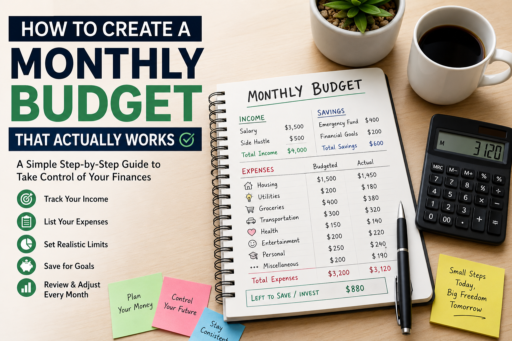
Creating a budget is one of the most effective ways to improve your financial situation. Unfortunately, many people create budgets that look good on paper but fail in real life. The problem is not budgeting itself—it’s using unrealistic plans that are difficult to maintain. Learning How to Create a Monthly Budget That Actually Works can help you gain control of your finances, reduce financial stress, increase savings, and make smarter spending decisions.
In 2026, managing money has become more challenging due to rising living expenses, subscription services, online shopping, and digital payments. Without a clear financial plan, it’s easy to overspend and lose track of where your money goes each month.
The good news is that creating an effective monthly budget doesn’t require complicated spreadsheets or advanced financial knowledge. Instead, it requires a simple system that matches your income, lifestyle, and financial goals.
In this guide, you’ll learn how to build a practical monthly budget that you can actually follow long term.
Why Most Budgets Fail
Before building a successful budget, it’s important to understand why many budgets fail.
Common reasons include:
- Setting unrealistic spending limits
- Ignoring unexpected expenses
- Not tracking spending regularly
- Making budgets too complicated
- Failing to adjust for life changes
An effective budget should support your life, not make it harder.
Benefits of Having a Monthly Budget
People who maintain a budget often experience significant financial improvements.
Benefits include:
- Better spending control
- Increased savings
- Reduced financial stress
- Improved financial confidence
- Faster progress toward goals
- Better preparation for emergencies
A budget provides clarity and direction for every dollar you earn.
Step 1: Calculate Your Monthly Income
The first step in learning How to Create a Monthly Budget That Actually Works is understanding exactly how much money you bring in each month.
Your income may include:
- Salary
- Freelance work
- Side hustles
- Investment income
- Other income sources
If your income varies, calculate an average based on several recent months.
Step 2: Track Your Expenses
Many people underestimate how much they spend.
Before creating spending limits, track expenses for at least one month.
Common categories include:
- Housing
- Utilities
- Transportation
- Food
- Entertainment
- Subscriptions
- Savings
This information provides a realistic picture of your financial habits.
Step 3: Separate Needs From Wants
A successful budget distinguishes between essential expenses and discretionary spending.
Needs
- Rent or mortgage
- Utilities
- Groceries
- Transportation
- Insurance
Wants
- Streaming services
- Dining out
- Entertainment
- Hobbies
- Luxury purchases
This distinction helps prioritize spending during difficult financial periods.
Step 4: Choose a Budgeting Method
There are several effective budgeting systems available.
Popular options include:
- 50/30/20 budgeting
- Zero-based budgeting
- Cash envelope budgeting
- Pay-yourself-first budgeting
If you’re still exploring budgeting approaches, you may also enjoy our guide on Best Budgeting Methods for Beginners in 2026.
The best system is the one you can consistently follow.
Step 5: Set Realistic Spending Limits
One of the biggest budgeting mistakes is setting limits that are too restrictive.
For example, reducing restaurant spending from $300 per month to $20 per month may not be sustainable.
Instead, make gradual adjustments that fit your lifestyle.
Small improvements maintained consistently often produce better results than extreme restrictions.
Step 6: Create Savings Goals
A monthly budget should not focus solely on expenses.
Savings should be treated as a priority category.
Examples include:
- Emergency fund
- Vacation fund
- Home purchase
- Investments
- Retirement savings
Including savings within your budget increases the likelihood of achieving long-term financial goals.
The Importance of Paying Yourself First
Many successful savers follow a simple principle: pay yourself first.
This means transferring money into savings immediately after receiving income.
Instead of saving whatever remains at the end of the month, savings become a planned financial priority.
This strategy often produces significantly better results.
How to Handle Irregular Expenses
Many budgets fail because people ignore expenses that do not occur every month.
Examples include:
- Car repairs
- Holiday spending
- Insurance renewals
- Medical expenses
- Home maintenance
Setting aside small amounts monthly can help prevent financial surprises.
Why Simplicity Matters
Complicated budgets often become difficult to maintain.
The most successful budgets are usually simple enough to understand at a glance.
Focus on major categories and meaningful spending decisions rather than tracking every penny obsessively.
Consistency is far more important than perfection.
If you’re looking for additional money management strategies, you may also enjoy our guide on Manage Multiple Debts Without Stress.
Review Your Budget Every Month
Creating a budget is only the beginning. To make it successful, you must review it regularly.
A monthly review helps you:
- Identify overspending
- Adjust spending categories
- Track savings progress
- Set new financial goals
- Improve future budgeting decisions
Even a simple 15-minute review at the end of each month can significantly improve your financial management.
How Budgeting Apps Can Help
Technology has made budgeting easier than ever.
Modern budgeting apps can automatically track expenses, categorize transactions, and monitor spending habits.
Popular budgeting app features include:
- Automatic expense tracking
- Savings goal monitoring
- Budget alerts
- Spending reports
- Financial dashboards
Using digital tools can reduce the effort required to maintain a budget consistently.
Creating a Family Budget
Families often face additional budgeting challenges because multiple people influence spending decisions.
A family budget should include:
- Housing costs
- Utilities
- Groceries
- Transportation
- Education expenses
- Entertainment
- Savings goals
Open communication is essential for successful family budgeting.
If you’re managing finances for a household, you may also enjoy our guide on Best Budgeting Tools for Families.
How to Reduce Monthly Expenses
Many people improve their financial situation simply by reducing unnecessary expenses.
Examples include:
- Canceling unused subscriptions
- Reducing impulse purchases
- Planning meals in advance
- Shopping with a list
- Comparing service providers
Small savings can add up significantly over time.
Common Budgeting Mistakes to Avoid
Understanding How to Create a Monthly Budget That Actually Works also means avoiding common mistakes.
Some of the most frequent budgeting errors include:
- Ignoring small expenses
- Creating unrealistic budgets
- Not reviewing spending
- Forgetting irregular expenses
- Giving up after setbacks
Budgeting is a long-term process that improves with practice.
What to Do When You Overspend
Overspending occasionally is normal.
The important thing is how you respond.
Instead of abandoning your budget completely:
- Identify the cause
- Adjust categories if needed
- Reduce spending elsewhere
- Learn from the experience
Financial progress is rarely perfect, and occasional mistakes are part of the learning process.
Budgeting With Irregular Income
Freelancers, contractors, and self-employed individuals often experience fluctuating income.
In these situations:
- Use average monthly income estimates
- Build a larger emergency fund
- Prioritize essential expenses
- Save during high-income months
A flexible budgeting system can provide greater financial stability.
How Budgeting Supports Financial Goals
A budget is more than a spending plan.
It is a tool that helps achieve financial goals faster.
Examples include:
- Saving for a house
- Paying off debt
- Building investments
- Creating emergency savings
- Preparing for retirement
Without a budget, these goals often take longer to achieve.
The Relationship Between Budgeting and Financial Freedom
Some people believe budgeting reduces freedom.
In reality, budgeting often creates more freedom by reducing financial uncertainty.
When you know exactly where your money is going, financial decisions become easier and less stressful.
This confidence can improve many aspects of personal finance.
How to Stay Motivated
Motivation often decreases after the first few weeks.
To stay committed:
- Track progress regularly
- Celebrate small wins
- Review financial goals
- Focus on long-term benefits
Consistency over time is what produces meaningful financial results.
Learning From Your Spending Patterns
Your spending habits reveal valuable information about your priorities.
By reviewing transactions regularly, you can identify:
- Areas of overspending
- Recurring unnecessary expenses
- Opportunities to save
- Financial habits that need improvement
This awareness helps make smarter financial decisions moving forward.
Using Trusted Financial Resources
People who want to improve their budgeting skills can learn from trusted financial education organizations. The Consumer Financial Protection Bureau provides helpful resources on budgeting, saving, and money management.
Reliable financial information can help you build stronger long-term habits.
Why Budgeting Is a Lifelong Skill
Financial circumstances change throughout life.
You may experience:
- Career changes
- Marriage
- Children
- Home purchases
- Retirement planning
A flexible budgeting system can adapt to each stage of life while helping maintain financial stability.
Final Thoughts
Learning How to Create a Monthly Budget That Actually Works is one of the most valuable financial skills you can develop.
A successful budget helps you understand your income, control spending, build savings, and achieve long-term financial goals.
The key is creating a realistic plan that fits your lifestyle and reviewing it consistently. Whether you’re budgeting for yourself or your family, small improvements made month after month can lead to significant financial progress.
Start simple, stay consistent, and remember that budgeting is not about restriction—it’s about giving your money a purpose and creating a stronger financial future.