
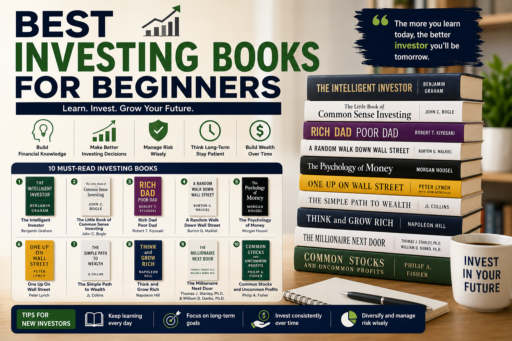
Investing can seem overwhelming when you are first getting started. Fortunately, some of the world’s best investors and financial experts have shared their knowledge through books that simplify complex concepts and teach timeless investing principles. Reading the Investing Books for Beginners can help new investors build confidence, avoid common mistakes, and develop a strong foundation for long-term financial success.
While markets, technologies, and investment platforms continue to evolve, many investing lessons remain unchanged. Topics such as diversification, patience, compound growth, and risk management are as important today as they were decades ago.
In 2026, beginner investors have access to countless online resources, but investing books still provide some of the most comprehensive and valuable financial education available.
The concept of Investing Books for Beginners focuses on financial education, investing fundamentals, wealth building, and long-term financial planning.
Why Investing Books Are Valuable
Investing books provide structured learning that helps investors understand important financial concepts.
Benefits include:
- Improved financial knowledge
- Better decision-making
- Greater investing confidence
- Long-term perspective
- Reduced investing mistakes
Strong financial education often leads to stronger financial outcomes.
Book #1: The Intelligent Investor
Often considered one of the most influential investing books ever written, this classic focuses on value investing, risk management, and long-term thinking.
Key lessons include:
- Investor discipline
- Margin of safety
- Emotional control
- Long-term investing
Many successful investors continue to recommend this book today.
Book #2: The Little Book of Common Sense Investing
This book explains the benefits of low-cost index fund investing and long-term portfolio management.
Topics include:
- Index funds
- Diversification
- Investment costs
- Long-term wealth building
It is often recommended for beginner investors seeking a simple investing strategy.
Book #3: Rich Dad Poor Dad
This popular personal finance book focuses on financial education, wealth building, and understanding the difference between assets and liabilities.
Many beginners find it useful for developing a wealth-building mindset.
Book #4: A Random Walk Down Wall Street
This book introduces readers to investing principles, market behavior, diversification, and portfolio construction.
It provides valuable insights into long-term investing and financial planning.
Book #5: The Psychology of Money
One of the most important lessons for investors is understanding behavior.
The Investing Books for Beginners often focus not only on investing strategies but also on how emotions influence financial decisions.
This book explores financial behavior, decision-making, patience, and long-term wealth creation.
Book #6: One Up On Wall Street
This book encourages investors to observe businesses, products, and trends they encounter in everyday life.
It emphasizes practical investing knowledge and independent thinking.
Book #7: The Simple Path to Wealth
This beginner-friendly book focuses on:
- Financial independence
- Long-term investing
- Index funds
- Wealth building
Its straightforward approach makes it popular among new investors.
Book #8: Think and Grow Rich
Although not strictly an investing book, it focuses on mindset, goal setting, discipline, and personal achievement.
Many investors appreciate its lessons on persistence and success.
Book #9: The Millionaire Next Door
This book examines the habits and behaviors commonly found among financially successful individuals.
It highlights the importance of discipline, saving, and living below your means.
Book #10: Common Stocks and Uncommon Profits
This classic investing book focuses on evaluating businesses and identifying companies with strong long-term growth potential.
Key concepts include:
- Business quality
- Competitive advantages
- Long-term growth
- Investment research
Many investors consider it an important resource for understanding stock selection.
Common Lessons Found in Great Investing Books
Although each book offers unique perspectives, many share similar investing principles.
Common lessons include:
- Invest for the long term
- Control emotions
- Diversify investments
- Keep costs low
- Continue learning
The Investing Books for Beginners often reinforce these timeless investing concepts.
Why Financial Education Matters
Investing without knowledge can increase the likelihood of mistakes.
Financial education helps investors:
- Understand risk
- Build confidence
- Make informed decisions
- Create effective investment plans
Continuous learning supports long-term financial success.
Focus on Principles Rather Than Predictions
Many successful investing books focus on principles rather than short-term market forecasts.
Examples include:
- Patience
- Discipline
- Diversification
- Long-term thinking
These principles often remain relevant regardless of market conditions.
Build a Personal Investing Library
Creating a collection of quality investing books can provide long-term educational value.
Investors may revisit these resources as their knowledge and experience grow.
The Investing Books for Beginners often become useful references throughout an investor’s journey.
Combine Reading With Practical Experience
Reading provides valuable knowledge, but practical experience also plays an important role.
Investors can apply lessons by:
- Building a portfolio
- Tracking investments
- Setting financial goals
- Reviewing progress regularly
Combining education and experience often produces the strongest results.
Continue Learning Throughout Life
Financial markets, technologies, and investment opportunities evolve over time.
Investors who continue learning often improve their understanding of:
- Risk management
- Portfolio construction
- Asset allocation
- Financial planning
Lifelong learning remains one of the most valuable investing habits.
Use Trusted Financial Resources
Investors interested in expanding their financial knowledge can benefit from trusted educational resources. The Investor.gov website provides practical guidance on investing, diversification, risk management, and long-term financial planning.
Reliable financial education supports stronger investment decisions and improved financial outcomes.
Additional Resources for Investors
To strengthen your investing knowledge, consider reading Start Investing in Your 20s, Long-Term Investing Habits, and Compare Different Investment Accounts.
These resources provide practical strategies that complement the investing lessons discussed in this guide.
The Benefits of Reading Investing Books
Learning from the Investing Books for Beginners can provide:
- Greater investing confidence
- Improved financial knowledge
- Better decision-making
- Reduced investing mistakes
- Stronger long-term financial outcomes
Books remain one of the most affordable and valuable investing resources available.
Final Thoughts
The Investing Books for Beginners demonstrate that successful investing is built on knowledge, discipline, patience, and continuous learning.
By studying timeless investing principles and applying them consistently, investors can improve their chances of achieving long-term financial success.
Remember that every great investor started as a beginner, and learning from quality books can help accelerate your financial education journey.