
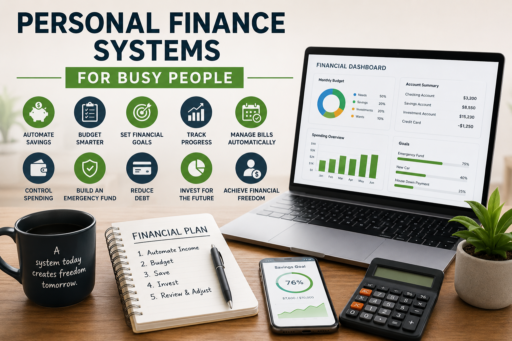
Managing personal finances can be difficult when life becomes busy. Work responsibilities, family commitments, daily tasks, and unexpected challenges often leave little time for budgeting, saving, investing, and financial planning. Fortunately, the Personal Finance Systems for Busy People can help simplify money management while reducing stress and improving financial outcomes.
A personal finance system is a structured approach to managing money. Instead of making financial decisions randomly, a system creates routines and processes that help keep finances organized and on track.
In 2026, automation, budgeting tools, and financial planning apps make it easier than ever to manage money efficiently. However, having a simple system remains more important than having complicated financial strategies.
The Personal Finance Systems for Busy People focus on automation, organization, and consistency.
Why Financial Systems Matter
Financial systems reduce the need for constant decision-making.
Benefits include:
- Less financial stress
- Better organization
- Improved savings habits
- Greater financial awareness
- More consistent progress toward goals
Strong systems help busy individuals stay financially organized even when schedules become demanding.
System #1: The Automated Savings System
One of the most effective Personal Finance Systems for Busy People is automating savings contributions.
Automatic transfers can help:
- Build emergency funds
- Increase savings consistency
- Reduce spending temptation
- Support long-term goals
Automation removes much of the effort required to save money regularly.
System #2: The Monthly Budget Review System
Rather than tracking finances every day, many busy people benefit from a monthly review process.
Review:
- Income
- Expenses
- Savings progress
- Debt balances
- Financial goals
A monthly review often provides sufficient oversight without becoming overwhelming.
System #3: The Pay Yourself First System
This system prioritizes saving before spending.
Instead of saving what remains at the end of the month, savings contributions occur immediately after income is received.
People who use the Personal Finance Systems for Busy People often prioritize saving as a fixed financial obligation.
System #4: The Cash Flow Management System
Cash flow refers to the movement of money into and out of your finances.
A cash flow system helps:
- Prevent overspending
- Improve budgeting
- Support financial goals
- Reduce financial surprises
Positive cash flow creates greater financial flexibility.
System #5: The Financial Dashboard System
Many people use a simple dashboard to track important financial information in one place.
A dashboard may include:
- Account balances
- Savings goals
- Debt balances
- Investment accounts
- Monthly spending summaries
This approach improves financial visibility without requiring excessive effort.
System #6: The Automatic Bill Payment System
Automatic bill payments help reduce missed payments and financial stress.
This system can improve:
- Organization
- Payment consistency
- Financial reliability
- Time management
Automation simplifies routine financial responsibilities.
System #7: The Goal-Based Finance System
Financial goals provide direction and motivation.
Examples include:
- Emergency funds
- Home ownership
- Retirement planning
- Investment growth
- Financial independence
Goal-based systems help ensure financial decisions align with long-term priorities.
System #8: The Weekly Money Check-In
A short weekly review can help maintain awareness without requiring significant time.
A weekly check-in may include:
- Reviewing spending
- Checking account balances
- Monitoring financial goals
- Identifying upcoming expenses
Even 10–15 minutes per week can improve financial organization.
System #9: The Debt Reduction System
Busy individuals often benefit from structured debt repayment plans.
Focus on:
- High-interest debt
- Consistent payments
- Progress tracking
- Long-term debt elimination
A clear repayment strategy often improves motivation and results.
System #10: The Long-Term Wealth Building System
The best financial systems focus not only on current finances but also on future financial success.
Long-term wealth building often includes saving, investing, and maintaining strong financial habits over many years.
Common Financial Management Mistakes Busy People Make
Many people struggle with personal finances because they rely on memory instead of systems.
Common mistakes include:
- Missing bill payments
- Not tracking spending
- Saving inconsistently
- Ignoring financial goals
- Failing to review finances regularly
The Personal Finance Systems for Busy People help eliminate these problems by creating structure and consistency.
Use Automation Whenever Possible
Automation is one of the most powerful financial tools available.
Consider automating:
- Savings transfers
- Investment contributions
- Bill payments
- Debt payments
People who use the Personal Finance Systems for Busy People often automate repetitive financial tasks to save time and reduce mistakes.
Focus on Simplicity
Complicated financial systems often fail because they require too much effort to maintain.
A simple system should be:
- Easy to follow
- Easy to review
- Easy to maintain
- Aligned with financial goals
Simplicity often improves long-term consistency.
Create Financial Routines
Financial routines help transform good intentions into lasting habits.
Examples include:
- Weekly money reviews
- Monthly budget updates
- Quarterly financial checkups
- Annual goal reviews
The Personal Finance Systems for Busy People often rely on predictable routines that require minimal effort.
Track Financial Progress
Monitoring progress improves motivation and accountability.
Important metrics may include:
- Savings growth
- Debt reduction
- Investment performance
- Net worth growth
Tracking results helps identify what is working and what needs improvement.
Build Systems Around Financial Goals
Every financial system should support specific objectives.
Examples include:
- Emergency fund growth
- Retirement planning
- Debt elimination
- Home ownership goals
Goal-focused systems often produce better long-term results.
Reduce Financial Decision Fatigue
Busy individuals make countless decisions every day.
Strong financial systems reduce the number of financial decisions that must be made repeatedly.
The Personal Finance Systems for Busy People help conserve mental energy while improving financial consistency.
Prepare for Unexpected Expenses
Financial systems should include preparation for emergencies.
This may involve:
- Emergency savings
- Insurance coverage
- Cash reserves
- Contingency planning
Preparation improves financial resilience and reduces stress.
Use Trusted Financial Resources
Individuals interested in improving financial organization can benefit from trusted educational resources. The Consumer Financial Protection Bureau provides practical guidance on budgeting, saving, debt management, and financial planning.
Reliable financial education can help strengthen personal finance systems and improve long-term financial outcomes.
Additional Resources for Better Financial Organization
To strengthen your financial systems, consider reading Create a Long-Term Financial Plan, Save More Money Every Month, and Money Management Tips for Singles.
These resources provide practical strategies that complement the systems discussed in this guide.
The Benefits of Strong Financial Systems
Following the Personal Finance Systems for Busy People can provide:
- Greater financial organization
- Improved savings habits
- Reduced financial stress
- Better financial decision-making
- Long-term financial security
Strong systems help simplify financial management while supporting long-term success.
Final Thoughts
The Personal Finance Systems for Busy People can help individuals stay financially organized even with demanding schedules.
By automating financial tasks, creating simple routines, tracking progress, and focusing on long-term goals, you can build a financial system that saves time while improving financial results.
Remember that the best financial system is the one you can follow consistently. Simple, repeatable actions often produce the greatest long-term benefits.