
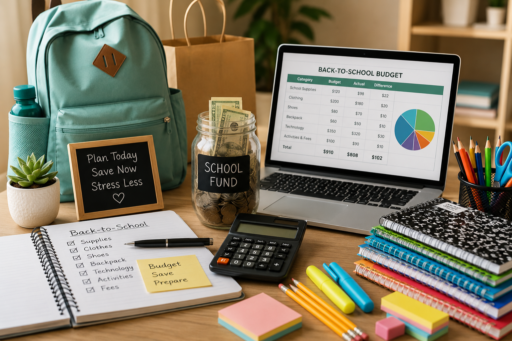
If you want to budget for back to school expenses, the key is to plan ahead and spread costs over time. School season often brings a long list of purchases, including supplies, clothing, technology, and activity fees. However, with a clear budget, these expenses become much more manageable.
Many families feel financially stressed when school starts because several costs arrive at once. Fortunately, a practical plan can help you prepare in advance, avoid overspending, and protect your monthly cash flow.
In this comprehensive guide, you will learn how to budget for back to school expenses, create sinking funds, prioritize purchases, and save money during the school season in 2026 and beyond.
To strengthen your overall family budget, you may also want to read Best Budget Categories for Families in 2026, Best Sinking Funds to Start in 2026, How to Cut Monthly Expenses Without Feeling Deprived (2026 Guide), and 50 Money Habits That Improve Your Finances in 2026.
Why Back-to-School Costs Feel Overwhelming
School expenses are often concentrated into a short period. As a result, families may face significant costs within just a few weeks.
According to the Consumer Financial Protection Bureau, planning for predictable seasonal expenses is an effective way to reduce financial stress.
Common Back-to-School Expenses
- School supplies
- Backpacks
- Clothing and shoes
- Laptops and calculators
- Lunch supplies
- Activity fees
- Transportation costs
- Tutoring and books
Step 1: Estimate Total Costs
List every anticipated expense and assign realistic amounts.
Step 2: Create a School Sinking Fund
Save small amounts throughout the year to cover future costs.
Step 3: Prioritize Essential Purchases
Buy required items first and delay optional purchases if needed.
Step 4: Set Spending Limits Per Child
Clear limits help maintain control and fairness.
Step 5: Reuse What You Already Own
Many supplies and clothing items can be used again.
Step 6: Compare Prices Early
Shopping in advance increases your chances of finding better deals.
Step 7: Watch for Seasonal Sales
Promotions can significantly reduce costs.
Step 8: Involve Your Children
Participation teaches valuable money habits.
Step 9: Avoid Last-Minute Shopping
Rushed purchases often lead to overspending.
Step 10: Track Actual Spending
Comparing estimates with reality improves next year’s planning.
How Sinking Funds Simplify School Costs
Saving gradually throughout the year turns large seasonal expenses into manageable monthly contributions.
How Families Can Save Money on Supplies
Bulk purchases, store brands, and reused materials can substantially lower costs.
How to Budget for Back to School Expenses on a Tight Budget
If your finances are stretched, you can still budget for back to school expenses by focusing on essential items, reusing supplies, and spreading purchases over several months.
How to Budget for Multiple Children
Families with more than one child benefit from setting category limits and tracking each child’s spending separately.
How to Handle Technology Costs
Laptops, calculators, and software should be planned well in advance, especially if they are required for school.
How to Avoid Overspending
Shopping with a detailed list and predetermined limits reduces impulse purchases.
Common Back-to-School Budgeting Mistakes
- Waiting until the last minute
- Ignoring small fees
- Buying unnecessary upgrades
- Failing to compare prices
- Not saving throughout the year
Sample Back-to-School Budget
| Category | Estimated Cost |
|---|---|
| School Supplies | $100 |
| Backpack | $60 |
| Clothing | $200 |
| Shoes | $100 |
| Technology | $300 |
| Activity Fees | $75 |
How Technology Supports Family Budgeting
Budgeting apps, spreadsheets, and automated savings make it easier to prepare for school expenses.
Protecting Your Financial Information
As you shop online, secure your accounts and payment methods.
For additional protection, read:
- Protect Your Online Payments From Fraud (2026 Guide)
- Manage Passwords Securely Without Forgetting Them (2026)
- Secure Your Files on Cloud Storage (Google Drive & More) 2026
30-Day School Budget Challenge
- Estimate all school costs.
- Create a sinking fund.
- Set spending limits.
- Compare prices.
- Reuse existing supplies.
- Track actual spending.
- Adjust next year’s plan.
Frequently Asked Questions
How can I budget for back to school expenses?
Create a sinking fund, estimate costs, and shop strategically throughout the year.
When should I start saving?
Ideally, begin saving several months in advance or contribute small amounts year-round.
How can families with multiple children stay on budget?
Set per-child spending limits and prioritize essential purchases.
Should I use credit cards?
Using cash or debit can help maintain tighter spending control.
What is the most effective strategy?
Planning early and spreading costs over time are the most powerful budgeting techniques.
Final Thoughts
Learning how to budget for back to school expenses helps families prepare confidently for one of the most predictable seasonal costs of the year.
By estimating expenses, saving gradually, comparing prices, and tracking actual spending, you can reduce stress and avoid overspending.
Remember that small monthly contributions can make large school costs far easier to manage.
Start planning early, involve your children, and refine your system each year.
Over time, these habits will strengthen your family budget and create greater financial stability in 2026 and beyond.