
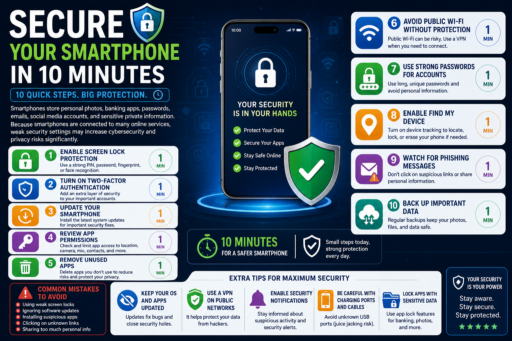
Smartphones store personal photos, banking apps, passwords, emails, social media accounts, and sensitive private information. Learning how to secure your smartphone in 10 minutes can help users reduce cybersecurity risks, improve mobile privacy, and better protect personal information from hacking attempts and unauthorized access.
Learning how to secure your smartphone in 10 minutes can help users improve online safety, reduce hacking risks, and protect personal information from cyber threats in 2026.
Many people use smartphones daily without realizing how vulnerable mobile devices may become when basic security settings are ignored.
In this beginner-friendly guide, you will learn:
- Why smartphone security matters
- Important mobile security settings
- How to improve online privacy
- Ways to reduce hacking risks
- How to secure apps and accounts
- Common smartphone security mistakes
- How to stay safer online in 2026
What Does How to Secure Your Smartphone in 10 Minutes Mean?
Learning how to secure your smartphone in 10 minutes means quickly improving important security settings that help protect mobile devices from hacking, scams, malware, and unauthorized access.
Smartphone security may help protect:
- Personal information
- Passwords
- Banking apps
- Photos and files
- Online accounts
Strong cybersecurity habits may significantly improve mobile safety.
Why How to Secure Your Smartphone in 10 Minutes Matters
Smartphones contain large amounts of personal and financial information.
Improving mobile security may help:
- Reduce hacking risks
- Protect online accounts
- Improve digital privacy
- Prevent unauthorized access
According to the Federal Trade Commission (FTC), cybersecurity awareness and safer digital habits help reduce online risks.
1. Enable Screen Lock Protection
Strong screen locks help prevent unauthorized access if smartphones become lost or stolen.
Recommended options include:
- PIN codes
- Fingerprint security
- Face recognition
- Strong passwords
Avoid simple passcodes such as 1234 or birth dates.
2. Turn On Two-Factor Authentication
Two-factor authentication adds extra account protection beyond passwords alone.
Even if passwords become exposed, 2FA may help prevent unauthorized access.
3. Update Your Smartphone Regularly
Software updates often include important security fixes and vulnerability patches.
Outdated devices may contain security weaknesses that hackers exploit.
4. Review App Permissions
Some apps request unnecessary access to:
- Location data
- Microphones
- Photos
- Contacts
- Camera access
Limiting unnecessary permissions may improve online privacy.
5. Remove Unused Apps
Unused apps may increase:
- Privacy risks
- Security vulnerabilities
- Background tracking
Removing unnecessary apps may improve smartphone security and performance.
6. Avoid Public Wi-Fi Without Protection
Public Wi-Fi networks may expose users to:
- Data interception
- Phishing attacks
- Malware risks
If you want stronger network security, read our guide on Secure Your Home Wi-Fi Network.
7. Use Strong Passwords for Accounts
Weak passwords increase cybersecurity risks significantly.
Strong passwords should:
- Be unique
- Contain mixed characters
- Avoid personal information
If you want stronger password protection, read our guide on Best Password Manager Features.
8. Enable Find My Device Features
Device tracking tools may help users:
- Locate lost phones
- Lock devices remotely
- Erase personal data
These features improve smartphone protection significantly.
9. Watch for Phishing Messages
Hackers often target smartphone users through:
- Fake text messages
- Scam emails
- Suspicious links
- Fake apps
10. Back Up Important Data
Regular backups help protect:
- Photos
- Files
- Contacts
- Important documents
Backups may reduce damage from device loss or malware attacks.
Common Smartphone Security Mistakes
1. Using Weak Screen Locks
Simple passwords increase unauthorized access risks.
2. Ignoring Updates
Outdated devices may contain vulnerabilities.
3. Installing Suspicious Apps
Unsafe apps may contain malware or spyware.
4. Ignoring App Permissions
Excessive permissions may reduce privacy.
5. Clicking Suspicious Links
Phishing scams commonly target smartphone users.
How Beginners Can Improve Smartphone Security
- Use strong passwords
- Enable 2FA
- Review app permissions
- Keep devices updated
- Avoid suspicious links
Simple cybersecurity habits may significantly improve smartphone safety.
Why Smartphone Security Matters More in 2026
Smartphones are connected to banking apps, social media accounts, cloud storage, and sensitive personal information.
Improving smartphone security may help reduce:
- Cybersecurity risks
- Identity theft
- Privacy exposure
- Unauthorized access
Cybersecurity awareness continues becoming increasingly important.
Related Articles
- What Is a Data Breach and What to Do
- Check if Your Email Was Hacked
- How to Secure Your Home Wi-Fi Network
Final Thoughts on How to Secure Your Smartphone in 10 Minutes
Learning how to secure your smartphone in 10 minutes can help users improve online safety, reduce cybersecurity risks, and better protect personal information.
You do not need advanced technical knowledge to improve mobile security.
Instead, focus on:
- Strong passwords
- Two-factor authentication
- Regular updates
- Privacy settings
- Cybersecurity awareness
Most importantly, remember that small security improvements may greatly improve smartphone safety over time.