
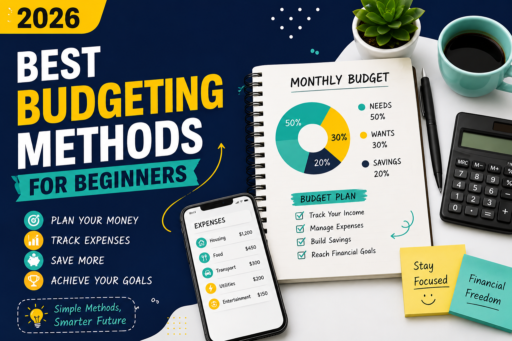
Managing money effectively is one of the most important life skills anyone can develop. Unfortunately, many people struggle with budgeting because they believe it is complicated, restrictive, or time-consuming. The truth is that budgeting is simply a plan for how you use your money. Learning the Best Budgeting Methods for Beginners can help you gain control over your finances, reduce stress, increase savings, and achieve long-term financial goals.
In 2026, budgeting has become more important than ever. Rising living costs, subscription services, online shopping, and digital payments make it easy to lose track of spending. Without a clear financial plan, many people find themselves living paycheck to paycheck despite earning a decent income.
The good news is that there is no single budgeting system that works for everyone. Different methods fit different personalities, lifestyles, and financial situations. In this guide, we’ll explore the most effective budgeting methods for beginners and help you determine which one fits your needs.
Why Budgeting Matters
Many people avoid budgeting because they assume it limits freedom. In reality, budgeting creates financial freedom by helping you understand where your money goes.
Benefits of budgeting include:
- Better spending control
- Reduced financial stress
- Improved savings habits
- Better financial decisions
- Clearer financial goals
- Greater confidence with money
Budgeting is not about restricting yourself. Instead, it helps ensure your money supports your priorities.
For additional budgeting and money management guidance, beginners can explore resources provided by the Consumer Financial Protection Bureau.
What Makes a Good Budgeting Method?
The best budgeting system is the one you can consistently follow.
A good budgeting method should:
- Be easy to understand
- Fit your lifestyle
- Support your goals
- Be sustainable long term
- Help track spending effectively
Consistency is far more important than perfection.
1. The 50/30/20 Budget Rule
Among the Best Budgeting Methods for Beginners, the 50/30/20 rule remains one of the most popular options.
This system divides after-tax income into three categories:
- 50% for needs
- 30% for wants
- 20% for savings and debt repayment
Needs include housing, groceries, transportation, utilities, and insurance. Wants include entertainment, dining out, hobbies, and non-essential purchases.
The remaining 20% is directed toward savings, investing, or paying down debt.
Advantages
- Easy to understand
- Simple calculations
- Flexible structure
- Suitable for most beginners
Disadvantages
- May not fit high-cost areas
- Limited detail for complex finances
2. Zero-Based Budgeting
Zero-based budgeting assigns every dollar a specific purpose.
At the beginning of each month, your income minus planned expenses should equal zero.
This does not mean spending everything. Instead, every dollar receives a job, including money allocated to savings and investments.
Example
- Income: $4,000
- Housing: $1,200
- Food: $500
- Transportation: $300
- Savings: $600
- Other categories: $1,400
Total planned spending equals total income.
Advantages
- Excellent spending awareness
- High level of control
- Reduces wasteful spending
Disadvantages
- Requires more effort
- Needs regular updates
3. The Pay Yourself First Method
This budgeting method focuses on savings before spending.
Instead of saving whatever remains at the end of the month, you automatically transfer money to savings first.
For example:
- Income arrives
- 20% goes to savings
- Remaining money covers expenses
This approach helps build savings consistently.
Advantages
- Builds savings quickly
- Simple system
- Easy automation
Disadvantages
- Less detailed spending control
4. The Cash Envelope System
The envelope system has existed for decades and remains effective today.
Under this method, money is divided into spending categories.
Examples include:
- Groceries
- Entertainment
- Dining out
- Transportation
Each category receives a fixed amount. Once the envelope is empty, spending stops until the next budgeting period.
Advantages
- Strong spending discipline
- Prevents overspending
- Simple concept
Disadvantages
- Less convenient in a digital world
- Cash handling required
Common Budgeting Mistakes Beginners Make
Many people fail with budgeting not because the method is wrong but because they make avoidable mistakes.
- Setting unrealistic limits
- Ignoring irregular expenses
- Not tracking spending
- Giving up after mistakes
- Creating overly complicated budgets
Budgeting is a skill that improves with practice.
How to Choose the Right Budgeting Method
The ideal budgeting method depends on your personality and goals.
- Prefer simplicity? Try 50/30/20.
- Want maximum control? Use zero-based budgeting.
- Focused on saving? Pay yourself first.
- Need spending discipline? Use envelopes.
The key is choosing a system you can maintain consistently.
If you’re looking for additional ways to improve your financial organization, you may also enjoy our guide on How to Create a Monthly Budget That Actually Works.
Using Budgeting Apps to Stay Consistent
One reason many people struggle with budgeting is consistency. Fortunately, modern budgeting apps make managing money easier than ever.
Budgeting applications can help users:
- Track expenses automatically
- Monitor account balances
- Set savings goals
- Categorize transactions
- Review spending patterns
Technology reduces much of the manual work traditionally associated with budgeting.
If you’re interested in budgeting software, you may also find our guide on Best Website Analytics Tools Compared useful.
Building an Emergency Fund Alongside Your Budget
Budgeting and emergency savings should work together.
An emergency fund provides protection against unexpected financial challenges such as:
- Medical expenses
- Car repairs
- Home maintenance
- Job loss
- Unexpected travel
Without emergency savings, even a small financial setback can disrupt a carefully planned budget.
Many financial experts recommend building an emergency fund that covers three to six months of essential expenses.
Setting Financial Goals
The Best Budgeting Methods for Beginners become far more effective when connected to specific financial goals.
Examples of financial goals include:
- Saving for a home
- Building an emergency fund
- Paying off debt
- Starting investments
- Funding education
- Preparing for retirement
Clear goals provide motivation and direction for budgeting decisions.
Short-Term vs Long-Term Financial Goals
Successful budgeting usually involves both short-term and long-term objectives.
Short-Term Goals
- Saving $1,000
- Reducing monthly expenses
- Paying off a small debt
Long-Term Goals
- Buying a home
- Building wealth
- Financial independence
- Retirement planning
Combining both types of goals helps maintain motivation while building long-term financial security.
How to Review Your Budget Every Month
A budget should not be created once and forgotten.
Monthly reviews help identify:
- Overspending categories
- Successful savings habits
- New financial priorities
- Areas needing improvement
Even small adjustments can produce significant improvements over time.
Adjusting Your Budget When Income Changes
Life circumstances change, and budgets should adapt accordingly.
You may experience:
- A salary increase
- A reduced income
- New expenses
- Family changes
- Relocation
Rather than abandoning your budget, adjust categories to reflect your new reality.
Flexibility is one of the keys to long-term budgeting success.
How Budgeting Reduces Financial Stress
Financial uncertainty often causes anxiety.
Many people worry about money because they do not know exactly where it goes each month.
A budget creates clarity.
When you understand your income, expenses, savings, and goals, financial decisions become easier and less stressful.
This increased confidence is one of the most valuable benefits of budgeting.
The Importance of Tracking Expenses
Even the best budget cannot succeed without expense tracking.
Tracking expenses helps identify spending patterns that may otherwise go unnoticed.
Common spending leaks include:
- Unused subscriptions
- Frequent dining out
- Impulse purchases
- Small daily expenses
Eliminating a few unnecessary expenses can free up significant money over the course of a year.
Creating Sustainable Budgeting Habits
One of the biggest mistakes beginners make is attempting dramatic financial changes too quickly.
Sustainable habits often work better than extreme restrictions.
Examples include:
- Tracking expenses weekly
- Saving automatically
- Reviewing finances monthly
- Planning purchases ahead of time
- Following spending limits consistently
Small habits repeated consistently often produce remarkable results.
Budgeting for Different Life Stages
Budgeting needs vary depending on life circumstances.
Students
Focus on controlling spending and avoiding unnecessary debt.
Young Professionals
Prioritize emergency savings and investment contributions.
Families
Balance household expenses, education costs, and long-term goals.
Pre-Retirees
Increase retirement contributions and strengthen financial security.
Understanding your current life stage can help you choose the most effective budgeting strategy.
Why Consistency Beats Perfection
Many beginners quit budgeting after making mistakes.
However, no budget is perfect.
Unexpected expenses and occasional overspending happen to everyone.
The goal is not perfection but progress.
Consistently following a reasonable budget usually produces better results than constantly switching between different systems.
Best Budgeting Method for Most Beginners
While every budgeting approach offers advantages, the 50/30/20 rule remains one of the easiest starting points for most people.
It provides structure without excessive complexity and helps balance spending, enjoyment, and savings.
As financial knowledge grows, individuals can transition to more detailed systems if necessary.
You may also enjoy our guide on How to Save Money During Low-Income Months to strengthen your overall financial plan.
Final Thoughts
Learning the Best Budgeting Methods for Beginners is one of the most important steps toward financial stability and long-term success.
Whether you choose the 50/30/20 rule, zero-based budgeting, the pay-yourself-first approach, or the cash envelope system, the most important factor is consistency.
A budget provides clarity, reduces stress, improves savings habits, and helps ensure your money supports your priorities.
Start with a simple method, review your progress regularly, and make adjustments as your financial situation evolves. Over time, budgeting can become one of the most powerful tools for building financial confidence and achieving your long-term goals.