
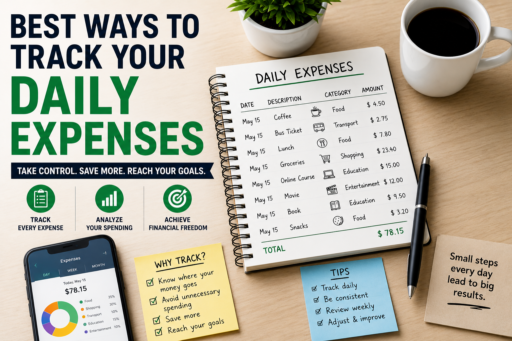
Managing money successfully starts with understanding where it goes. Unfortunately, many people know how much they earn each month but have little idea how much they spend each day. Small purchases may seem insignificant individually, yet they can add up to hundreds or even thousands of dollars over time. Learning the Best Ways to Track Your Daily Expenses can help you gain control of your finances, improve budgeting habits, increase savings, and make smarter financial decisions.
In 2026, tracking expenses has become easier than ever thanks to budgeting apps, banking tools, and digital payment records. However, many people still struggle because they do not have a consistent system.
The good news is that expense tracking does not need to be complicated. Whether you prefer mobile apps, spreadsheets, notebooks, or automated systems, there are effective solutions for every lifestyle.
This guide explores the best ways to track your daily expenses and build stronger money management habits.
Why Tracking Daily Expenses Matters
Expense tracking provides visibility into your financial behavior.
Without tracking, it’s easy to underestimate spending and overlook wasteful habits.
Benefits include:
- Better budgeting accuracy
- Improved savings habits
- Reduced overspending
- Greater financial awareness
- Smarter spending decisions
- Faster financial progress
Understanding where your money goes is the foundation of effective personal finance management.
Common Spending Leaks Most People Miss
Many daily expenses seem harmless until they are added together over an entire month.
Common examples include:
- Coffee purchases
- Food delivery fees
- Streaming subscriptions
- Impulse purchases
- Convenience store spending
- Online shopping extras
Tracking expenses helps reveal these hidden spending patterns.
Method 1: Use a Budgeting App
One of the Best Ways to Track Your Daily Expenses is using a budgeting application.
Modern budgeting apps can automatically categorize transactions, monitor spending habits, and generate financial reports.
Advantages
- Automatic tracking
- Real-time updates
- Spending alerts
- Visual reports
- Easy categorization
Disadvantages
- Learning curve for some users
- Premium features may require payment
For many beginners, budgeting apps offer the easiest path to consistent expense tracking.
Method 2: Use a Spreadsheet
Spreadsheets remain popular among people who want complete control over their financial records.
A spreadsheet allows you to track:
- Date
- Expense category
- Description
- Amount spent
- Monthly totals
While this approach requires more manual work, it provides excellent customization.
Method 3: Keep a Spending Journal
Some people prefer writing expenses manually.
A spending journal encourages greater awareness because each purchase must be recorded intentionally.
You can record:
- What you bought
- How much it cost
- Why you purchased it
- Whether it was necessary
This method often improves spending discipline.
Method 4: Review Bank Transactions Daily
Many banks now provide detailed transaction histories through mobile applications.
Reviewing transactions daily can help identify spending patterns quickly.
This approach works especially well for people who primarily use debit cards or digital payments.
Method 5: Track Cash Spending Separately
Cash transactions are often overlooked because they leave fewer digital records.
If you regularly use cash, consider keeping a separate record of:
- Food purchases
- Transportation
- Entertainment
- Miscellaneous expenses
Combining cash and digital spending records provides a more complete financial picture.
Create Spending Categories
Expense categories help organize financial information.
Popular categories include:
- Housing
- Utilities
- Transportation
- Food
- Healthcare
- Entertainment
- Savings
- Personal spending
Categorization makes financial analysis much easier.
How Expense Tracking Supports Budgeting
Tracking expenses and budgeting work together.
A budget creates a spending plan, while expense tracking measures actual behavior.
If you’re building a budget, you may also enjoy our guide on How to Create a Monthly Budget That Actually Works.
Together, these systems help improve financial control.
Why Consistency Is More Important Than Perfection
Many people quit tracking expenses because they miss a few days.
However, consistent tracking—even if imperfect—is more valuable than abandoning the process entirely.
The goal is building awareness, not achieving perfect records.
Using Expense Tracking to Save More Money
One of the biggest benefits of expense tracking is identifying opportunities to save.
When spending patterns become visible, unnecessary expenses become easier to eliminate.
Many people discover they can save significant amounts simply by reducing small recurring purchases.
If you’re trying to improve spending habits, you may also find our guide on Best Budgeting Tools for Families helpful.
Review Your Expenses Every Week
Tracking expenses becomes much more effective when combined with regular reviews.
A weekly review helps you:
- Identify spending trends
- Spot unnecessary purchases
- Adjust financial priorities
- Stay aligned with your budget
- Improve spending decisions
Even a short review session can provide valuable financial insights.
Perform a Monthly Expense Analysis
While daily tracking builds awareness, monthly reviews reveal larger patterns.
At the end of each month, examine:
- Total spending
- Category breakdowns
- Largest expenses
- Savings contributions
- Areas of overspending
This analysis helps improve future financial planning.
How Expense Tracking Helps Achieve Financial Goals
The Best Ways to Track Your Daily Expenses do more than record purchases.
They help connect daily financial decisions with long-term goals.
Examples include:
- Building an emergency fund
- Saving for a house
- Paying off debt
- Funding vacations
- Increasing investments
Tracking expenses creates awareness that supports better goal achievement.
Family Expense Tracking
Expense tracking becomes even more important for families.
Households often have multiple spending sources and financial responsibilities.
Tracking family expenses can help:
- Control household spending
- Improve communication
- Support family budgets
- Reduce financial surprises
- Increase savings opportunities
Many families benefit from sharing spending information openly and reviewing finances together.
If you’re managing family finances, you may also enjoy our guide on Best Budget Categories for Families.
Common Expense Tracking Mistakes
Many people make mistakes that reduce the effectiveness of expense tracking.
Common examples include:
- Tracking inconsistently
- Ignoring cash purchases
- Forgetting subscriptions
- Using too many categories
- Failing to review reports
A simple and consistent system usually produces the best results.
Tracking Small Purchases Matters
Some people only track major expenses.
However, small purchases often create the largest budgeting problems.
For example:
- Daily coffee
- Snacks
- Food delivery fees
- Impulse online purchases
Over time, these seemingly minor expenses can significantly impact savings goals.
How to Stay Motivated
Expense tracking can feel tedious at first.
To stay motivated:
- Set clear financial goals
- Review progress regularly
- Celebrate savings milestones
- Keep the process simple
Most people find tracking easier once they begin seeing measurable financial improvements.
Using Automation to Simplify Tracking
Automation has become one of the most effective ways to maintain expense records.
Many financial tools automatically:
- Import transactions
- Categorize purchases
- Generate reports
- Track spending limits
Automation reduces effort while improving consistency.
Understanding Spending Patterns
One of the greatest benefits of expense tracking is recognizing behavioral patterns.
You may discover:
- Certain days involve more spending
- Specific categories exceed expectations
- Emotional spending triggers
- Recurring financial habits
Understanding these patterns makes it easier to improve money management.
Expense Tracking and Financial Discipline
Financial discipline develops through awareness.
People who regularly monitor spending often become more intentional with money.
They are more likely to:
- Follow budgets
- Save consistently
- Avoid impulse purchases
- Reach financial goals faster
Expense tracking provides the foundation for these positive habits.
Learning From Financial Reports
Reports generated by budgeting apps or spreadsheets can reveal valuable insights.
For example, you may notice that dining out consumes a larger portion of your budget than expected.
This information allows you to make targeted adjustments rather than guessing where to cut spending.
Using Trusted Financial Resources
People interested in improving their budgeting and expense tracking skills can benefit from trusted educational resources. The Consumer Financial Protection Bureau provides practical guidance on budgeting, spending management, and financial planning.
Reliable information helps build stronger long-term financial habits.
The Long-Term Benefits of Tracking Expenses
Expense tracking is not just about controlling spending today.
Over time, it can help:
- Increase savings
- Reduce financial stress
- Improve budgeting accuracy
- Support investment goals
- Build financial confidence
These benefits compound over months and years.
Final Thoughts
Learning the Best Ways to Track Your Daily Expenses is one of the most effective steps toward better money management.
Whether you use budgeting apps, spreadsheets, journals, or banking tools, the key is consistency.
Tracking expenses helps you understand spending habits, improve budgeting accuracy, increase savings, and make smarter financial decisions.
Start with a simple system, review your spending regularly, and use the insights you gain to build stronger financial habits. Over time, daily expense tracking can become a powerful tool for achieving financial stability and long-term success.