
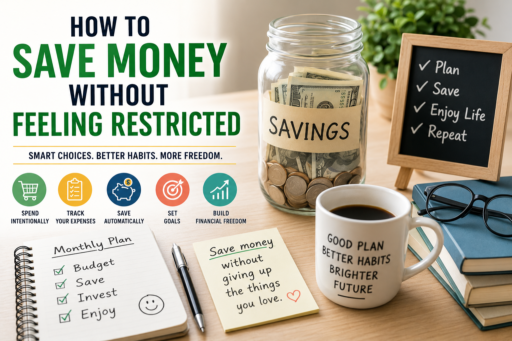
Many people believe that saving money requires extreme sacrifices, strict budgets, and giving up everything they enjoy. Unfortunately, this belief often causes people to avoid saving altogether. The truth is that successful saving does not require a miserable lifestyle. Learning How to Save Money Without Feeling Restricted can help you build financial security while still enjoying life.
In 2026, saving money has become more important than ever. Rising living costs, subscription services, online shopping, and lifestyle inflation can make it difficult to build savings consistently. However, sustainable saving strategies focus on balance rather than deprivation.
The goal is not to eliminate spending entirely. Instead, it is to spend intentionally while reducing waste and prioritizing what truly matters.
In this guide, you’ll discover practical ways to save money without feeling restricted or sacrificing your happiness.
Why Traditional Saving Advice Often Fails
Many financial plans fail because they rely on unrealistic restrictions.
Examples include:
- Never eating out
- Eliminating all entertainment
- Stopping every non-essential purchase
- Following extremely strict budgets
While these approaches may work temporarily, they often lead to frustration and burnout.
Sustainable financial success comes from habits you can maintain for years, not weeks.
Focus on Value Instead of Cost
One of the most effective ways to save money is evaluating purchases based on value rather than price alone.
Ask yourself:
- Will this improve my life?
- Will I still value this purchase next month?
- Is this worth the money spent?
Spending on things that genuinely matter often reduces wasteful purchases automatically.
Track Spending Before Cutting Expenses
Before trying to save more money, understand where your money currently goes.
Expense tracking helps identify:
- Unnecessary spending
- Subscription waste
- Impulse purchases
- Overspending categories
If you’re looking for practical tracking methods, you may also enjoy our guide on Best Ways to Track Your Daily Expenses.
Awareness often leads to savings without requiring major sacrifices.
Use the 24-Hour Purchase Rule
Impulse buying is one of the biggest obstacles to saving money.
The 24-hour rule helps reduce emotional spending.
When considering a non-essential purchase:
- Wait 24 hours
- Evaluate whether you still want it
- Decide rationally instead of emotionally
Many purchases lose their appeal after a short waiting period.
Automate Your Savings
One of the simplest saving strategies is automation.
Instead of relying on willpower, schedule automatic transfers to savings accounts.
For example:
- 5% of income
- 10% of income
- 20% of income
Because the transfer happens automatically, saving becomes effortless.
Reduce Spending Without Eliminating Enjoyment
Saving money does not mean eliminating fun.
Instead, look for lower-cost alternatives.
Examples include:
- Home-cooked meals instead of daily takeout
- Streaming one service instead of several
- Free community activities
- Discount memberships
- Library resources
Small adjustments can generate significant savings while preserving enjoyment.
Avoid Lifestyle Inflation
Lifestyle inflation occurs when spending increases every time income rises.
For example:
- Bigger apartment
- More expensive car
- Additional subscriptions
- Frequent luxury purchases
Avoiding lifestyle inflation is one of the most effective ways to increase long-term savings.
Build a Flexible Budget
Rigid budgets often create frustration.
Instead, create a budget that includes room for enjoyment.
For example:
- Essential expenses
- Savings goals
- Entertainment spending
- Personal purchases
A balanced budget is far easier to maintain long term.
Set Meaningful Financial Goals
Saving becomes easier when connected to clear goals.
Examples include:
- Emergency fund
- Vacation savings
- Home purchase
- Debt repayment
- Retirement investing
Specific goals provide motivation and make saving feel rewarding.
Learn the Difference Between Wants and Needs
Understanding the difference between wants and needs improves financial decision-making.
Needs
- Housing
- Food
- Utilities
- Transportation
- Healthcare
Wants
- Luxury items
- Premium subscriptions
- Frequent dining out
- Impulse shopping
This distinction helps prioritize spending without eliminating enjoyment completely.
Why Small Savings Matter
Many people underestimate the impact of small changes.
Saving a few dollars each day may seem insignificant, but consistent savings accumulate over time.
Small financial improvements often create larger long-term results than dramatic short-term changes.
If you’re building a spending plan, you may also find our guide on How to Create a Monthly Budget That Actually Works helpful.
Try a Savings Challenge
Saving money becomes much easier when it feels like a game rather than a restriction.
Many people enjoy savings challenges because they provide structure and motivation.
Popular examples include:
- The 52-week savings challenge
- No-spend weekends
- Round-up savings challenges
- Monthly savings goals
Challenges help create momentum while making saving more enjoyable.
Build Better Financial Habits
Learning How to Save Money Without Feeling Restricted often comes down to habits rather than income.
Strong financial habits include:
- Tracking expenses regularly
- Reviewing spending weekly
- Saving automatically
- Planning purchases in advance
- Avoiding emotional spending
Small habits repeated consistently often create significant financial improvements over time.
Use Cash Back and Rewards Wisely
Cash back programs and rewards can help reduce costs when used responsibly.
However, they should never become an excuse to spend more money.
The best approach is:
- Purchase only what you already planned to buy
- Use rewards strategically
- Avoid unnecessary purchases for points
Used correctly, rewards programs can generate meaningful savings.
Family Saving Strategies
Families often have greater financial responsibilities, but they also have more opportunities to save together.
Examples include:
- Meal planning
- Shared entertainment activities
- Bulk purchasing
- Energy-saving habits
- Household budgeting
When everyone participates, saving becomes easier and more sustainable.
If you’re managing family finances, you may also enjoy our guide on Best Budgeting Tools for Families.
Avoid Comparing Yourself to Others
One of the biggest obstacles to saving money is comparison.
Social media often creates unrealistic expectations about spending and lifestyle choices.
Remember:
- Everyone has different goals
- Everyone has different incomes
- Everyone has different priorities
Focus on your own financial progress rather than comparing yourself to others.
Create Spending Limits, Not Spending Bans
Completely eliminating enjoyable activities often leads to frustration.
Instead of banning spending categories entirely, create reasonable limits.
For example:
- One restaurant visit per week
- A monthly entertainment budget
- A fixed amount for hobbies
This approach provides balance while supporting financial goals.
Plan Purchases in Advance
Planned spending is usually more efficient than spontaneous spending.
Before making purchases:
- Create a shopping list
- Compare prices
- Wait before buying
- Evaluate long-term value
Advanced planning reduces impulse purchases and helps maximize value.
Common Saving Mistakes
Many people unintentionally make mistakes that slow financial progress.
Examples include:
- Trying to save too aggressively
- Ignoring financial goals
- Not tracking spending
- Giving up after setbacks
- Using savings for non-emergencies
A sustainable approach usually works better than extreme financial restrictions.
Review Your Progress Monthly
Regular reviews help maintain motivation.
Each month, evaluate:
- Money saved
- Spending habits
- Financial goals
- Areas for improvement
Progress becomes easier to maintain when results are visible.
How Saving Improves Financial Freedom
Saving money is not simply about building a bank account balance.
It creates options and flexibility.
Savings can help:
- Handle emergencies
- Reduce financial stress
- Support major life goals
- Increase confidence
- Create long-term security
These benefits often improve overall quality of life.
Track Progress Toward Goals
People are more likely to continue saving when they can see progress.
Whether you’re saving for a vacation, emergency fund, home purchase, or investment account, monitoring progress provides motivation.
Visual progress tracking can make long-term goals feel more achievable.
Use Trusted Financial Resources
Improving saving habits often requires learning from reliable sources. The Consumer Financial Protection Bureau provides practical guidance on budgeting, saving, and money management.
Reliable financial education helps build stronger long-term habits.
The Long-Term Impact of Consistent Saving
Small savings may not seem significant initially.
However, consistency creates powerful long-term results.
Over time, regular saving can:
- Build emergency funds
- Support investments
- Reduce debt dependence
- Increase financial security
- Create wealth-building opportunities
The key is maintaining the habit consistently.
Final Thoughts
Learning How to Save Money Without Feeling Restricted is about creating balance rather than eliminating enjoyment.
Successful saving strategies focus on intentional spending, realistic budgets, strong habits, and meaningful financial goals.
Instead of making extreme sacrifices, concentrate on reducing waste, improving awareness, and building sustainable habits. Over time, these small improvements can create significant financial progress without making life feel restrictive.
Start with simple changes, stay consistent, and remember that saving money should support your lifestyle—not control it.