
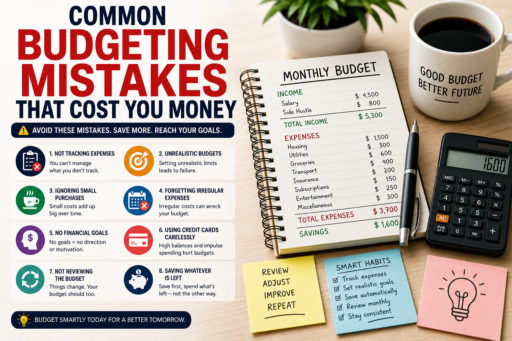
Budgeting is one of the most powerful tools for improving financial health. However, many people create budgets that fail to deliver results because they make common mistakes that quietly drain money over time. Learning about the Common Budgeting Mistakes That Cost You Money can help you avoid unnecessary financial stress, improve savings, and make better long-term financial decisions.
In 2026, managing personal finances has become increasingly challenging due to rising living expenses, digital subscriptions, online shopping, and inflation. While budgeting remains essential, even small budgeting mistakes can significantly impact financial progress.
The good news is that most budgeting mistakes are easy to fix once you recognize them.
In this guide, we’ll explore the most common budgeting errors and how to avoid them.
Why Budgeting Mistakes Matter
Many financial problems do not come from low income alone.
Instead, they often result from poor money management habits.
Budgeting mistakes can lead to:
- Overspending
- Debt accumulation
- Financial stress
- Missed savings goals
- Reduced financial security
Understanding these mistakes is the first step toward improving your financial situation.
Mistake #1: Not Tracking Expenses
One of the most common budgeting mistakes is failing to monitor spending.
Without tracking expenses, it becomes difficult to identify where money is actually going.
Small daily purchases often accumulate into surprisingly large monthly expenses.
If you want better visibility into your spending habits, you may also enjoy our guide on Best Ways to Track Your Daily Expenses.
Expense tracking provides the foundation for accurate budgeting.
Mistake #2: Creating Unrealistic Budgets
Many people set spending limits that are impossible to maintain.
Examples include:
- Eliminating all entertainment spending
- Cutting food expenses excessively
- Setting aggressive savings targets immediately
While these plans may look impressive on paper, they often lead to frustration and failure.
A realistic budget is far more effective than a perfect but unsustainable one.
Mistake #3: Ignoring Small Purchases
Small expenses may seem insignificant individually.
However, repeated spending on:
- Coffee
- Snacks
- Food delivery
- Impulse purchases
- Microtransactions
can add up significantly over time.
Tracking even minor purchases helps maintain financial awareness.
Mistake #4: Forgetting Irregular Expenses
Many budgets focus only on monthly bills.
Unfortunately, irregular expenses often create financial surprises.
Examples include:
- Insurance renewals
- Car repairs
- Medical expenses
- Holiday spending
- Home maintenance
Including these expenses in your financial plan helps prevent budgeting failures.
Mistake #5: Not Having Financial Goals
Budgeting without goals often feels meaningless.
Financial goals provide direction and motivation.
Examples include:
- Emergency funds
- Debt reduction
- Home ownership
- Retirement planning
- Investment growth
Clear goals make budgeting more purposeful and rewarding.
Mistake #6: Relying on Memory
Many people believe they can remember every purchase they make.
In reality, memory is often unreliable.
Using apps, spreadsheets, or financial tracking systems produces far more accurate results.
Documentation improves financial awareness and decision-making.
Mistake #7: Not Reviewing the Budget Regularly
A budget should not remain unchanged forever.
Life circumstances constantly evolve.
Income changes, expenses shift, and priorities develop over time.
Monthly reviews help ensure your budget remains effective and realistic.
Mistake #8: Lifestyle Inflation
As income increases, many people automatically increase spending. This lifestyle inflation is one of the most common budgeting mistakes that cost you money, preventing individuals from building savings and achieving long-term financial goals.
This phenomenon is known as lifestyle inflation.
Examples include:
- Upgrading vehicles unnecessarily
- Moving into more expensive housing
- Increasing luxury spending
- Adding subscriptions
Controlling lifestyle inflation can dramatically improve long-term savings.
Mistake #9: Using Credit Cards Carelessly
Credit cards can be valuable financial tools when used responsibly.
However, overspending on credit often creates budgeting problems.
Common mistakes include:
- Carrying high balances
- Making impulse purchases
- Ignoring repayment plans
Responsible credit use supports budgeting, while poor credit habits can undermine it.
Mistake #10: Giving Up After One Bad Month
Many people abandon their budget after experiencing a single setback.
Unexpected expenses and occasional overspending happen to everyone.
The key is adjusting and continuing rather than quitting entirely.
If you’re looking for a more practical budgeting system, you may also find our guide on How to Create a Monthly Budget That Actually Works helpful.
Mistake #11: Saving Whatever Is Left Over
Many people approach saving with the intention of putting aside whatever money remains at the end of the month.
Unfortunately, there is often little or nothing left.
A better strategy is to treat savings as a planned expense.
Many successful savers automate transfers immediately after receiving income.
This approach increases consistency and reduces the temptation to spend.
Mistake #12: Using Too Many Budget Categories
Some budgets become so detailed that they are difficult to manage.
Examples include creating separate categories for:
- Coffee
- Snacks
- Fast food
- Dining out
- Takeout
- Work lunches
While detailed tracking can be useful, excessive complexity often discourages consistency.
Simple budgeting systems are usually easier to maintain.
Mistake #13: Ignoring Subscription Costs
Subscription services have become a major expense for many households.
Common examples include:
- Streaming services
- Cloud storage plans
- Software subscriptions
- Fitness memberships
- Premium mobile applications
Individually these costs may appear small, but together they can significantly impact a budget. In fact, overlooking subscriptions is one of the most common budgeting mistakes that cost you money because recurring charges often go unnoticed for months.
Mistake #14: Budgeting Alone When Managing Family Finances
Family budgets often fail when only one person participates.
Successful household budgeting requires communication and cooperation.
Family members should understand:
- Financial goals
- Spending priorities
- Savings objectives
- Budget limitations
Shared understanding improves long-term success.
Mistake #15: Focusing Only on Cutting Expenses
Many people believe budgeting is only about spending less.
However, improving income can be just as important.
Examples include:
- Career development
- Freelancing
- Side businesses
- Additional certifications
Budgeting should support both expense management and income growth.
Common Family Budgeting Errors
Families often face unique budgeting challenges.
Common errors include:
- Not planning for school expenses
- Ignoring seasonal costs
- Failing to discuss money openly
- Overestimating future income
- Neglecting emergency savings
Family budgets benefit from regular communication and planning.
If you’re managing household finances, you may also enjoy our guide on Best Budgeting Tools for Families.
Why Budget Reviews Matter
A budget should evolve alongside your financial situation.
Monthly reviews help identify:
- Overspending categories
- Successful savings habits
- New financial priorities
- Areas needing improvement
Regular reviews make budgeting more effective over time.
How Emotional Spending Damages Budgets
Emotional spending is one of the most overlooked budgeting mistakes.
People often spend money in response to:
- Stress
- Boredom
- Excitement
- Social pressure
Recognizing emotional triggers can improve spending decisions significantly.
Mistake #16: Not Tracking Financial Progress
Without measurable progress, it becomes difficult to stay motivated.
Tracking goals such as:
- Savings growth
- Debt reduction
- Investment contributions
- Expense reductions
helps maintain momentum and accountability.
How to Recover From Budgeting Mistakes
Everyone makes financial mistakes.
The important thing is responding constructively.
When mistakes occur:
- Identify the cause
- Adjust the budget
- Learn from the experience
- Continue moving forward
Progress matters more than perfection.
Build Better Financial Habits
Avoiding budgeting mistakes often comes down to building stronger habits.
Examples include:
- Tracking expenses regularly
- Reviewing finances monthly
- Saving automatically
- Planning purchases ahead of time
- Monitoring financial goals
Consistent habits create long-term financial success.
Use Trusted Financial Resources
Improving budgeting skills often requires reliable financial education. The Consumer Financial Protection Bureau provides practical guidance on budgeting, saving, debt management, and personal finance.
Learning from trusted sources helps strengthen financial decision-making.
The Long-Term Cost of Budgeting Mistakes
Small budgeting mistakes may seem harmless initially.
However, repeated financial errors can have significant long-term consequences.
Over time, these mistakes may result in:
- Reduced savings
- Higher debt levels
- Missed investment opportunities
- Greater financial stress
- Delayed financial goals
Avoiding common mistakes helps create a stronger financial future.
Final Thoughts
Understanding the Common Budgeting Mistakes That Cost You Money can dramatically improve your financial results.
Many budgeting failures result from simple errors such as unrealistic expectations, inconsistent tracking, forgotten expenses, emotional spending, and lack of regular reviews.
Fortunately, these mistakes are preventable. By creating realistic budgets, tracking expenses consistently, setting clear goals, and reviewing your finances regularly, you can build stronger money management habits and achieve greater financial stability.
Budgeting is not about perfection. It is about making informed decisions that support your long-term financial success.