
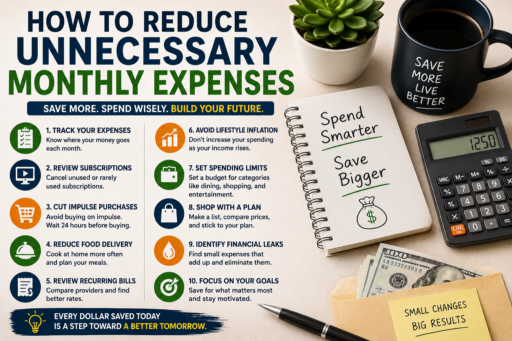
Many people believe they need a higher income to improve their finances. While increasing income can certainly help, reducing unnecessary expenses is often the fastest way to create more financial flexibility. Learning How to Reduce Unnecessary Monthly Expenses can free up money for savings, debt reduction, investments, and long-term financial goals without requiring major lifestyle changes.
In 2026, monthly expenses can easily grow through subscriptions, convenience services, impulse purchases, and small recurring costs that often go unnoticed. Individually, these expenses may seem insignificant, but together they can consume hundreds or even thousands of dollars each year.
The good news is that reducing unnecessary expenses does not mean eliminating everything you enjoy. Instead, it means spending intentionally and focusing money on what matters most.
This guide explains practical strategies to reduce unnecessary monthly expenses and improve financial stability.
Why Monthly Expenses Matter
Every dollar spent unnecessarily is a dollar that cannot be used for other financial goals.
Reducing expenses can help:
- Increase savings
- Build emergency funds
- Pay off debt faster
- Reduce financial stress
- Improve financial security
Small reductions often create surprisingly large long-term benefits.
Step 1: Track Every Expense
The first step in learning How to to Reduce Unnecessary Monthly Expenses is understanding where your money goes.
Track all spending for at least one month, including:
- Housing costs
- Food expenses
- Transportation
- Subscriptions
- Entertainment
- Online purchases
Many people discover expenses they had forgotten about completely.
Step 2: Review Subscription Services
Subscription costs are among the most common sources of unnecessary spending.
Examples include:
- Streaming services
- Music platforms
- Fitness memberships
- Software subscriptions
- Cloud storage plans
Review every subscription and ask whether it still provides enough value.
Step 3: Reduce Impulse Purchases
Impulse spending can quietly damage a budget.
Before making non-essential purchases, consider:
- Waiting 24 hours
- Comparing alternatives
- Evaluating actual need
Many purchases lose their appeal after a short waiting period.
Step 4: Cut Back on Food Delivery
Food delivery services offer convenience, but convenience often comes at a high cost.
Delivery fees, service charges, and tips can significantly increase spending.
Strategies include:
- Meal planning
- Cooking at home
- Preparing lunches
- Reducing restaurant visits
Even modest reductions can create noticeable monthly savings.
Step 5: Review Recurring Bills
Many recurring bills increase gradually over time.
Review:
- Internet services
- Mobile phone plans
- Insurance policies
- Utility bills
You may find opportunities to negotiate better rates or switch providers.
Step 6: Avoid Lifestyle Inflation
As income rises, many people automatically increase spending.
This behavior often prevents financial progress.
Instead of upgrading every aspect of your lifestyle, consider directing additional income toward:
- Savings
- Investments
- Debt reduction
This approach helps build long-term wealth.
Step 7: Create Spending Limits
Setting spending limits can prevent unnecessary expenses from growing out of control.
Categories may include:
- Dining out
- Entertainment
- Shopping
- Hobbies
Limits encourage more intentional spending decisions.
Step 8: Shop With a Plan
Unplanned shopping often results in unnecessary purchases.
Before shopping:
- Create a list
- Compare prices
- Set a budget
- Avoid emotional buying
Planning reduces the likelihood of overspending.
Step 9: Identify Financial Leaks
Financial leaks are small recurring expenses that provide little value.
Examples include:
- Unused subscriptions
- Frequent convenience purchases
- Duplicate services
- Unused memberships
Fixing these leaks can significantly improve monthly cash flow.
Step 10: Focus on Long-Term Goals
Reducing expenses becomes easier when you have a clear reason for saving.
Examples include:
- Emergency funds
- Debt freedom
- Home ownership
- Retirement savings
- Investment growth
Strong goals help maintain motivation and discipline.
Reducing Household Expenses as a Family
Families often have more financial responsibilities, which means there are usually more opportunities to reduce unnecessary spending.
Common areas to review include:
- Entertainment subscriptions
- Dining out expenses
- Utility usage
- Shopping habits
- Household memberships
Small adjustments made across multiple categories can produce significant savings over time.
Common Spending Mistakes That Cost Money
Many people unknowingly waste money through habits that seem harmless individually.
Common mistakes include:
- Impulse buying
- Shopping without a list
- Keeping unused subscriptions
- Ignoring monthly expenses
- Buying based on emotions
Recognizing these habits is the first step toward correcting them.
How to Conduct a Monthly Expense Review
One of the best ways to maintain financial control is by reviewing expenses every month.
A monthly review should include:
- Total spending
- Category breakdowns
- Savings progress
- New recurring charges
- Budget performance
Regular reviews help identify problems before they become costly.
Replace Expensive Habits With Affordable Alternatives
Reducing expenses does not always require eliminating enjoyable activities.
Instead, consider lower-cost alternatives.
Examples include:
- Home-cooked meals instead of delivery
- Free entertainment options
- Public parks instead of expensive outings
- Library resources instead of paid subscriptions
These substitutions can preserve enjoyment while reducing spending.
Build Better Spending Habits
Learning How to Reduce Unnecessary Monthly Expenses is largely about developing better financial habits.
Helpful habits include:
- Tracking expenses regularly
- Planning purchases
- Comparing prices
- Using budgets consistently
- Reviewing financial goals frequently
Strong habits help prevent unnecessary spending before it occurs.
Why Small Expenses Matter
Many people focus only on large purchases.
However, small recurring expenses often have a greater long-term impact.
Examples include:
- Daily coffee purchases
- Unused subscriptions
- Frequent convenience spending
- Small online purchases
These costs can accumulate into substantial annual expenses.
Use Savings Goals as Motivation
Reducing expenses becomes easier when savings have a purpose.
Potential goals include:
- Emergency funds
- Debt reduction
- Vacation savings
- Investment contributions
- Major purchases
Clear goals make financial sacrifices feel more meaningful.
Track the Money You Save
Many people focus only on spending reductions and forget to track the resulting savings.
Consider recording:
- Monthly savings
- Subscription reductions
- Dining savings
- Shopping savings
Visible progress increases motivation and reinforces positive behavior.
Create a Leaner Budget
After identifying unnecessary expenses, update your budget accordingly.
This process helps redirect money toward priorities that support long-term financial goals.
A leaner budget often provides greater financial flexibility and security.
Use Trusted Financial Resources
People interested in improving spending habits can benefit from trusted financial education resources. The Consumer Financial Protection Bureau offers practical guidance on budgeting, saving money, debt management, and financial planning.
Combining financial education with expense management strategies often produces better long-term results.
Additional Resources for Better Money Management
If you want to strengthen your overall financial plan, consider reading Common Budgeting Mistakes That Cost You Money, Best Money-Saving Challenges, and Best Free Budgeting Apps Compared.
Together, these resources can help improve budgeting, saving, and spending decisions.
The Long-Term Benefits of Reducing Expenses
Reducing unnecessary monthly expenses can provide:
- Greater financial stability
- Increased savings
- Faster debt repayment
- Improved financial confidence
- More freedom and flexibility
Even small improvements repeated consistently can produce remarkable financial results.
Final Thoughts
Learning How to Reduce Unnecessary Monthly Expenses is one of the fastest ways to improve your financial situation.
By reviewing subscriptions, reducing impulse purchases, tracking expenses, building better habits, and focusing on meaningful financial goals, you can create more room in your budget without dramatically changing your lifestyle.
Remember that financial success is often built through small decisions repeated consistently. Every unnecessary expense you eliminate creates an opportunity to save, invest, or strengthen your financial future.