
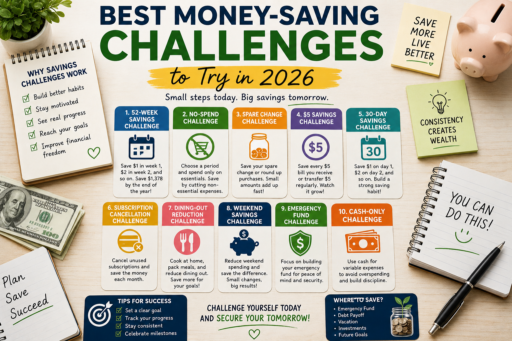
Saving money can be difficult, especially when daily expenses, subscriptions, and unexpected costs compete for your attention. Fortunately, saving does not always have to feel restrictive or boring. One of the most effective ways to build better financial habits is by participating in savings challenges. The Best Money-Saving Challenges can help make saving money more engaging, motivating, and achievable.
Money-saving challenges transform saving into a structured goal with clear progress. Instead of focusing only on the final amount, participants enjoy reaching small milestones that build momentum over time.
Whether you’re saving for an emergency fund, a vacation, debt reduction, or a major purchase, a savings challenge can help you stay focused and consistent.
This guide explores some of the best money-saving challenges to try in 2026 and explains how they can improve your financial future.
Why Money-Saving Challenges Work
Many people struggle with saving because financial goals feel too large or distant.
Savings challenges help by:
- Creating structure
- Building consistency
- Increasing motivation
- Making progress visible
- Developing positive habits
Small victories often lead to larger financial success.
Challenge #1: The 52-Week Savings Challenge
The 52-week challenge remains one of the most popular savings methods.
The concept is simple:
- Week 1: Save $1
- Week 2: Save $2
- Week 3: Save $3
- Continue increasing each week
By the end of the year, participants can save more than $1,300.
Advantages
- Easy to follow
- Gradual increases
- Strong motivation
Challenge #2: The No-Spend Challenge
This challenge focuses on reducing unnecessary spending.
Participants choose a period such as:
- One weekend
- One week
- One month
During that period, only essential expenses are allowed.
The challenge helps identify spending habits and financial leaks.
Challenge #3: The Spare Change Challenge
Small amounts of money can accumulate surprisingly quickly.
This challenge involves saving:
- Loose coins
- Rounded-up purchases
- Small daily amounts
The simplicity makes it ideal for beginners.
Challenge #4: The $5 Savings Challenge
Every time you receive a $5 bill, you save it instead of spending it.
Digital versions can also work by automatically transferring $5 whenever certain conditions are met.
Many participants are surprised by how quickly savings grow.
Challenge #5: The 30-Day Savings Challenge
This challenge increases savings daily for 30 days.
For example:
- Day 1: Save $1
- Day 2: Save $2
- Day 3: Save $3
The challenge creates a short-term goal with visible progress.
Challenge #6: The Subscription Cancellation Challenge
Many people pay for services they rarely use.
This challenge involves:
- Reviewing subscriptions
- Canceling unused services
- Saving the difference
The savings can often be substantial.
Challenge #7: The Dining-Out Reduction Challenge
Restaurant meals and food delivery can consume a large portion of a budget.
This challenge encourages:
- Cooking at home
- Meal planning
- Reducing delivery orders
The money saved can be redirected toward financial goals.
Challenge #8: The Weekend Savings Challenge
Many people spend more money on weekends than during the workweek.
The challenge involves reducing non-essential weekend spending and saving the difference.
This approach can significantly improve monthly savings.
Challenge #9: The Emergency Fund Challenge
Building emergency savings is one of the most valuable financial goals.
This challenge focuses specifically on creating a financial safety net.
Participants may aim for:
- $500
- $1,000
- One month of expenses
Emergency savings improve financial security and reduce stress.
Challenge #10: The Cash-Only Challenge
Using cash instead of cards often increases spending awareness.
Participants set cash limits for categories such as:
- Entertainment
- Dining
- Shopping
This challenge can reduce impulse purchases and encourage mindful spending.
Family Savings Challenges
Money-saving challenges can become even more effective when the entire family participates.
Family challenges help:
- Build teamwork
- Encourage accountability
- Teach financial responsibility
- Increase motivation
Examples include:
- No-spend weekends
- Family savings jars
- Monthly savings goals
- Reducing entertainment expenses
Working together often makes saving more enjoyable and sustainable.
How to Stay Motivated During a Savings Challenge
Many people start savings challenges with enthusiasm but lose motivation after a few weeks.
Helpful motivation strategies include:
- Tracking progress visually
- Celebrating milestones
- Setting realistic goals
- Remembering the purpose behind the challenge
Motivation tends to increase when progress is visible and measurable.
Common Savings Challenge Mistakes
Even the Best Money-Saving Challenges can fail if approached incorrectly.
Common mistakes include:
- Setting unrealistic targets
- Choosing overly difficult challenges
- Stopping after one setback
- Failing to track progress
- Not having a clear savings goal
Successful challenges balance ambition with practicality.
Choose a Challenge That Matches Your Lifestyle
Not every savings challenge works for every person.
Consider:
- Income level
- Monthly expenses
- Financial goals
- Available time
The best challenge is one you can maintain consistently.
Combining Challenges for Faster Results
Some people combine multiple challenges for greater savings.
Examples include:
- No-spend challenge + subscription challenge
- Cash-only challenge + dining-out challenge
- 52-week challenge + emergency fund challenge
Combining complementary challenges can accelerate financial progress.
How Savings Challenges Improve Financial Awareness
Many people discover spending habits they never noticed before.
Savings challenges often reveal:
- Impulse purchases
- Unnecessary subscriptions
- Emotional spending habits
- Budgeting weaknesses
This awareness often leads to better financial decisions long after the challenge ends.
Using Challenges to Reach Financial Goals
Savings challenges become more powerful when linked to specific goals.
Examples include:
- Emergency funds
- Debt reduction
- Vacation savings
- Home down payments
- Investment contributions
Clear goals provide additional motivation and direction.
Building Long-Term Wealth Through Small Actions
Many people underestimate the power of consistent saving.
Small contributions made regularly can create significant financial growth over time.
The habits developed during savings challenges often continue long after the challenge itself ends.
This is one reason why saving challenges are so effective for long-term wealth building.
Track Your Progress Regularly
Tracking progress helps maintain momentum.
Review:
- Total amount saved
- Monthly improvements
- Goals achieved
- Spending reductions
Visible progress often encourages continued participation.
Create Better Financial Habits
The ultimate purpose of savings challenges is not simply accumulating money.
The larger goal is building habits such as:
- Consistent saving
- Mindful spending
- Financial discipline
- Goal-focused decision making
Strong habits often produce lasting financial benefits.
Use Trusted Financial Resources
People interested in improving their saving habits can benefit from trusted financial education resources. The Consumer Financial Protection Bureau offers practical guidance on budgeting, saving money, debt management, and financial planning.
Combining financial education with savings challenges often improves long-term results.
Internal Resources You May Find Helpful
To strengthen your financial foundation even further, consider exploring additional personal finance guides such as Common Budgeting Mistakes That Cost You Money, Manage Money More Effectively Every Month, and Simple Financial Habits That Improve Your Wealth.
Together, these strategies can help create a stronger financial future.
Final Thoughts
The Best Money-Saving Challenges offer a practical and engaging way to improve financial habits, increase savings, and achieve important financial goals.
Whether you choose the 52-week challenge, a no-spend challenge, an emergency fund challenge, or a combination of several methods, the key is consistency. Small actions performed regularly often create remarkable financial results.
Start with a challenge that fits your lifestyle, track your progress, stay motivated, and focus on building habits that will continue benefiting your finances for years to come.