
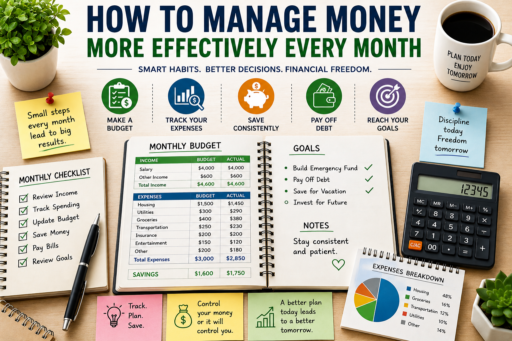
Managing money effectively is one of the most important skills for achieving financial stability and long-term success. Unfortunately, many people struggle with overspending, inconsistent saving, unexpected expenses, and poor financial planning. Learning Manage Money More Effectively Every Month can help you gain greater control over your finances and make steady progress toward your financial goals.
In 2026, rising living costs, subscription services, online shopping, and increasing financial responsibilities make money management more important than ever. The good news is that effective money management does not require advanced financial knowledge. Instead, it relies on consistent habits and practical systems.
This guide explains proven strategies that can help you manage money more effectively every month.
Why Monthly Money Management Matters
Good financial management creates stability and reduces stress.
Benefits include:
- Better budgeting
- Increased savings
- Reduced debt
- Improved financial confidence
- Greater long-term security
Small improvements in money management can produce significant results over time.
Step 1: Know Your Monthly Income
The foundation of effective money management is understanding how much money you actually receive each month.
Include:
- Salary
- Freelance income
- Business income
- Investment income
- Other earnings
Accurate income tracking helps create realistic financial plans.
Step 2: Track Every Expense
Many people underestimate how much they spend.
Tracking expenses helps identify:
- Spending leaks
- Unnecessary purchases
- Subscription costs
- Budgeting opportunities
If you’re looking for a practical tracking system, you may also enjoy our guide on Best Ways to Track Your Daily Expenses.
Financial awareness is one of the most powerful money management tools.
Step 3: Create a Monthly Budget
A budget provides a clear plan for your money.
Without a budget, spending often becomes reactive rather than intentional.
Your budget should include:
- Essential expenses
- Savings goals
- Debt payments
- Personal spending
Budgets help ensure every dollar serves a purpose.
Step 4: Pay Yourself First
One of the most effective money management habits is saving before spending.
Instead of saving what remains at the end of the month, transfer money to savings immediately after receiving income.
This habit improves consistency and accelerates financial progress.
Step 5: Build an Emergency Fund
Unexpected expenses are inevitable.
Emergency savings help prevent financial setbacks from becoming major problems.
Emergency funds can cover:
- Medical bills
- Car repairs
- Home maintenance
- Temporary income loss
If you’re starting from zero, you may also find our guide on Build an Emergency Fund From Scratch helpful.
Step 6: Reduce Unnecessary Spending
Many people improve their finances simply by eliminating wasteful spending.
Common areas to review include:
- Unused subscriptions
- Impulse purchases
- Frequent food delivery
- Premium memberships
Small savings often add up surprisingly quickly.
Step 7: Automate Good Financial Habits
Automation helps maintain consistency.
Consider automating:
- Savings transfers
- Bill payments
- Investment contributions
Automation reduces the likelihood of missed payments and inconsistent saving.
Step 8: Review Financial Goals Regularly
Financial goals provide motivation and direction.
Examples include:
- Emergency savings
- Debt reduction
- Retirement planning
- Home ownership
- Investment growth
Monthly reviews help ensure your financial decisions remain aligned with your goals.
Step 9: Avoid Lifestyle Inflation
As income increases, many people increase spending automatically.
This behavior can prevent long-term wealth accumulation.
Instead of spending every raise, consider directing additional income toward savings and investments.
Step 10: Stay Consistent
Successful money management does not require perfection.
Consistency is far more important.
Small positive habits repeated every month often create significant financial improvements over time.
Family Money Management Strategies
Managing money becomes more complex when multiple people share financial responsibilities.
Families often need to coordinate:
- Household expenses
- Children’s costs
- Savings goals
- Debt payments
- Emergency funds
Open communication and regular financial discussions can significantly improve household financial management.
If you’re managing family finances, you may also enjoy our guide on Best Budgeting Tools for Families.
Debt Reduction Strategies
Debt can limit financial flexibility and make monthly money management more difficult.
Effective debt reduction strategies include:
- Debt Snowball Method
- Debt Avalanche Method
- Extra monthly payments
- Debt consolidation
Reducing debt often frees up additional money for savings and investments.
Why Monthly Financial Reviews Matter
Many people create budgets but rarely review them.
Monthly reviews help identify:
- Overspending categories
- Savings progress
- Budgeting weaknesses
- New financial priorities
Regular reviews improve financial awareness and support better decision-making.
Track Financial Progress
Progress tracking helps maintain motivation.
Consider monitoring:
- Monthly savings growth
- Debt reduction progress
- Net worth improvements
- Financial goal completion
Seeing measurable progress encourages consistency.
Common Money Management Mistakes
Even people with good intentions often make financial mistakes that slow progress.
Common mistakes include:
- Ignoring budgets
- Overspending on non-essential items
- Failing to save consistently
- Not tracking expenses
- Using credit cards irresponsibly
Avoiding these mistakes can improve financial outcomes significantly.
How to Increase Monthly Savings
Increasing savings does not always require a higher income.
Many people save more by:
- Reducing unnecessary expenses
- Automating savings
- Using budgeting templates
- Reviewing subscriptions regularly
- Planning purchases carefully
Small improvements often produce noticeable results over time.
Managing Variable Income
Freelancers, contractors, and business owners may experience fluctuating income.
Helpful strategies include:
- Creating conservative budgets
- Maintaining larger emergency funds
- Tracking average monthly income
- Prioritizing essential expenses
Planning for income variability reduces financial stress.
Building Better Financial Habits
Learning Manage Money More Effectively Every Month depends heavily on daily habits.
Helpful habits include:
- Checking finances weekly
- Saving automatically
- Tracking expenses consistently
- Reviewing goals regularly
- Avoiding emotional spending
Strong financial habits often matter more than complex financial strategies.
Why Financial Awareness Is Powerful
Financial awareness helps identify opportunities for improvement.
People who understand their income, expenses, savings, and financial goals tend to make better money decisions.
Awareness creates control, and control creates progress.
Use Trusted Financial Resources
People interested in improving financial skills can benefit from trusted educational resources. The Consumer Financial Protection Bureau provides practical guidance on budgeting, saving, debt management, and financial planning.
Combining financial education with consistent money management habits can improve long-term financial outcomes.
The Long-Term Benefits of Effective Money Management
Managing money effectively each month can provide:
- Greater financial confidence
- Improved savings
- Reduced debt
- Lower financial stress
- Better long-term security
These benefits often compound over time and contribute to long-term financial success.
Final Thoughts
Learning Manage Money More Effectively Every Month is one of the most valuable financial skills you can develop.
By tracking expenses, creating budgets, building emergency savings, reducing debt, reviewing progress regularly, and maintaining consistent financial habits, you can strengthen your financial position month after month.
Remember that financial improvement is a process. Small positive actions repeated consistently often lead to remarkable long-term results and greater financial freedom.