
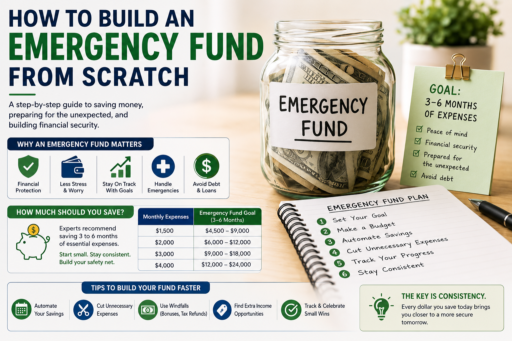
Unexpected expenses are a normal part of life. Car repairs, medical bills, home maintenance, job loss, and other emergencies can happen at any time. Unfortunately, many people are financially unprepared when these situations occur. Learning How to Build an Emergency Fund From Scratch is one of the most important steps toward financial stability and peace of mind.
An emergency fund acts as a financial safety net. Instead of relying on credit cards, loans, or borrowing money when unexpected expenses arise, you can use savings specifically set aside for emergencies.
In 2026, building an emergency fund remains one of the most recommended personal finance strategies because it helps reduce financial stress and protects long-term financial goals.
This guide explains how to start an emergency fund from zero and grow it steadily over time.
What Is an Emergency Fund?
An emergency fund is money reserved specifically for unexpected financial situations.
Examples include:
- Medical emergencies
- Car repairs
- Home repairs
- Job loss
- Unexpected travel
- Major essential expenses
An emergency fund is not intended for vacations, shopping, or entertainment spending.
Its purpose is financial protection.
Why an Emergency Fund Is Important
Many people underestimate the importance of emergency savings until they face a financial crisis.
Benefits include:
- Reduced financial stress
- Less dependence on debt
- Greater financial confidence
- Protection for long-term goals
- Improved financial stability
An emergency fund helps prevent temporary problems from becoming long-term financial setbacks.
How Much Should You Save?
There is no universal emergency fund amount.
However, financial experts often recommend saving enough to cover three to six months of essential expenses.
Examples:
- Monthly expenses of $2,000 = $6,000–$12,000 emergency fund
- Monthly expenses of $3,000 = $9,000–$18,000 emergency fund
For beginners, the first goal can simply be saving the first $500 or $1,000.
Small milestones create momentum.
Step 1: Calculate Essential Monthly Expenses
The first step in learning How to Build an Emergency Fund From Scratch is understanding your essential expenses.
Examples include:
- Housing
- Utilities
- Food
- Transportation
- Insurance
- Healthcare
Knowing these numbers helps determine your emergency savings target.
Step 2: Create a Savings Goal
Large financial goals often feel overwhelming.
Instead of focusing on saving several months of expenses immediately, break the goal into smaller targets.
Examples:
- First $500
- First $1,000
- One month of expenses
- Three months of expenses
- Six months of expenses
Achieving smaller milestones helps maintain motivation.
Step 3: Include Savings in Your Budget
An emergency fund grows faster when saving becomes part of your monthly budget.
Instead of saving whatever remains at the end of the month, treat savings as a planned expense.
If you’re building a spending plan, you may also enjoy our guide on How to Create a Monthly Budget That Actually Works.
Budgeting and emergency savings work best together.
Step 4: Automate Your Savings
Automation is one of the easiest ways to build savings consistently.
Consider setting up automatic transfers:
- Weekly
- Biweekly
- Monthly
Even small automatic contributions can produce impressive results over time.
Automation removes the need for constant decision-making.
Step 5: Reduce Unnecessary Spending
Building an emergency fund often requires identifying areas where spending can be reduced.
Examples include:
- Unused subscriptions
- Impulse purchases
- Frequent food delivery
- Unplanned shopping
Even modest reductions can accelerate savings growth significantly.
Step 6: Track Your Progress
Progress tracking helps maintain motivation.
Monitor:
- Current balance
- Savings growth
- Monthly contributions
- Milestones achieved
Seeing progress visually often encourages continued saving.
Where Should You Keep Your Emergency Fund?
Your emergency fund should remain accessible while staying separate from everyday spending accounts.
Ideal characteristics include:
- Easy access
- Low risk
- Liquidity
- Account security
The goal is accessibility rather than investment returns.
Common Emergency Fund Mistakes
Many people unintentionally slow their progress by making common mistakes.
Examples include:
- Saving inconsistently
- Using the fund for non-emergencies
- Setting unrealistic goals
- Delaying the start of saving
A consistent and disciplined approach produces the best results.
Emergency Fund Mistakes to Avoid
Building an emergency fund takes time and discipline. Unfortunately, many people make mistakes that slow progress or reduce the effectiveness of their savings.
Common mistakes include:
- Waiting for the “perfect time” to start saving
- Using the fund for non-emergencies
- Saving inconsistently
- Keeping savings mixed with spending accounts
- Setting unrealistic goals
Avoiding these mistakes can help accelerate your financial progress.
Preparing for Job Loss
One of the most important reasons to build an emergency fund is protection against income loss.
Job loss can happen unexpectedly, even to highly skilled professionals.
An emergency fund can help cover:
- Rent or mortgage payments
- Utilities
- Food expenses
- Transportation costs
- Insurance premiums
Having several months of expenses saved provides valuable financial flexibility during difficult periods.
Emergency Funds for Families
Families often require larger emergency funds because they typically have more financial responsibilities.
Factors that may increase emergency savings needs include:
- Children
- Housing costs
- Healthcare expenses
- Education costs
- Multiple dependents
For families, emergency savings provide security and stability during unexpected situations.
If you’re managing household finances, you may also enjoy our guide on Best Budgeting Tools for Families.
Build Saving Habits That Last
Learning How to Build an Emergency Fund From Scratch is often more about habits than income.
Successful savers typically:
- Save consistently
- Review finances regularly
- Track progress
- Avoid unnecessary spending
- Prioritize financial goals
Small habits repeated consistently can produce significant results over time.
How to Save Money Faster
If you want to accelerate emergency fund growth, consider:
- Increasing automatic transfers
- Reducing discretionary spending
- Selling unused items
- Using side income for savings
- Directing bonuses toward savings goals
Even temporary efforts can significantly boost savings progress.
Should You Invest Your Emergency Fund?
Emergency savings should prioritize accessibility and stability.
Because emergencies can happen at any time, most financial experts recommend keeping emergency funds in low-risk, easily accessible accounts rather than volatile investments.
The purpose of an emergency fund is protection—not maximizing returns.
Emergency Fund vs General Savings
Many people confuse emergency funds with general savings.
However, they serve different purposes.
Emergency Fund
- Unexpected expenses
- Financial emergencies
- Income protection
General Savings
- Vacations
- Major purchases
- Hobbies
- Personal goals
Keeping these funds separate improves financial organization.
What Counts as a Real Emergency?
Not every expense qualifies as an emergency.
Legitimate emergencies often include:
- Medical bills
- Essential home repairs
- Major car repairs
- Unexpected unemployment
- Urgent family situations
Impulse purchases and optional spending should not come from emergency savings.
How Long Does It Take to Build an Emergency Fund?
The timeline depends on:
- Income level
- Monthly expenses
- Savings rate
- Financial priorities
Some people reach their first $1,000 within a few months, while larger emergency funds may take a year or more.
The important thing is starting and remaining consistent.
Why Tracking Progress Matters
Progress tracking keeps motivation high.
When people see savings growing month after month, they are more likely to continue positive financial habits.
If you’re trying to improve spending awareness while building savings, you may also enjoy our guide on Best Ways to Track Your Daily Expenses.
Financial Confidence and Peace of Mind
An emergency fund provides more than financial protection.
It also reduces stress and improves confidence.
Knowing you can handle unexpected expenses without relying on debt creates a sense of financial security that many people find invaluable.
Trusted Financial Resources
People interested in improving their saving habits can benefit from trusted educational resources. The Consumer Financial Protection Bureau provides practical guidance on saving money, budgeting, and financial planning.
Reliable financial education can strengthen long-term money management skills.
Final Thoughts
Learning How to Build an Emergency Fund From Scratch is one of the most valuable financial skills you can develop.
An emergency fund protects against unexpected expenses, reduces financial stress, and provides stability during difficult situations. Whether your first goal is saving $500, $1,000, or several months of expenses, every contribution moves you closer to greater financial security.
Start small, save consistently, track your progress, and treat emergency savings as a priority. Over time, your emergency fund can become one of the strongest foundations of your personal financial plan.