
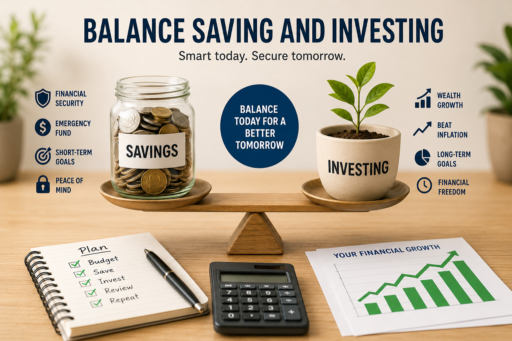
One of the most common financial questions people ask is whether they should focus on saving money or investing it. While both are essential for long-term financial success, many individuals struggle to Balance Saving and Investing in a way that supports both financial security and wealth growth. Some people save excessively and miss opportunities for growth, while others invest aggressively without maintaining adequate financial protection.
Learning how to Balance Saving and Investing is one of the most important skills in personal finance. A balanced approach allows you to prepare for emergencies, achieve short-term goals, build long-term wealth, and reduce financial stress. Instead of viewing saving and investing as competing priorities, successful individuals understand that both serve different purposes and work together to strengthen financial stability.
Saving provides security and liquidity, while investing creates opportunities for growth and wealth accumulation. The challenge is determining how much money should go toward each goal based on your financial situation, risk tolerance, and future objectives.
In this guide, you’ll learn how to balance saving and investing effectively, understand when each strategy is most appropriate, and create a financial plan that supports both stability and long-term growth.
Why Balancing Saving and Investing Matters
Many people mistakenly believe they must choose between saving and investing. In reality, financial success usually requires both.
Saving helps you:
- Handle emergencies.
- Pay for short-term goals.
- Avoid unnecessary debt.
- Maintain financial flexibility.
Investing helps you:
- Build long-term wealth.
- Outpace inflation.
- Create passive income.
- Prepare for retirement.
A balanced financial strategy combines the strengths of both approaches. Without savings, unexpected expenses can force you into debt. Without investing, your money may lose purchasing power over time due to inflation.
What Is Saving?
Saving involves setting aside money in safe and easily accessible accounts for future use.
Common saving vehicles include:
- Savings accounts.
- Money market accounts.
- High-yield savings accounts.
- Certificates of deposit (CDs).
The primary purpose of saving is preservation rather than growth.
Saved money is generally protected from market volatility and remains available when needed.
Advantages of Saving
- Low risk.
- Easy access to funds.
- Ideal for emergencies.
- Suitable for short-term goals.
- Provides financial security.
Disadvantages of Saving
- Lower returns.
- Limited wealth-building potential.
- Inflation may reduce purchasing power.
What Is Investing?
Investing involves putting money into assets that have the potential to grow in value over time.
Examples include:
- Stocks.
- Bonds.
- Index funds.
- ETFs.
- Real estate.
- Dividend-paying investments.
Unlike saving, investing involves risk. However, investors are generally rewarded with higher long-term returns in exchange for accepting that risk. Successfully learning how to Balance Saving and Investing allows individuals to benefit from investment growth while maintaining financial security.
Advantages of Investing
- Potential for higher returns.
- Long-term wealth creation.
- Retirement growth.
- Inflation protection.
- Passive income opportunities.
Disadvantages of Investing
- Market volatility.
- Potential losses.
- Requires patience.
- Short-term value fluctuations.
Why Saving Alone Is Not Enough
Many people feel comfortable keeping all their money in savings accounts. While this approach provides security, it may not be sufficient for achieving long-term financial goals.
Inflation gradually reduces purchasing power over time. If your savings earn less than the inflation rate, your money effectively loses value.
For example, a savings account earning 2% annually may struggle to keep pace with inflation averaging 3% or more.
As a result, relying exclusively on savings can make it more difficult to build wealth, prepare for retirement, and achieve financial independence.
Why Investing Alone Can Be Risky
Some individuals focus entirely on investing and neglect savings.
This strategy can create problems when unexpected expenses arise.
Without adequate savings, investors may be forced to sell investments during market downturns to cover emergencies.
This can result in:
- Investment losses.
- Tax consequences.
- Interrupted wealth-building plans.
- Increased financial stress.
A balanced strategy helps prevent these situations by maintaining sufficient cash reserves alongside investments.
Step 1: Build an Emergency Fund First
Before investing aggressively, establish an emergency fund.
An emergency fund serves as the foundation of financial stability.
Most experts recommend saving:
- Three to six months of expenses.
- More if income is unpredictable.
- Additional reserves during uncertain economic periods.
Emergency savings help protect investments from being liquidated prematurely.
Related Article: How to Build an Emergency Fund From Scratch
Step 2: Define Your Financial Goals
To successfully Balance Saving and Investing, you must identify your financial objectives.
Different goals require different strategies.
Examples include:
- Emergency preparedness.
- Home purchases.
- Travel plans.
- Retirement savings.
- Financial independence.
- Children’s education.
Clearly defining goals helps determine how much money should be allocated to savings versus investments.
Step 3: Separate Short-Term and Long-Term Goals
A useful guideline is separating goals based on time horizon.
Short-Term Goals (1–5 Years)
- Emergency funds.
- Vacation savings.
- Vehicle purchases.
- Home down payments.
Money for short-term goals generally belongs in savings rather than investments.
Long-Term Goals (5+ Years)
- Retirement.
- Wealth building.
- Financial independence.
- Legacy planning.
Long-term goals often benefit from investment growth opportunities.
Step 4: Understand Your Risk Tolerance
Your risk tolerance significantly affects how you balance saving and investing.
Conservative individuals may prefer larger savings reserves and smaller investment allocations.
Aggressive investors may feel comfortable directing more money toward growth-oriented investments.
Understanding your comfort level with risk helps create a strategy you can follow consistently during market fluctuations.
Step 5: Create a Saving-to-Investing Ratio
One of the simplest ways to Balance Saving and Investing is establishing a clear allocation strategy for new income.
There is no universal formula because financial situations vary. However, many individuals benefit from setting predetermined percentages.
Examples include:
- 70% saving, 30% investing while building an emergency fund.
- 50% saving, 50% investing during major financial transitions.
- 30% saving, 70% investing after achieving strong financial stability.
Your ratio should evolve as your financial situation improves.
Step 6: Automate Both Saving and Investing
Automation removes many of the emotional decisions that often interfere with financial progress.
Rather than manually deciding what to do with money each month, automate transfers into designated savings and investment accounts.
Automation provides several benefits:
- Consistency.
- Reduced temptation to spend.
- Improved financial discipline.
- Long-term habit formation.
Many successful investors treat saving and investing as automatic expenses rather than optional activities.
Step 7: Increase Contributions Over Time
Your ability to save and invest should grow alongside your income.
When receiving:
- Salary increases.
- Bonuses.
- Business income.
- Additional revenue streams.
Consider directing a portion of that income toward savings and investments instead of increasing spending immediately.
This strategy helps accelerate wealth accumulation without dramatically affecting your lifestyle.
Step 8: Review and Adjust Regularly
Financial priorities change throughout life.
Major events such as marriage, children, career changes, home purchases, or retirement planning may require adjustments to your saving and investing strategy.
Review your financial plan periodically and ask:
- Am I meeting savings goals?
- Are investments aligned with my objectives?
- Has my risk tolerance changed?
- Do I need additional emergency reserves?
Regular reviews help maintain balance and ensure continued progress.
A Practical Example of Balancing Saving and Investing
Consider a person earning $4,000 per month after taxes.
After covering essential expenses, they may allocate:
- $400 toward emergency savings.
- $400 toward retirement investments.
- $200 toward medium-term goals.
This approach supports both short-term security and long-term growth.
As savings goals are achieved, more money can gradually shift toward investing. Successfully learning to Balance Saving and Investing allows you to adjust your strategy as your financial foundation becomes stronger.
How Age Influences Saving and Investing Decisions
In Your 20s
You may prioritize building an emergency fund while investing aggressively for long-term growth.
In Your 30s and 40s
Many people focus on balancing family responsibilities, mortgage payments, retirement contributions, and wealth accumulation.
In Your 50s and Beyond
Preserving wealth often becomes increasingly important. Investors may gradually increase savings reserves and reduce portfolio risk.
Your strategy should evolve as your financial circumstances change.
Common Mistakes to Avoid
Keeping Everything in Cash
While cash provides security, excessive cash holdings may limit long-term growth potential.
Investing Without Emergency Savings
Without a financial safety net, unexpected expenses may force you to sell investments at unfavorable times.
Ignoring Inflation
Inflation reduces purchasing power over time, making long-term investing increasingly important.
Trying to Time the Market
Waiting for the “perfect” investment opportunity often delays progress unnecessarily.
Changing Strategies Frequently
Constant adjustments based on market headlines can undermine long-term success.
Signs You Are Successfully Balancing Saving and Investing
Several indicators suggest your strategy is working effectively:
- Emergency savings continue growing.
- Investment contributions remain consistent.
- Financial stress decreases.
- Debt levels decline.
- Net worth steadily increases.
- Long-term goals remain on track.
If these areas are improving, your balance between saving and investing is likely supporting overall financial health.
The Role of Discipline in Financial Success
Financial success rarely depends on a single investment or savings account.
Instead, it usually results from consistent habits maintained over many years.
People who successfully Balance Saving and Investing understand that discipline often matters more than perfect timing. They continue saving during strong markets, continue investing during market downturns, and remain focused on long-term goals rather than short-term distractions.
Consistency creates momentum. Over time, that momentum can lead to significant financial growth and stability.
Additional Resources for Learning
The more you understand personal finance, the easier it becomes to Balance Saving and Investing effectively. Educational resources, financial books, and trusted government websites can help improve your financial decision-making skills.
For additional information about saving and investing basics, Investor.gov provides educational resources that explain investment principles, risk management, and long-term wealth-building strategies.
Related Article: How to Create a Personal Investment Strategy
Related Article: How to Grow Your Net Worth Over Time
Related Article: How to Calculate Investment Growth
Final Thoughts
Learning how to Balance Saving and Investing is essential for building both financial security and long-term wealth. Saving provides protection against emergencies and short-term financial needs, while investing creates opportunities for future growth and financial independence.
The most effective financial plans do not choose one over the other. Instead, they combine both strategies in a way that aligns with personal goals, risk tolerance, and financial circumstances.
By building an emergency fund, defining clear objectives, automating contributions, reviewing progress regularly, and maintaining long-term discipline, you can create a balanced financial strategy that supports both stability and growth.
Remember that balancing saving and investing is not about finding a perfect formula. It is about creating a sustainable system that helps you achieve financial confidence, flexibility, and long-term success.