
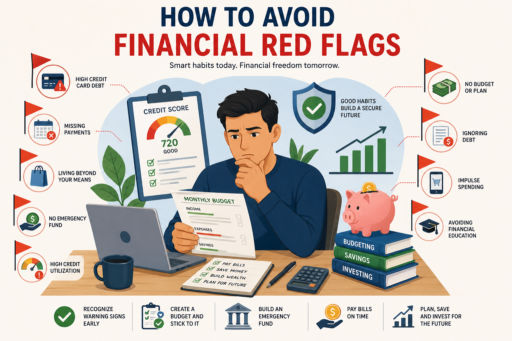
Financial success rarely depends on a single major decision. More often, it is the result of hundreds of small choices made consistently over time. Unfortunately, many people overlook warning signs that indicate financial problems may be developing beneath the surface.
These warning signs are often referred to as financial red flags. While they may seem harmless initially, they can eventually lead to debt, poor credit scores, financial stress, and missed opportunities. The good news is that most financial red flags can be identified early and corrected before they become serious problems.
Learning how to avoid financial red flags is one of the most important steps toward building long-term financial stability. By recognizing these warning signs and taking action early, you can improve your financial health, protect your future, and make smarter money decisions.
Table of Contents
- What Are Financial Red Flags?
- Why Ignoring Financial Warning Signs Can Be Expensive
- Living Beyond Your Means
- Constantly Carrying Credit Card Debt
- Missing Payments Regularly
- Having No Emergency Fund
- Relying on Loans for Everyday Expenses
- Ignoring Your Credit Report
- Spending Without a Budget
- Making Emotional Financial Decisions
- Not Saving for Future Goals
- Avoiding Financial Education
- Falling for Get-Rich-Quick Schemes
- Ignoring Subscription and Recurring Charges
- Having No Financial Plan
- How to Build Better Financial Habits
- Final Thoughts
What Are Financial Red Flags?
Financial red flags are behaviors, habits, or situations that indicate potential money problems.
Examples include:
- Spending more than you earn.
- Carrying high-interest debt.
- Missing payments.
- Living paycheck to paycheck.
- Having no emergency savings.
- Ignoring financial planning.
A single mistake is usually not a disaster. However, when these issues become recurring habits, they often create larger financial challenges over time.
Recognizing these signs early gives you the opportunity to make adjustments before significant damage occurs.
Why Ignoring Financial Warning Signs Can Be Expensive
Many financial problems develop gradually.
People often ignore small issues because they seem manageable in the moment. However, debt, interest charges, and poor financial habits tend to compound over time.
For example:
- One missed payment can hurt your credit score.
- A growing credit card balance can generate expensive interest.
- A lack of emergency savings can force you into debt during unexpected situations.
Understanding these risks helps explain why addressing financial red flags early is so important.
Living Beyond Your Means
One of the biggest financial red flags is consistently spending more money than you earn.
This often happens when people:
- Use credit cards excessively.
- Upgrade lifestyles too quickly.
- Make impulse purchases regularly.
- Increase spending after every income increase.
Living beyond your means may feel sustainable temporarily, but it eventually creates financial pressure.
A healthier approach is to keep expenses below income levels and direct the difference toward savings and financial goals.
Constantly Carrying Credit Card Debt
Credit cards can be useful financial tools when used responsibly. However, carrying balances month after month often signals a deeper financial issue.
Warning signs include:
- Only making minimum payments.
- Using one card to pay another.
- Watching balances grow each month.
- Struggling to pay off purchases.
If you recently read our guide on Best Credit Card Habits That Save Money, you already know how important it is to pay balances in full whenever possible.
Reducing high-interest debt should be a priority for anyone seeking long-term financial stability.
Missing Payments Regularly
Late payments can become extremely costly.
Consequences may include:
- Late fees.
- Higher interest rates.
- Credit score damage.
- Reduced borrowing opportunities.
Even people with good incomes can experience financial difficulties if payment management becomes disorganized.
Setting automatic reminders and payment alerts can help eliminate this red flag before it becomes a larger problem.
Having No Emergency Fund
Life is unpredictable.
Unexpected expenses can include:
- Medical bills.
- Vehicle repairs.
- Home maintenance.
- Job loss.
- Family emergencies.
Without savings, many people turn to credit cards or loans during difficult situations.
An emergency fund provides protection against these events and reduces reliance on debt.
Even saving a small amount consistently can create meaningful financial security over time.
Relying on Loans for Everyday Expenses
Borrowing money occasionally for major purchases is common. However, relying on debt to cover basic living expenses is often a serious warning sign.
Examples include:
- Using loans to buy groceries.
- Paying utility bills with credit cards.
- Borrowing money every month.
- Taking advances to cover routine expenses.
When debt becomes necessary for daily living, it often indicates that spending and income are no longer aligned.
Ignoring Your Credit Report
Many consumers rarely check their credit reports.
This can be risky because errors, fraud, and inaccurate information sometimes occur.
Reviewing your credit profile regularly helps you:
- Detect mistakes.
- Monitor account activity.
- Track financial progress.
- Protect your identity.
You may also find our article on How to Monitor Your Credit Effectively useful if you want to strengthen your credit management habits.
Spending Without a Budget
A budget provides direction for your money.
Without one, spending decisions often become reactive instead of intentional.
Common signs of poor budgeting include:
- Not knowing where money goes.
- Frequently overspending.
- Running out of money before payday.
- Struggling to save consistently.
Creating a simple monthly budget helps establish control and improves financial awareness.
Making Emotional Financial Decisions
Many spending decisions are driven by emotions rather than logic.
People often spend more when they feel:
- Stressed.
- Bored.
- Excited.
- Frustrated.
- Pressured by others.
Emotional spending may provide temporary satisfaction, but it often creates long-term financial consequences.
Before making significant purchases, consider waiting at least 24 hours. This simple habit can reduce impulsive decisions dramatically.
Not Saving for Future Goals
Saving should not only focus on emergencies.
Long-term financial goals may include:
- Buying a home.
- Starting a business.
- Retirement planning.
- Education expenses.
- Travel opportunities.
People who save consistently usually experience greater financial flexibility and less stress in the future.
Building savings gradually is often more effective than waiting for the perfect time to start.
Avoiding Financial Education
Financial knowledge influences nearly every money-related decision.
Unfortunately, many people spend years making financial choices without understanding topics such as:
- Credit scores.
- Debt management.
- Investing.
- Budgeting.
- Saving strategies.
The more you learn, the better your financial decisions typically become.
Reading personal finance articles, books, and trusted educational resources can provide valuable long-term benefits.
For trusted financial education resources, visit the Consumer Financial Protection Bureau, which provides practical guidance on budgeting, credit, debt management, and consumer financial rights.
Falling for Get-Rich-Quick Schemes
Promises of fast and effortless wealth are common online.
Examples include:
- Guaranteed investment returns.
- Unrealistic trading systems.
- Fake passive income opportunities.
- High-pressure financial promotions.
Legitimate wealth building usually requires:
- Time.
- Patience.
- Consistency.
- Smart decision-making.
If an opportunity sounds too good to be true, it often is.
Ignoring Subscription and Recurring Charges
Small recurring charges can accumulate surprisingly quickly.
Many consumers pay for services they rarely use.
Examples include:
- Streaming subscriptions.
- Software memberships.
- Mobile applications.
- Online services.
Reviewing recurring expenses every few months can uncover easy savings opportunities.
This habit often improves cash flow without requiring major lifestyle changes.
Having No Financial Plan
A lack of financial direction is one of the most overlooked red flags.
Without a plan, it becomes difficult to:
- Track progress.
- Measure success.
- Prioritize goals.
- Make confident decisions.
A financial plan does not need to be complicated.
Even simple goals such as:
- Saving a specific amount monthly.
- Paying off debt.
- Improving credit scores.
- Building investments.
can create significant long-term progress.
You may also benefit from reading Best Financial Goals for Long-Term Wealth to develop a clearer financial roadmap.
How to Build Better Financial Habits
Avoiding financial red flags is not about perfection.
Instead, focus on consistent improvement.
Helpful habits include:
- Tracking expenses.
- Following a budget.
- Saving regularly.
- Monitoring credit reports.
- Paying bills on time.
- Reducing unnecessary debt.
- Continuing financial education.
Small actions repeated consistently often create the biggest financial improvements..
Learning how to avoid financial red flags consistently can help individuals build stronger money habits, improve financial confidence, and achieve long-term financial goals more effectively
Financial Red Flags in Relationships
Financial red flags do not only apply to personal spending habits. They can also appear in relationships. Whether you are married, dating, or planning a future with someone, financial compatibility plays a major role in long-term stability.
Common relationship-related financial red flags include:
- Hiding debt from a partner.
- Refusing to discuss money.
- Constant overspending.
- Gambling problems.
- Excessive borrowing.
- Lack of financial goals.
Healthy financial communication helps prevent misunderstandings and supports shared financial success. Discussing budgets, savings goals, debt obligations, and future plans openly can strengthen both financial and personal relationships.
Recognizing these warning signs early allows individuals to make informed decisions and avoid unnecessary financial stress in the future.
Financial Red Flags That Hurt Credit Scores
Many people focus only on spending habits while ignoring actions that damage credit scores.
Examples include:
- Missing payment due dates.
- High credit utilization.
- Applying for multiple credit cards frequently.
- Defaulting on loans.
- Ignoring collection accounts.
- Closing old credit accounts unnecessarily.
These behaviors can significantly impact borrowing opportunities, interest rates, and overall financial flexibility.
If your goal is long-term financial health, monitoring your credit profile should become a regular habit. Small improvements today can help prevent larger financial challenges tomorrow.
Financial Red Flags at Work and in Business
Financial warning signs can also appear in professional environments.
For employees, warning signs might include:
- Depending entirely on one income source.
- Having no career development plan.
- Ignoring opportunities to increase skills.
For business owners, red flags may include:
- Poor cash flow management.
- Excessive debt.
- Lack of financial records.
- Inconsistent revenue tracking.
Building multiple income streams and maintaining organized financial records can improve long-term financial resilience.
The earlier these warning signs are identified, the easier they are to address.
The Long-Term Cost of Ignoring Financial Red Flags
Many financial red flags appear small initially. A missed payment, an unnecessary purchase, or a growing balance may not seem serious at first.
However, financial problems often compound over time.
For example:
- Small debt balances generate interest.
- Poor spending habits reduce savings opportunities.
- Missed payments damage credit profiles.
- Lack of investing delays wealth building.
Understanding the long-term consequences can motivate people to make positive changes sooner rather than later.
The sooner financial warning signs are addressed, the easier it becomes to regain control and build a stronger financial future.
Final Thoughts
Understanding how to avoid financial red flags can help protect your finances, improve your credit profile, and reduce financial stress. Most serious money problems begin as small warning signs that are ignored for too long.
By identifying these red flags early, creating better financial habits, and maintaining a long-term perspective, you can build stronger financial security and make more confident decisions about your future.
The goal is not to achieve perfection overnight. Instead, focus on steady progress. Over time, avoiding financial red flags and making smarter money decisions can lead to greater financial freedom, stability, and peace of mind.