
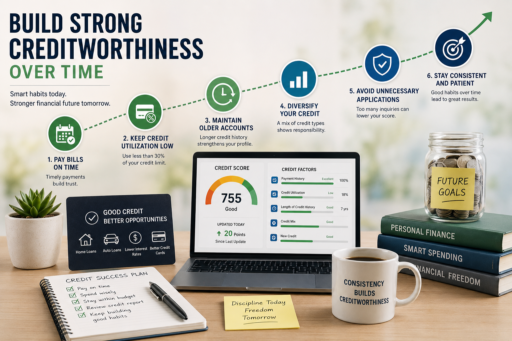
Building strong creditworthiness is one of the most valuable financial goals a person can pursue. A strong credit profile can make it easier to qualify for loans, secure favorable interest rates, obtain credit cards with better benefits, and even improve financial flexibility during important life events. However, many people mistakenly believe that creditworthiness can be improved overnight. In reality, strong creditworthiness is built gradually through consistent financial habits practiced over months and years.
Creditworthiness reflects how lenders evaluate an individual’s ability to manage borrowed money responsibly. While credit scores are often used as a measurement, true creditworthiness extends beyond a single number. It includes payment history, debt management, credit utilization, account age, financial stability, and overall borrowing behavior.
Fortunately, anyone can build strong creditworthiness over time by following proven financial principles. The process requires patience, discipline, and consistency, but the long-term rewards can be significant.
Understand What Creditworthiness Really Means
Before attempting to build strong creditworthiness, it is important to understand what the term actually means. Creditworthiness refers to a lender’s assessment of how likely a borrower is to repay debt according to agreed terms.
Financial institutions analyze various factors when evaluating borrowers. These factors help determine the level of risk associated with lending money.
Some of the most common factors include:
- Payment history
- Credit utilization
- Length of credit history
- Types of credit accounts
- Recent credit applications
- Outstanding debt balances
Improving these areas gradually allows consumers to build strong creditworthiness while demonstrating responsible financial behavior.
Always Pay Bills on Time
One of the most important habits for anyone trying to build strong creditworthiness is making payments on time. Payment history often carries substantial weight in credit evaluations because it directly reflects financial responsibility.
Even a single missed payment can remain on credit reports for years and potentially affect future borrowing opportunities. Consistent on-time payments, on the other hand, help establish a positive track record that lenders appreciate.
Consumers who struggle to remember payment dates may benefit from automatic payments, calendar reminders, or budgeting applications that provide due-date notifications.
Over time, a long history of timely payments becomes one of the strongest indicators of creditworthiness.
Keep Credit Utilization Low
Credit utilization represents the percentage of available credit currently being used. This factor plays a significant role in determining overall credit health.
For example, if someone has a total credit limit of $10,000 and maintains balances of $2,000, their utilization ratio equals 20%.
Many financial experts recommend keeping utilization below 30%, while lower percentages often produce even stronger results.
Individuals working to build strong creditworthiness should regularly monitor balances and avoid consistently using most of their available credit.
Lower utilization signals responsible borrowing behavior and demonstrates financial control.
Maintain Older Credit Accounts
The age of credit accounts contributes to overall credit history. Older accounts provide evidence of long-term financial management and help establish stability.
Many consumers are tempted to close older accounts they rarely use. However, doing so can reduce available credit and shorten average account age.
Whenever possible, maintaining older accounts in good standing may support efforts to build strong creditworthiness over time.
Of course, accounts with excessive fees or unnecessary costs should still be evaluated carefully before deciding whether to keep them open.
Diversify Your Credit Profile
Lenders often prefer borrowers who have demonstrated the ability to manage different types of credit responsibly. A healthy credit profile may include a mix of revolving accounts and installment accounts.
Examples include:
- Credit cards
- Personal loans
- Auto loans
- Student loans
- Lines of credit
This does not mean consumers should open accounts unnecessarily. Rather, responsible management of different account types over time can contribute positively to overall creditworthiness.
Avoid Applying for Excessive Credit
Applying for multiple accounts within a short period can create concerns for lenders. Frequent applications may generate numerous hard inquiries and potentially suggest financial distress.
Consumers seeking to build strong creditworthiness should focus on quality rather than quantity. Each new application should serve a legitimate financial purpose.
Carefully evaluating credit needs before submitting applications can help preserve long-term credit health.
Create a Long-Term Financial Strategy
Strong creditworthiness rarely develops by accident. Instead, it often results from a deliberate financial strategy supported by consistent habits.
A long-term plan may include paying down debt, building emergency savings, monitoring credit reports, controlling spending, and using credit responsibly.
Individuals who establish clear financial goals typically find it easier to stay motivated throughout the credit-building process.
Rather than focusing solely on short-term credit score fluctuations, successful consumers concentrate on sustainable financial behaviors that deliver lasting results.
Monitor Your Credit Reports Regularly
One of the most overlooked strategies for anyone trying to build strong creditworthiness is reviewing credit reports on a regular basis. Credit reports contain valuable information about account history, payment records, balances, and potential errors that could affect a consumer’s financial reputation.
Errors occasionally appear on credit reports, and identifying them early can prevent unnecessary damage. Reviewing reports also allows consumers to track progress and verify that financial habits are producing positive results.
Consumers who actively monitor their credit information often gain a better understanding of how financial decisions influence long-term creditworthiness.
Develop Responsible Spending Habits
Credit can be a useful financial tool when used responsibly. However, excessive spending remains one of the most common obstacles to building strong creditworthiness.
Many consumers experience difficulties not because they lack access to credit but because they fail to manage spending effectively. Creating a realistic budget and tracking expenses can help prevent unnecessary debt accumulation.
Responsible spending habits allow individuals to maintain manageable balances while preserving financial flexibility for future goals.
As consumers become more disciplined with spending, it becomes easier to build strong creditworthiness and maintain healthy financial stability.
Build an Emergency Fund
Unexpected expenses can quickly disrupt even the most carefully planned budget. Medical bills, vehicle repairs, job interruptions, and household emergencies often force individuals to rely heavily on credit.
An emergency fund provides a financial safety net that reduces dependence on borrowed money during difficult situations.
Having emergency savings allows consumers to continue making payments on time while avoiding excessive debt accumulation. This combination supports both financial stability and long-term creditworthiness.
Even small monthly contributions can gradually build meaningful financial protection over time.
Pay More Than the Minimum Payment
Although minimum payments help keep accounts in good standing, paying only the minimum amount may slow financial progress considerably.
Consumers who consistently pay more than required often reduce debt faster, save money on interest charges, and improve utilization ratios.
Making larger payments whenever possible demonstrates stronger financial control and can accelerate efforts to build strong creditworthiness.
Over time, reduced balances create additional flexibility and improve overall financial health.
Avoid Maxing Out Credit Cards
High balances can negatively affect creditworthiness even when payments are made on time. Using most of an available credit limit may signal elevated financial risk to lenders.
Instead of approaching credit limits, consumers should aim to keep balances comfortably below available limits whenever possible.
Maintaining lower balances often results in healthier utilization ratios and a stronger overall credit profile.
Individuals who consistently avoid maxing out cards generally experience fewer financial challenges and greater borrowing opportunities.
Use Credit Consistently but Carefully
Building credit requires activity. Accounts that remain completely unused for extended periods may provide limited opportunities to demonstrate responsible borrowing behavior.
Many financially successful consumers use credit for planned purchases that can easily be repaid within their budget.
This approach creates positive payment history while avoiding unnecessary debt.
Learning to use credit consistently without overspending is one of the most effective ways to build strong creditworthiness over time.
Practice Patience During the Process
One of the biggest misconceptions about credit improvement is the belief that significant results should appear immediately. In reality, strong creditworthiness often develops gradually.
Many positive factors require time to mature. Payment history expands month by month, account age increases year by year, and responsible habits produce cumulative benefits over extended periods.
Consumers who remain patient and committed to good financial practices typically achieve stronger results than those searching for quick fixes.
The most reliable improvements often come from consistency rather than shortcuts.
Learn From Past Financial Mistakes
Many individuals who eventually build excellent credit profiles have experienced financial mistakes at some point. Missed payments, excessive debt, or poor budgeting decisions do not necessarily prevent future success.
The key is learning from previous challenges and implementing better habits moving forward.
Each financial setback can provide valuable lessons that contribute to smarter decision-making in the future.
Consumers who actively improve their financial behavior often discover that past difficulties become important stepping stones toward stronger creditworthiness.
Stay Focused on Long-Term Financial Health
Creditworthiness should not be viewed as an isolated objective. Instead, it should be considered one component of overall financial wellness.
Healthy savings habits, responsible debt management, disciplined spending, and long-term financial planning all contribute to stronger credit profiles.
Individuals who focus on comprehensive financial improvement often achieve sustainable results that extend beyond credit scores alone.
Building strong creditworthiness becomes easier when it is supported by broader financial stability.
Additional Resources to Improve Credit Health
If you want to continue strengthening your financial profile, consider reading related guides such as Manage Multiple Credit Accounts, How to Build Credit Responsibly, Best Credit Management Tips for Beginners, and How to Monitor Your Credit Effectively. These resources can provide additional strategies that complement your long-term credit-building efforts.
For official consumer credit guidance, visit the Consumer Financial Protection Bureau (CFPB)
Conclusion
Learning how to build strong creditworthiness over time requires patience, discipline, and consistent financial habits. While there are no instant solutions, responsible actions repeated over months and years can create meaningful improvements.
Making payments on time, maintaining low credit utilization, monitoring credit reports, avoiding excessive debt, protecting account history, and practicing responsible spending all contribute to stronger creditworthiness.
Consumers who remain committed to these principles often enjoy greater financial flexibility, improved borrowing opportunities, and increased confidence when making important financial decisions.
Ultimately, strong creditworthiness is not built through a single action. It is the result of hundreds of responsible financial choices made consistently over time. Those choices can open doors to better financial opportunities for years to come.