
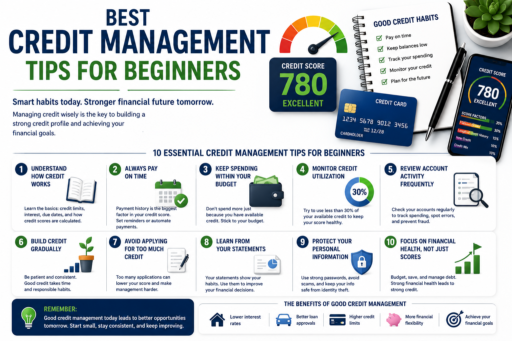
Managing credit for the first time can feel overwhelming. If you’re searching for effective Credit Management Tips for Beginners, it helps to know what steps can make the process easier. Between credit cards, payment deadlines, credit scores, utilization ratios, account monitoring, and financial planning, many beginners are unsure where to start.
Unfortunately, a lack of knowledge often leads to costly mistakes. Some people avoid credit completely because they fear debt, while others use credit carelessly without understanding the long-term consequences.
The truth is that credit itself is neither good nor bad.
Credit is simply a financial tool. When used responsibly, it can help build financial flexibility, strengthen credit history, and create future opportunities. When mismanaged, it can lead to debt, stress, and financial setbacks.
Learning effective Credit Management Tips for Beginners can help you build confidence, avoid common mistakes, and establish healthy financial habits from the start.
The good news is that successful credit management does not require advanced financial knowledge. Most strong credit profiles are built through simple habits repeated consistently over time.
In this guide, we’ll explore practical credit management strategies that every beginner should understand.
Why Credit Management Matters
Many people focus on obtaining credit but spend very little time learning how to manage it.
However, the way credit is managed often matters more than the amount of credit available.
Imagine two individuals with similar credit cards and similar incomes.
One develops organized financial habits, monitors accounts regularly, and pays bills on time.
The other ignores statements, misses due dates, and spends impulsively.
Several years later, their financial situations may look dramatically different.
The difference is usually not the credit product itself. It is the management habits behind it.
Tip #1: Understand How Credit Works
Before using credit, take time to understand the basics.
Many financial mistakes occur simply because consumers do not fully understand how borrowing works.
Important concepts include:
- Credit limits.
- Payment due dates.
- Interest charges.
- Credit utilization.
- Payment history.
A basic understanding of these concepts creates a stronger foundation for future financial decisions.
Tip #2: Always Pay on Time
If there is one habit every beginner should prioritize, it is making payments on time.
Consistent payments demonstrate responsibility and help create positive financial patterns.
Many consumers who struggle with credit later often begin with missed payment deadlines that could have been avoided.
Helpful strategies include:
- Calendar reminders.
- Automatic payments.
- Monthly account reviews.
- Budgeting systems.
Small organizational habits often prevent larger financial problems.
Tip #3: Keep Spending Within Your Budget
One of the biggest mistakes beginners make is confusing available credit with available money.
Just because a credit card allows a purchase does not mean the purchase fits your financial situation.
Responsible consumers generally make spending decisions based on income and budgets—not credit limits.
Maintaining this mindset helps reduce financial stress and supports healthier long-term credit habits.
Tip #4: Monitor Credit Utilization
Credit utilization is a concept many beginners overlook.
However, understanding utilization can help improve overall credit management.
Imagine consistently using most of your available credit limit.
Even if payments are made on time, very high balances may create unnecessary financial pressure.
Monitoring utilization regularly helps consumers maintain better control over credit activity.
Related Article: How Credit Utilization Affects Your Score
Tip #5: Review Account Activity Frequently
Many beginners only check accounts when making payments.
However, reviewing account activity regularly can help identify problems early.
Frequent reviews may help you:
- Track spending.
- Monitor balances.
- Detect fraud.
- Identify errors.
- Improve financial awareness.
Consumers who stay informed about account activity are often better prepared to make smart financial decisions.
Related Article: How to Monitor Your Credit Effectively
Tip #6: Build Credit Gradually
One of the most valuable lessons for beginners is understanding that strong credit takes time.
Many people look for shortcuts or rapid improvements.
Unfortunately, credit development is usually a gradual process.
Imagine planting a tree.
You cannot force it to grow overnight.
Instead, consistent care produces results over time.
Credit works in a similar way.
Consumers who develop patience often avoid many of the mistakes that come from rushing the process.
Tip #7: Avoid Applying for Too Much Credit
Receiving multiple credit offers can be tempting, especially for someone new to credit.
However, opening several accounts without a clear purpose can make financial management more complicated.
Before applying for new credit, ask yourself:
- Do I actually need this account?
- Will it support my financial goals?
- Can I manage it responsibly?
Successful credit management often involves quality decisions rather than quantity.
Consumers who follow strong Credit Management Tips for Beginners typically focus on responsible account management instead of accumulating unnecessary accounts.
Tip #8: Learn From Your Statements
Many beginners overlook an important financial tool: their monthly statements.
Statements provide valuable information about spending habits, balances, payments, and account activity.
Reviewing statements regularly can help you:
- Identify spending patterns.
- Track progress.
- Monitor financial goals.
- Catch errors early.
- Improve budgeting decisions.
Small observations often lead to meaningful financial improvements.
Tip #9: Protect Your Personal Information
Credit management is not only about spending and payments.
It also involves protecting your financial information.
Identity theft, fraud, and account security issues can create significant financial challenges.
Helpful habits include:
- Using strong passwords.
- Monitoring accounts regularly.
- Avoiding suspicious websites and links.
- Protecting sensitive financial information.
Many financial problems can be prevented through simple security practices.
Related Article: Best Ways to Protect Your Credit Score
Tip #10: Focus on Financial Health, Not Just Credit Scores
Many beginners become obsessed with credit scores.
While scores are important, they are only one part of a larger financial picture.
Strong financial health often includes:
- Responsible spending.
- Emergency savings.
- Debt management.
- Budgeting.
- Long-term planning.
Ironically, consumers who focus on overall financial health often see credit improvements occur naturally over time.
Common Credit Management Mistakes Beginners Make
Many new credit users make similar mistakes during their first few years.
Common examples include:
- Missing payment deadlines.
- Overspending.
- Ignoring statements.
- Applying for unnecessary accounts.
- Failing to monitor utilization.
- Checking only credit scores.
The encouraging news is that most of these mistakes are avoidable.
Awareness and consistency often make a significant difference.
Related Article: How to Avoid Common Credit Mistakes
A Real-Life Example of Good Credit Management
Consider two individuals who receive their first credit cards at roughly the same time.
The first creates a budget, pays on time, monitors account activity, and keeps spending under control.
The second makes purchases impulsively, ignores statements, and occasionally misses due dates.
After several years, the first individual often enjoys stronger financial confidence, healthier credit, and greater financial flexibility.
The second may face unnecessary debt and additional financial stress.
The difference is not income.
It is the quality of the habits developed from the beginning.
How Good Credit Management Creates Future Opportunities
Strong credit management habits can support important future goals.
Examples include:
- Purchasing a home.
- Financing a vehicle.
- Qualifying for financial products.
- Reducing borrowing costs.
- Improving financial flexibility.
The earlier these habits are developed, the more valuable they often become over time.
Related Article: How to Build Credit Without Overspending
Related Article: Best Financial Decisions That Improve Credit
The Difference Between Good and Bad Credit Habits
Many beginners focus on credit scores without paying enough attention to the habits that create those scores. In reality, credit scores are often the result of daily financial behaviors repeated over long periods.
Good credit habits usually include paying bills on time, monitoring account activity, keeping balances manageable, following a budget, and reviewing financial statements regularly.
Bad credit habits often involve overspending, ignoring due dates, carrying unnecessary debt, and failing to monitor accounts.
Imagine two people starting with similar financial situations. One consistently follows healthy financial habits while the other manages credit carelessly. Over time, the difference in their financial outcomes can become significant.
Understanding this distinction helps beginners focus on behaviors that support long-term financial success rather than short-term results.
Creating Your First Credit Management Plan
One of the easiest ways to improve financial organization is creating a simple credit management plan.
This plan does not need to be complicated. In fact, the most effective plans are often simple and easy to follow.
A beginner credit management plan may include:
- Reviewing account balances weekly.
- Paying every bill before the due date.
- Monitoring credit reports regularly.
- Tracking monthly spending.
- Maintaining an emergency savings fund.
Having a written plan can help reduce financial stress and make credit management decisions more consistent.
Consumers who follow structured plans often feel more confident because they know exactly what actions need to be taken each month. This approach allows them to implement practical Credit Management Tips for Beginners without feeling overwhelmed.
How Beginners Can Recover From Early Credit Mistakes
Almost everyone makes financial mistakes at some point. Missing a payment, overspending, or misunderstanding how credit works does not mean your financial future is ruined.
The important thing is responding quickly and learning from the experience.
Many successful credit users experienced setbacks early in their financial journeys. What separates them from others is their willingness to improve habits and make better decisions moving forward.
Credit management is a long-term process. Small improvements made consistently can often outweigh earlier mistakes.
For beginners, the goal should not be perfection. The goal should be progress, consistency, and continuous learning.
Frequently Asked Questions
What is the most important credit management habit?
Paying bills on time consistently remains one of the most important habits for maintaining healthy credit.
How often should beginners review accounts?
Many consumers benefit from reviewing account activity at least several times each month.
Should beginners have multiple credit cards?
Not necessarily. Managing a small number of accounts responsibly is often better than opening several accounts too quickly.
Can beginners build credit without debt?
Yes. Responsible account management and on-time payments can help build credit without carrying unnecessary debt.
Why is utilization important?
Utilization helps measure how much available credit is being used and can influence overall credit health.
Additional Resources for Credit Management
Financial education can help beginners develop stronger habits and avoid common mistakes.
For additional information about credit management resources, the Consumer Financial Protection Bureau provides educational tools covering credit cards, borrowing, and responsible financial management.
Related Article: How to Understand Credit Reports
Related Article: How to Use Credit Cards More Responsibly
Final Thoughts
Learning effective Credit Management Tips for Beginners can help create a strong financial foundation that supports future goals and opportunities. The most successful credit users are rarely those with complicated strategies. Instead, they are often the people who consistently follow simple habits.
By paying on time, monitoring accounts, managing spending carefully, protecting personal information, and focusing on long-term financial health, beginners can avoid many common mistakes and build confidence over time.
Remember that credit management is a skill. Like any skill, it improves through practice, consistency, and experience.