
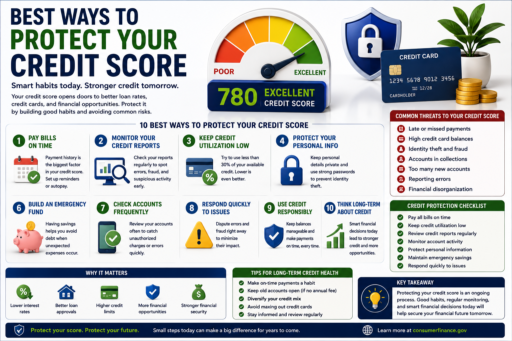
Building a strong credit score takes time, patience, and consistent financial habits. It’s important to know how to protect your credit score throughout this process. Unfortunately, damaging a credit score can happen much faster. A missed payment, identity theft incident, reporting error, or period of financial stress can sometimes undo months or even years of progress.
This is why protecting your credit score is just as important as improving it.
Many consumers focus heavily on credit-building strategies but spend very little time thinking about credit protection. The reality is that strong credit requires both growth and protection.
Learning the best ways to Protect Your Credit Score can help you maintain financial flexibility, qualify for better borrowing opportunities, reduce financial stress, and avoid unnecessary setbacks.
The good news is that many credit protection strategies are simple. Most involve awareness, consistency, and a willingness to monitor financial information regularly.
In this guide, we’ll explore practical ways to protect your credit profile and reduce the risk of common problems that can negatively affect long-term credit health.
Why Credit Protection Matters
Many consumers only pay attention to credit after a problem occurs.
Perhaps a loan application is denied.
Maybe a credit score suddenly drops.
Or an unfamiliar account appears on a credit report.
By that point, the issue has already happened.
Credit protection focuses on prevention rather than reaction.
Just as regular vehicle maintenance helps prevent expensive repairs, consistent credit monitoring can help reduce financial surprises.
The earlier problems are identified, the easier they are often to address.
Strategy #1: Pay Every Bill on Time
If there is one habit that consistently protects credit health, it is paying bills on time.
Payment history remains one of the most important components of a credit profile.
Imagine spending years building strong credit and then missing multiple due dates because of poor organization.
Many credit problems begin with simple oversights rather than major financial disasters.
Helpful strategies include:
- Automatic payments.
- Calendar reminders.
- Budgeting systems.
- Monthly account reviews.
Creating reliable systems often reduces the likelihood of preventable mistakes.
Strategy #2: Monitor Credit Reports Regularly
One of the most effective ways to Protect Your Credit Score is reviewing credit reports consistently.
Regular reviews can help identify:
- Reporting errors.
- Fraud indicators.
- Unexpected account activity.
- Incorrect balances.
- Unfamiliar inquiries.
Consumers who understand their reports often discover issues earlier than those who only check scores occasionally.
Related Article: How to Understand Credit Reports
Strategy #3: Keep Credit Utilization Under Control
High utilization can sometimes place unnecessary pressure on a credit profile.
Many consumers focus entirely on making payments while overlooking how much available credit they are using.
Imagine a credit card with a high balance that remains near its limit for several months.
Even when payments are made on time, utilization levels may still influence overall credit health.
Monitoring balances regularly helps prevent utilization from gradually becoming a problem.
Related Article: How Credit Utilization Affects Your Score
Strategy #4: Protect Personal Information Carefully
Identity theft and fraud can create significant financial complications.
Protecting personal information remains an important part of credit protection.
Simple precautions include:
- Using strong passwords.
- Securing financial accounts.
- Avoiding suspicious links.
- Monitoring account activity.
- Protecting sensitive information.
Many fraud-related issues begin with small security weaknesses that could have been prevented. Taking simple precautions today can help Protect Your Credit Score and reduce the risk of costly financial problems later.
Strategy #5: Avoid Applying for Unnecessary Credit
New credit applications are not always a problem.
However, applying for multiple credit products without a clear purpose can create unnecessary risk.
Before submitting an application, ask yourself:
- Do I need this account?
- Will it improve my financial situation?
- Can I manage it responsibly?
Intentional borrowing often supports stronger long-term credit health than impulsive borrowing.
Strategy #6: Build an Emergency Fund
Many people do not realize how closely emergency savings and credit protection are connected.
Unexpected expenses are part of life.
A vehicle repair, medical bill, home maintenance issue, or temporary loss of income can happen at any time.
Without emergency savings, consumers often rely heavily on credit cards during difficult situations.
This can increase balances, raise utilization, and create financial stress.
An emergency fund provides flexibility and can help protect your credit profile when life becomes unpredictable.
Strategy #7: Monitor Credit Accounts Frequently
Many consumers review account activity only when making payments.
However, regular monitoring provides additional protection.
Checking accounts consistently may help identify:
- Unauthorized transactions.
- Fraud attempts.
- Unexpected balance increases.
- Billing errors.
- Unusual account activity.
Early detection often reduces the impact of potential problems.
People who successfully Protect Your Credit Score usually make account monitoring a routine habit rather than an occasional task.
Strategy #8: Respond Quickly to Problems
One of the biggest mistakes consumers make is delaying action when problems appear.
Imagine noticing an unfamiliar account or reporting error and deciding to deal with it later.
Weeks become months.
Meanwhile, the issue remains unresolved.
Addressing concerns early often leads to faster and less stressful resolutions.
Whether the issue involves fraud, reporting errors, or payment challenges, timely action is usually beneficial.
Strategy #9: Use Credit Cards Responsibly
Credit cards can help build strong credit profiles when managed properly.
However, they can also create challenges when spending becomes difficult to control.
Responsible habits often include:
- Paying balances on time.
- Keeping utilization manageable.
- Monitoring transactions.
- Avoiding unnecessary debt.
Protecting credit health often begins with maintaining healthy borrowing habits.
Related Article: How to Use Credit Cards More Responsibly
Strategy #10: Think Long-Term About Credit Decisions
Many financial decisions seem small in the moment.
However, credit profiles are often shaped by hundreds of decisions accumulated over time.
Before opening new accounts, taking on additional debt, or making large purchases, consider how those decisions may affect your future goals.
Long-term thinking often helps consumers avoid choices that could weaken financial flexibility later.
Strong credit is usually the result of consistent habits rather than short-term tactics.
Common Threats to Credit Scores
Understanding potential risks can help consumers avoid unnecessary setbacks.
Common threats include:
- Late payments.
- Identity theft.
- Reporting errors.
- High utilization.
- Excessive debt.
- Financial disorganization.
- Ignoring account activity.
Many of these problems are preventable through awareness and proactive financial management.
Related Article: How to Monitor Your Credit Effectively
A Real-Life Example of Credit Protection
Consider two consumers with similar credit scores.
The first reviews reports regularly, monitors account activity, maintains emergency savings, and responds quickly to unusual activity.
The second rarely reviews financial information and only checks credit when applying for financing.
When an unexpected reporting error appears, the first consumer notices it quickly and addresses it before it causes major problems.
The second consumer discovers the issue much later during an important loan application.
The difference is not luck.
It is preparation.
This example illustrates why consumers who actively Protect Your Credit Score often avoid financial surprises and preserve valuable opportunities for the future.
How Credit Protection Supports Financial Goals
Strong credit often creates opportunities.
Consumers with healthy credit profiles may have greater flexibility when pursuing goals such as:
- Purchasing a home.
- Financing a vehicle.
- Qualifying for credit cards.
- Reducing borrowing costs.
- Managing future financial opportunities.
Protecting your credit helps preserve those opportunities and reduces the likelihood of unexpected obstacles.
Related Article: Best Financial Decisions That Improve Credit
Related Article: Best Credit Habits for Better Financial Health
Frequently Asked Questions
What is the best way to protect a credit score?
Consistently paying bills on time, monitoring credit reports, and maintaining healthy financial habits remain some of the most effective strategies.
Can identity theft damage credit?
Yes. Fraudulent activity may create reporting issues and financial complications if not identified and addressed quickly.
How often should I check my credit report?
Many consumers benefit from reviewing reports several times per year and monitoring accounts regularly.
Does high utilization hurt credit?
High utilization can place pressure on a credit profile, which is why balance management is important.
Can emergency savings help protect credit?
Yes. Emergency funds may reduce reliance on credit cards during unexpected financial situations.
Additional Resources for Credit Protection
Financial education can help consumers build stronger habits and avoid common credit-related problems.
For additional information about credit protection resources, the Consumer Financial Protection Bureau provides educational tools covering credit reports, credit scores, consumer rights, and responsible credit management.
Related Article: Annual Fee vs No Annual Fee Credit Cards
Related Article: Credit Score Improvement Strategies
Final Thoughts
Learning how to Protect Your Credit Score is one of the most valuable investments you can make in your financial future. Building strong credit takes time, but protecting it requires ongoing awareness and consistent habits.
By paying bills on time, monitoring reports, managing utilization, protecting personal information, and responding quickly to potential issues, you can significantly reduce the likelihood of credit-related setbacks.
Remember that credit protection is not a one-time task. It is an ongoing process that helps preserve financial opportunities, strengthen confidence, and support long-term financial success.