
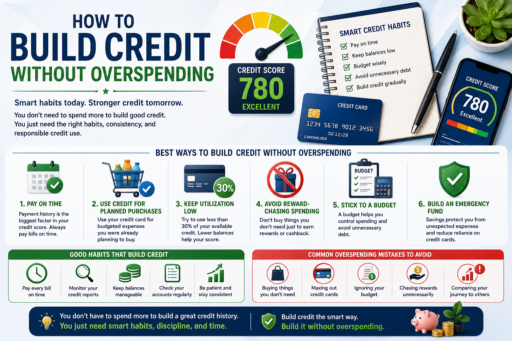
One of the biggest misconceptions about credit building is the belief that you need to spend large amounts of money to improve your credit profile. In reality, it is possible to build credit without overspending. Many consumers assume that using credit cards heavily or carrying large balances will somehow accelerate credit growth.
In reality, the opposite is often true.
Strong credit is not usually built through excessive spending. Instead, it is built through consistent financial habits, responsible account management, and thoughtful use of available credit.
Unfortunately, many people damage their financial health while trying to improve their credit. They spend more than their budgets allow, accumulate unnecessary debt, and focus on short-term credit goals rather than long-term financial stability.
Learning how to Build Credit Without Overspending can help you strengthen your credit profile while maintaining healthy financial habits and avoiding unnecessary debt.
The good news is that building credit responsibly does not require a high income or large purchases. Small, consistent actions often produce better results than aggressive spending strategies.
In this guide, we’ll explore practical ways to improve credit while keeping spending under control.
Why Overspending Is Not Required for Credit Building
Many consumers confuse credit usage with credit quality.
They assume that higher spending automatically leads to better credit.
However, lenders are generally more interested in how credit is managed than how much money is spent.
Imagine two consumers.
The first spends thousands of dollars every month and carries large balances.
The second uses credit modestly, pays on time, and manages balances carefully.
Over time, the second consumer may develop a stronger and healthier credit profile despite spending significantly less.
This is because responsible behavior often matters more than spending volume.
Strategy #1: Focus on Payment History First
If your goal is to build credit, payment history should be one of your highest priorities.
Making payments consistently demonstrates reliability and financial responsibility.
You do not need expensive purchases to establish this pattern.
Even small recurring charges paid on time can contribute to a positive credit history.
Examples may include:
- Streaming subscriptions.
- Mobile phone bills.
- Utility payments when applicable.
- Small routine purchases.
The key is consistency rather than spending volume.
Strategy #2: Use Credit Cards for Planned Purchases
One of the smartest ways to Build Credit Without Overspending is using credit cards only for purchases that already exist within your budget.
Imagine buying groceries, fuel, or other planned necessities.
Instead of increasing spending, you simply change the payment method.
This approach allows you to build credit activity while maintaining financial discipline.
The purchase was already planned. The credit card simply becomes the tool used to complete it.
Related Article: How to Use Credit Cards More Responsibly
Strategy #3: Keep Utilization Manageable
Many consumers mistakenly believe that using most of their available credit helps build stronger credit.
In reality, carrying very high balances can create unnecessary financial pressure.
Imagine having a credit card with a $1,000 limit.
Using a small portion responsibly often creates less financial stress than continuously approaching the limit.
Managing utilization carefully helps support both financial stability and long-term credit health.
Related Article: How Credit Utilization Affects Your Score
Strategy #4: Avoid Reward-Chasing Purchases
Rewards programs can be useful, but they sometimes encourage unnecessary spending.
Imagine purchasing items you never intended to buy simply to earn cashback or points.
The rewards may seem attractive, but overspending often eliminates much of the benefit.
Financially successful consumers focus on planned purchases first and rewards second.
Smart credit building should never depend on buying things you do not need.
Strategy #5: Create a Budget That Supports Credit Building
A budget provides structure and helps prevent emotional spending decisions.
Without a spending plan, credit cards can become difficult to manage.
A simple budget helps you:
- Track expenses.
- Plan payments.
- Monitor balances.
- Avoid unnecessary debt.
- Maintain financial control.
Credit building becomes significantly easier when it is supported by a realistic spending plan.
Strategy #6: Build an Emergency Fund Alongside Credit
Many consumers focus entirely on credit building while ignoring savings.
This can create unnecessary financial risk.
Imagine facing an unexpected vehicle repair or medical expense without any emergency savings.
In that situation, many people rely heavily on credit cards.
As balances grow, financial stress often increases.
Building even a modest emergency fund can help reduce dependence on debt and support healthier long-term credit habits.
Strong financial health usually involves both savings and responsible credit management working together.
Strategy #7: Increase Credit Activity, Not Spending
One important concept many consumers overlook is that credit activity and spending are not the same thing.
You do not need expensive purchases to demonstrate responsible credit use.
For example, a person who consistently uses a credit card for routine budgeted expenses and pays the balance responsibly may build credit without increasing spending at all.
The goal is creating positive account activity rather than creating larger bills.
Consumers who successfully Build Credit Without Overspending often understand this distinction very well.
Strategy #8: Monitor Progress Regularly
Building credit is a long-term process.
Without monitoring progress, it can be difficult to identify strengths, weaknesses, and opportunities for improvement.
Regular reviews may help you:
- Track payment history.
- Monitor utilization.
- Review account activity.
- Identify reporting errors.
- Measure long-term progress.
Awareness often leads to better financial decisions.
Related Article: How to Monitor Your Credit Effectively
Strategy #9: Avoid Comparing Your Credit Journey to Others
Many consumers become discouraged when comparing themselves to people with longer credit histories or higher scores.
However, credit building is highly individual.
Different incomes, account histories, financial goals, and life circumstances all influence credit development.
Instead of comparing your progress to others, focus on improving your own financial habits consistently.
Small improvements maintained over time often produce meaningful long-term results.
Strategy #10: Focus on Long-Term Financial Health
Sometimes consumers become so focused on increasing a score that they ignore broader financial goals.
Overspending to build credit is rarely a good trade-off.
Strong credit should support financial health rather than undermine it.
Before making a purchase, ask yourself:
- Does this fit my budget?
- Would I buy this without a credit card?
- Will this help or hurt my long-term financial goals?
These questions often encourage smarter financial decisions.
Common Mistakes People Make When Building Credit
Many consumers unintentionally create financial problems while trying to improve their credit.
Common mistakes include:
- Overspending to increase activity.
- Chasing rewards unnecessarily.
- Ignoring utilization levels.
- Missing payment deadlines.
- Applying for unnecessary credit.
- Focusing only on scores.
Fortunately, most of these mistakes can be avoided through planning and awareness.
Related Article: How to Avoid Common Credit Mistakes
A Real-Life Example of Smart Credit Building
Consider two individuals trying to improve their credit.
The first begins making unnecessary purchases every month because they believe spending more will improve their score faster.
The second uses a credit card only for budgeted expenses such as groceries and fuel while paying balances responsibly.
After a year, the second individual often enjoys stronger financial stability because credit growth occurred without creating additional debt or financial stress.
The lesson is simple.
Credit building works best when it is supported by healthy financial habits rather than excessive spending.
How Responsible Credit Building Supports Financial Freedom
Many people think of credit as the goal.
In reality, credit is a tool.
Strong credit can help support larger financial goals such as:
- Purchasing a home.
- Financing a vehicle.
- Qualifying for financial products.
- Reducing borrowing costs.
- Creating greater financial flexibility.
When you Build Credit Without Overspending, you strengthen your credit profile without sacrificing overall financial well-being.
Related Article: Best Financial Decisions That Improve Credit
Related Article: Best Ways to Protect Your Credit Score
Frequently Asked Questions
Can I build credit without carrying debt?
Yes. Many consumers build positive credit histories through responsible account management and on-time payments without carrying unnecessary debt.
Do I need to spend a lot to improve my credit?
No. Consistent responsible use is generally more important than high spending levels.
Can small purchases help build credit?
Yes. Small, budgeted purchases paid responsibly may contribute to positive credit activity.
Does overspending improve credit faster?
Not necessarily. Overspending can create financial stress and increase debt without providing meaningful long-term benefits.
How long does it take to build credit?
The timeline varies, but consistent positive habits often produce gradual improvements over time.
Additional Resources for Credit Building
Learning how to manage credit responsibly can help consumers improve financial health while avoiding unnecessary debt.
For additional information about credit building resources, the Consumer Financial Protection Bureau provides educational tools covering credit reports, credit scores, and responsible credit management.
Related Article: Annual Fee vs No Annual Fee Credit Cards
Related Article: Best Starter Credit Cards for Young Adults
Final Thoughts
Learning how to Build Credit Without Overspending is one of the smartest approaches to long-term financial success. Strong credit is not created through excessive spending or unnecessary debt. Instead, it develops through consistent habits, responsible account management, and thoughtful financial decisions.
By focusing on payment history, maintaining manageable balances, following a budget, and avoiding unnecessary purchases, you can strengthen your credit profile while protecting your overall financial health.
Remember that successful credit building is not a race. Small, consistent actions often produce the strongest and most sustainable results over time.