
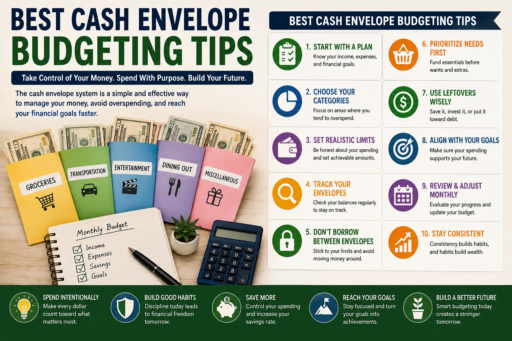
Managing money effectively can be challenging, especially when digital payments make spending feel almost effortless. One budgeting method that continues to help people control spending and improve financial discipline is the cash envelope system. The Cash Envelope Budgeting Tips can help individuals reduce overspending, stay within budget limits, and achieve financial goals more consistently.
The cash envelope method involves dividing money into spending categories and placing cash into separate envelopes. Each envelope represents a specific budget category such as groceries, transportation, entertainment, or dining out. Once the money in an envelope is gone, spending in that category stops until the next budgeting period.
Although many people now rely on digital payments, the cash envelope system remains popular because it creates stronger spending awareness and encourages intentional financial decisions.
The Cash Envelope Budgeting Tips can help you maximize the effectiveness of this simple yet powerful budgeting method.
What Is Cash Envelope Budgeting?
Cash envelope budgeting is a system that allocates cash into specific spending categories.
Common envelope categories include:
- Groceries
- Transportation
- Entertainment
- Dining out
- Personal spending
This method creates clear spending limits and helps prevent budget overruns.
Why the Cash Envelope System Works
Many budgeting methods fail because spending remains difficult to visualize.
Using physical cash provides:
- Greater spending awareness
- Better self-control
- Reduced impulse purchases
- Improved budgeting discipline
The Cash Envelope Budgeting Tips often focus on creating visibility and accountability.
Tip #1: Start With a Simple Budget
Before creating envelopes, determine how much money is available for spending.
Review:
- Monthly income
- Fixed expenses
- Savings goals
- Debt obligations
A realistic budget provides the foundation for successful envelope budgeting.
Tip #2: Choose the Right Categories
Not every expense needs its own envelope.
Focus on spending categories where overspending is most likely to occur.
Common examples include groceries, dining out, entertainment, and miscellaneous spending.
Tip #3: Use Realistic Spending Limits
Setting unrealistic limits often leads to budgeting frustration.
Review past spending patterns and create envelope amounts that are challenging but achievable.
People who follow the Cash Envelope Budgeting Tips often focus on gradual improvement rather than perfection.
Tip #4: Track Envelope Balances Regularly
Monitor how much money remains in each envelope throughout the month.
Regular tracking helps:
- Prevent overspending
- Improve planning
- Increase spending awareness
Visibility is one of the greatest strengths of the envelope system.
Tip #5: Avoid Borrowing Between Envelopes
Moving money between envelopes can weaken budgeting discipline.
Whenever possible, keep spending within the limits assigned to each category.
This encourages more thoughtful financial decisions.
People who use the Cash Envelope Budgeting Tips consistently often find it easier to stay within spending limits and avoid unnecessary debt.
Tip #6: Prioritize Essential Categories
Essential expenses should always receive priority.
Examples include:
- Food
- Transportation
- Household necessities
- Healthcare costs
Prioritizing essentials helps maintain financial stability.
Tip #7: Use Leftover Cash Strategically
Unused cash at the end of the month can support financial goals.
Consider directing leftover funds toward:
- Savings
- Debt repayment
- Investments
- Emergency funds
This approach helps turn small savings into meaningful financial progress.
Tip #8: Combine Cash Budgeting With Financial Goals
Envelope budgeting becomes more powerful when connected to clear financial objectives.
Goals provide motivation and help maintain budgeting discipline over time.
The Cash Envelope Budgeting Tips become even more effective when every spending category supports a specific financial goal.
Tip #9: Review Spending Patterns Monthly
Monthly reviews help identify trends and opportunities for improvement.
Analyze which envelopes consistently run out of money and which categories regularly have leftover funds.
These insights can improve future budgets.
Tip #10: Stay Consistent
The cash envelope system works best when used consistently over time.
Small improvements repeated month after month often produce significant financial benefits.
Common Cash Envelope Budgeting Mistakes
Even effective budgeting systems can fail when implemented incorrectly.
Common mistakes include:
- Using too many envelopes
- Setting unrealistic spending limits
- Borrowing money between envelopes
- Failing to track spending regularly
- Ignoring monthly reviews
The Cash Envelope Budgeting Tips focus on simplicity, consistency, and realistic expectations.
Create a Monthly Envelope Review
Successful budgeting requires regular evaluation.
At the end of each month, review:
- Categories that exceeded limits
- Categories with leftover cash
- Unexpected expenses
- Savings opportunities
People who use the Cash Envelope Budgeting Tips often adjust their budgets based on real spending patterns.
Build Better Spending Awareness
One major advantage of the envelope system is increased spending awareness.
Physically handling cash creates a stronger connection between spending decisions and financial consequences.
This awareness often reduces impulse purchases and improves financial discipline.
Use Envelope Budgeting for Problem Categories
Some spending categories create more financial challenges than others.
Examples may include:
- Dining out
- Entertainment
- Shopping
- Hobbies
The Cash Envelope Budgeting Tips often recommend focusing on categories where overspending occurs most frequently.
Combine Envelope Budgeting With Savings Goals
Budgeting should support broader financial objectives.
Monthly savings goals may include:
- Emergency funds
- Debt repayment
- Retirement savings
- Investment contributions
People who connect envelope budgeting with long-term goals often stay motivated for longer periods.
Adapt the System to Modern Banking
Many people prefer a hybrid approach that combines cash and digital payments.
For example, fixed expenses may remain digital while discretionary spending uses envelopes.
This flexibility allows individuals to benefit from both systems.
Teach Financial Discipline
The envelope method can also be a valuable educational tool.
Families may use the system to teach:
- Budgeting basics
- Spending control
- Saving habits
- Financial responsibility
These lessons often support long-term financial success.
Track Long-Term Progress
Monthly budgeting is important, but long-term progress matters as well.
Monitor:
- Savings growth
- Debt reduction
- Net worth improvements
- Financial goal achievement
The Cash Envelope Budgeting Tips help individuals build stronger financial habits over time.
Use Trusted Financial Resources
Individuals interested in improving budgeting skills can benefit from trusted educational resources. The Consumer Financial Protection Bureau provides practical guidance on budgeting, saving, debt management, and financial planning.
Combining financial education with a strong budgeting system often improves financial outcomes.
Additional Resources for Better Money Management
To strengthen your budgeting strategy, consider reading Prevent Lifestyle Inflation, Financial Checklists for Every Month, and Build Better Money Habits.
Together, these resources provide practical strategies for controlling spending and achieving financial goals.
The Benefits of Cash Envelope Budgeting
Following the Best Cash Envelope Budgeting Tips can provide:
- Greater spending awareness
- Improved budgeting discipline
- Better savings habits
- Reduced overspending
- Stronger financial confidence
Small budgeting improvements often create significant long-term financial benefits.
Final Thoughts
The Cash Envelope Budgeting Tips can help individuals take greater control of their finances and develop stronger money management habits.
By creating realistic spending limits, tracking envelope balances, reviewing budgets regularly, and connecting spending decisions to financial goals, you can improve budgeting success and build a stronger financial future.
Remember that the goal is not perfection. Consistent progress and smarter spending decisions are what ultimately lead to long-term financial success.