
Credit scores play a major role in modern financial life. Learning credit score ranges explained simply can help beginners understand how scores affect loan approvals, credit card applications, apartment rentals, insurance rates, and even some job opportunities. However, many beginners feel confused when they see credit score numbers without understanding what they actually mean.
Learning credit score ranges explained simply can help you understand where your score stands, what lenders may think about your financial habits, and how to improve your credit profile over time.
The good news is that credit scores are not random numbers. They are based on financial behaviors that can be improved with consistent habits.
In this beginner-friendly guide, you will learn:
- What credit scores are
- How credit score ranges work
- What is considered good or bad credit
- How lenders use credit scores
- What affects your score
- How to improve your score gradually
- Common mistakes to avoid in 2026
What Does Credit Score Ranges Explained Simply Mean?
Learning credit score ranges explained simply means understanding how credit scores are grouped into categories that lenders use to evaluate financial risk.
Your credit score is a number that reflects how responsibly you manage borrowed money.
Higher scores generally signal:
- Lower financial risk
- Better payment habits
- Stronger credit management
Lower scores may suggest:
- Late payments
- High debt levels
- Financial instability
Why Credit Score Ranges Explained Simply Matters
Your credit score can affect many financial opportunities.
Good credit scores may help you qualify for:
- Lower interest rates
- Better credit cards
- Higher credit limits
- Apartment rentals
- Auto loans
- Mortgages
According to Experian, lenders use credit score ranges to evaluate borrowing risk and approval decisions.
Common Credit Score Ranges
Although scoring systems vary slightly, many lenders use ranges similar to these:
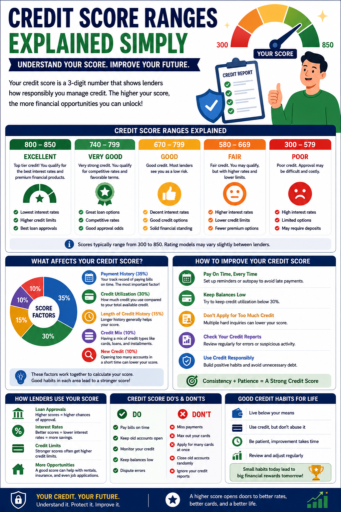
Excellent Credit: 800–850
People in this range usually have:
- Excellent payment history
- Low credit utilization
- Strong account management
Excellent credit often qualifies for the best interest rates and premium financial products.
Very Good Credit: 740–799
This range is considered very strong by most lenders.
Borrowers often qualify for competitive rates and favorable terms.
Good Credit: 670–739
This range is generally viewed positively.
Most lenders consider borrowers in this category acceptable credit risks.
Fair Credit: 580–669
Fair credit may still qualify for loans and cards, but usually with:
- Higher interest rates
- Lower limits
- Fewer premium options
Poor Credit: 300–579
Poor credit may make approvals difficult.
Borrowers may face:
- High interest rates
- Security deposits
- Limited borrowing options
How Credit Scores Are Calculated
Credit scores are based on multiple financial factors.
1. Payment History
Paying on time is one of the most important factors.
Missed payments may damage your score quickly.
2. Credit Utilization
This measures how much available credit you are using.
Lower utilization is generally better.
3. Credit History Length
Older accounts may strengthen your score.
4. Credit Mix
Lenders sometimes consider different account types positively.
5. New Credit Applications
Too many hard inquiries may temporarily lower your score.
Why Payment History Matters Most
Consistent on-time payments show lenders that you manage debt responsibly.
Even one missed payment may lower your score significantly.
If you want to understand missed payment risks, read our article on What Happens If You Miss a Credit Card Payment.
What Is Credit Utilization?
Credit utilization measures the percentage of your available credit currently being used.
Example:
- Credit limit = $5,000
- Balance = $500
- Utilization = 10%
Experts generally recommend staying below 30% utilization.
How Long Does It Take to Build Good Credit?
Building strong credit usually takes time and consistency.
Positive financial habits practiced over months and years gradually improve your profile.
There are rarely instant shortcuts to excellent credit.
How to Improve Your Credit Score
1. Pay On Time Every Month
Payment consistency is extremely important.
2. Keep Balances Low
Lower utilization helps improve scores.
3. Avoid Applying for Too Many Cards
Too many inquiries may lower your score temporarily.
4. Review Credit Reports Regularly
Monitoring reports helps identify errors or fraud.
If you find mistakes, read our guide on How to Dispute Credit Report Errors.
5. Use Credit Responsibly
Healthy habits matter more than quick fixes.
How Bad Credit Can Affect Your Finances
Lower scores may lead to:
- Higher loan interest rates
- Security deposits
- Lower approval chances
- Higher borrowing costs
Improving your score may reduce long-term financial expenses significantly.
Can You Build Credit Without Debt?
Yes — responsible credit usage does not require carrying large balances or expensive debt.
Many people build strong credit by:
- Paying balances fully
- Keeping utilization low
- Avoiding missed payments
If you want healthier financial habits, read our article on Best Credit Card Habits for Good Credit.
Common Credit Score Myths
1. Checking Your Score Hurts It
Checking your own score usually does not lower it.
2. Carrying Debt Improves Scores
Responsible usage matters more than carrying balances.
3. Closing Old Cards Always Helps
Closing accounts may sometimes reduce score factors.
4. Income Directly Determines Your Score
Scores mainly focus on borrowing behavior, not salary.
5. Credit Repair Is Instant
Strong credit usually requires consistent long-term habits.
Best Beginner Habits for Strong Credit
- Pay on time
- Keep balances low
- Track spending carefully
- Review statements monthly
- Avoid unnecessary debt
Small responsible habits can create major long-term financial benefits.
How Credit Scores Affect Credit Cards
Your score often affects:
- Approval odds
- Interest rates
- Credit limits
- Rewards eligibility
If you are looking for beginner-friendly cards, read our article on Best Starter Credit Cards for Young Adults.
Final Thoughts on Credit Score Ranges Explained Simply
Learning credit score ranges explained simply can help you better understand your financial profile and make smarter money decisions over time.
Credit scores may seem complicated initially, but they are largely built on simple habits:
- Pay on time
- Keep balances low
- Avoid unnecessary debt
- Monitor your credit regularly
- Stay financially organized
Most importantly, remember that strong credit is usually built gradually through consistent responsible financial behavior.