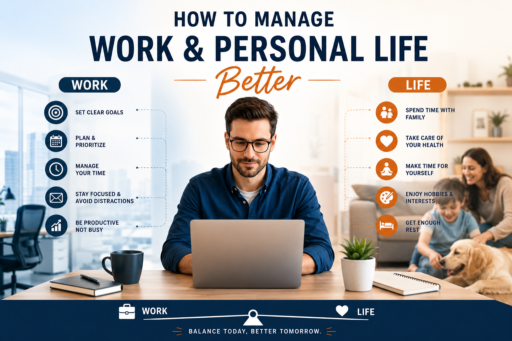
Finding the right balance between work and personal life has become increasingly difficult in today’s fast-paced world. Technology allows people to stay connected almost every hour of the day, making it easy for work responsibilities to extend far beyond the office. Emails arrive late at night, meetings fill the calendar, and personal time often disappears without notice. Over time, this constant pressure can lead to stress, reduced productivity, and burnout.
Learning how to manage work and personal life better is not about dividing your time equally between your career and your personal life. Instead, it means creating healthy boundaries, prioritizing what matters most, and building routines that allow you to succeed professionally without sacrificing your physical health, relationships, or mental well-being.
Many successful professionals have discovered that working longer hours does not necessarily produce better results. In fact, people who maintain a healthy work-life balance often perform better because they have more energy, better focus, and greater motivation. They understand that long-term success depends on sustainability rather than constant overwork.
In this guide, you’ll learn practical strategies that can help you organize your schedule, reduce stress, improve productivity, and create a healthier balance between your professional responsibilities and your personal life.
Why Work-Life Balance Matters
Many professionals believe they must always be available to prove their commitment. While dedication is valuable, constantly working without enough rest eventually reduces performance.
Maintaining a healthy balance offers several benefits:
- Lower stress levels
- Improved physical health
- Better concentration
- Increased productivity
- Stronger personal relationships
- Higher job satisfaction
- Better long-term career performance
When your personal life supports your professional goals, both areas become stronger.
Define What Balance Means to You
Work-life balance looks different for everyone.
Some professionals value spending evenings with family. Others prioritize fitness, education, hobbies, or volunteering. The important thing is identifying what matters most to you instead of comparing your lifestyle with others.
Ask yourself:
- What activities help me recharge?
- Which relationships deserve more attention?
- How much personal time do I realistically need each week?
- Which work responsibilities are truly essential?
Having clear answers makes it easier to organize your schedule around your priorities.
Set Clear Working Hours
One of the biggest reasons work expands into personal life is the absence of clear boundaries.
Whenever possible, establish regular working hours.
For example:
- Start work at the same time each morning.
- Schedule lunch breaks.
- Decide when your workday officially ends.
- Avoid checking work emails late at night.
- Turn off work notifications after business hours.
Creating predictable routines helps separate professional responsibilities from personal time.
Prioritize Your Most Important Tasks
Many people stay busy all day but accomplish very little.
Instead of reacting to every email or notification, identify your most important priorities before your day begins.
Ask yourself:
- What task creates the biggest impact today?
- Which deadline requires immediate attention?
- What can realistically wait until tomorrow?
Completing meaningful work first often reduces stress throughout the remainder of the day.
Learn to Protect Your Personal Time
Your calendar should include personal commitments just as seriously as work meetings.
Schedule time for:
- Exercise
- Family dinners
- Reading
- Relaxation
- Hobbies
- Personal development
Treat these appointments as non-negotiable whenever possible.
Protecting personal time allows you to recharge and return to work with greater focus.
Stop Trying to Be Perfect
Perfectionism often creates unnecessary pressure.
Many professionals spend excessive amounts of time improving work that is already good enough.
Instead of chasing perfection, aim for consistent progress.
Finished work usually creates more value than work that remains unfinished because it never feels perfect.
Learning how to manage work and personal life better often begins by accepting that excellence does not require perfection.
Use Time Blocking
Time blocking helps organize your day by assigning specific periods to different responsibilities.
For example:
Morning:
- Deep work
- Writing
- Strategic planning
Afternoon:
- Meetings
- Emails
- Administrative work
Evening:
- Family time
- Exercise
- Reading
- Personal projects
Following a structured schedule reduces decision fatigue and prevents work from consuming your entire day.
Reduce Unnecessary Distractions
Constant interruptions make even simple tasks take much longer.
Common distractions include:
- Social media
- Phone notifications
- Constant email checking
- Unplanned conversations
- Multitasking
Consider creating focused work sessions where distractions are minimized.
Even one uninterrupted hour often produces more progress than several distracted hours.
Internal Link Opportunity: Best Productivity Systems for Busy Professionals
Learn to Delegate
Trying to handle every responsibility yourself eventually creates unnecessary stress.
Whenever possible, delegate tasks that:
- Can be completed by someone else.
- Require less specialized knowledge.
- Consume valuable time without creating significant value.
Delegation allows you to focus your energy on work that truly requires your attention.
Schedule Regular Breaks
Many professionals skip breaks believing it increases productivity.
The opposite is often true.
Short breaks improve:
- Concentration
- Creativity
- Decision-making
- Energy levels
Even standing up, stretching, or taking a short walk can improve your focus for the next work session. Taking regular breaks is an important part of how to manage work and personal life better, allowing you to maintain higher energy levels and improve productivity throughout the day.
Create Healthy Daily Habits
Work-life balance is supported by small daily routines rather than dramatic lifestyle changes.
Healthy habits include:
- Getting enough sleep.
- Drinking enough water.
- Exercising regularly.
- Eating balanced meals.
- Limiting excessive caffeine.
- Maintaining consistent sleep schedules.
Good health provides the energy needed to perform well at work while still enjoying personal life.
Avoid Constant Multitasking
Many people assume multitasking helps them accomplish more.
In reality, switching repeatedly between different activities often reduces concentration and increases mistakes.
Instead of dividing your attention across several tasks, focus completely on one important responsibility before moving to the next.
Single-tasking often produces better results in less time.
Plan Your Week in Advance
Rather than planning each day separately, review your entire week.
During your weekly planning session:
- Review upcoming meetings.
- Prepare for deadlines.
- Schedule personal activities.
- Reserve time for important projects.
- Identify potential scheduling conflicts.
Planning ahead reduces surprises and helps maintain a healthier balance throughout the week.
Internal Link Opportunity: Best To-Do List Apps for Busy Professionals
Accept That Balance Changes Over Time
Perfect balance does not exist every single day.
Some weeks require greater focus on work because of important deadlines.
Other periods allow more time for family, vacations, or personal projects.
The goal is not perfect balance every day but maintaining a healthy balance over the long term.
Professionals who understand this become less stressed when temporary imbalances occur because they know they can readjust their schedules afterward.
Learn to Disconnect After Work
One of the biggest challenges professionals face today is staying mentally connected to work long after the workday ends. Even after leaving the office or shutting down a laptop, many people continue checking emails, responding to messages, or thinking about unfinished tasks.
To truly recharge, create a routine that signals the end of your workday. This might include closing your laptop, writing tomorrow’s priorities, organizing your desk, or taking a short walk before transitioning into personal time.
Learning how to manage work and personal life better includes giving yourself permission to disconnect. Rest is not wasted time—it is an investment in tomorrow’s performance.
Build Strong Relationships Outside of Work
Career success is important, but meaningful relationships contribute significantly to long-term happiness and emotional well-being.
Make time to:
- Have dinner with family.
- Meet friends regularly.
- Call loved ones.
- Attend community events.
- Celebrate important milestones.
- Spend quality time without checking your phone.
Strong personal relationships provide emotional support during stressful periods and help maintain a healthier perspective on life.
Learn to Manage Stress Effectively
Stress cannot always be eliminated, but it can be managed.
Healthy stress-management techniques include:
- Regular exercise
- Deep breathing
- Meditation
- Journaling
- Reading
- Spending time outdoors
- Listening to music
- Practicing gratitude
Developing healthy coping strategies helps prevent work-related pressure from affecting your personal life.
Developing healthy coping strategies helps prevent work-related pressure from affecting your personal life. According to the Mayo Clinic, practicing healthy stress-management habits can improve both your physical well-being and your overall work-life balance.
Use Technology Wisely
Technology can either improve your work-life balance or make it much worse.
Instead of allowing every app to demand your attention, use technology intentionally.
Helpful practices include:
- Scheduling “Do Not Disturb” hours.
- Turning off unnecessary notifications.
- Using calendar reminders for personal activities.
- Limiting social media during work hours.
- Using productivity tools to stay organized.
Technology should support your priorities rather than control your schedule.
Internal Link Opportunity: Best AI Productivity Apps in 2026
Review Your Priorities Regularly
Your goals and responsibilities will naturally change throughout your career.
Every few months, ask yourself:
- Am I spending time on what matters most?
- Is my workload realistic?
- Am I neglecting important relationships?
- Do I still have time for hobbies and personal growth?
- Which activities add the most value to my life?
Regular self-reflection helps you make adjustments before small problems become major sources of stress.
Avoid Bringing Work Stress Home
Everyone experiences difficult days at work.
However, carrying workplace frustration into your personal life can damage relationships and reduce your ability to relax.
Before entering your home, try creating a mental transition.
You might:
- Listen to calming music during your commute.
- Take several deep breaths.
- Go for a short walk.
- Change into comfortable clothes.
- Spend a few quiet minutes before interacting with family.
Simple transition routines help separate work responsibilities from personal life.
Create Realistic Expectations
Many professionals expect themselves to excel in every area simultaneously.
In reality, everyone has limited time and energy.
Accept that:
- Some days will be highly productive.
- Unexpected problems will occur.
- Priorities will occasionally change.
- Not every task will be completed immediately.
Realistic expectations reduce unnecessary pressure and make it easier to maintain consistent progress. This approach is essential when learning how to manage work and personal life better, as it helps you stay productive without feeling overwhelmed by unrealistic demands.
Don’t Ignore Your Physical Health
Your body directly affects your productivity.
Poor sleep, unhealthy eating habits, and lack of exercise often lead to:
- Lower concentration
- Reduced energy
- Poor decision-making
- Increased stress
- Lower motivation
Even small improvements—such as walking for 30 minutes several times a week or maintaining a regular sleep schedule—can have a significant impact on both work performance and personal well-being.
Measure Success Beyond Your Career
Many people define success only by promotions, salary increases, or professional achievements.
A healthier definition includes:
- Good physical health
- Strong family relationships
- Financial stability
- Personal happiness
- Continuous learning
- Time for hobbies
- Emotional well-being
A successful career becomes far more rewarding when it supports a fulfilling personal life rather than replacing it.
Common Work-Life Balance Mistakes
Many professionals unintentionally create habits that make balance more difficult.
Some of the most common mistakes include:
- Working during every lunch break.
- Checking emails before going to bed.
- Accepting every meeting request.
- Skipping vacations.
- Ignoring exercise.
- Constantly multitasking.
- Never setting boundaries.
- Feeling guilty when taking time off.
Recognizing these habits allows you to replace them with healthier routines.
Build Sustainable Daily Routines
The most effective work-life balance strategies are simple enough to follow consistently.
For example:
Morning:
- Healthy breakfast
- Review priorities
- Focused work session
Afternoon:
- Scheduled meetings
- Short breaks
- Administrative tasks
Evening:
- Exercise
- Family time
- Reading
- Preparing for tomorrow
Small routines repeated daily often create greater long-term improvements than dramatic lifestyle changes.
Final Thoughts
Understanding how to manage work and personal life better is not about working fewer hours or avoiding responsibility. It is about making intentional decisions that protect both your career and your personal well-being.
Start by setting clear boundaries, planning your priorities, protecting your personal time, and building healthy daily habits. Over time, these small adjustments create a more sustainable lifestyle where productivity and personal happiness support one another instead of competing for your attention.
Remember that achieving balance is an ongoing process rather than a final destination. Your responsibilities will continue to evolve, and your routines should evolve with them. By regularly reviewing your priorities, making thoughtful adjustments, and focusing on what truly matters, you can build a career that supports a meaningful, healthy, and fulfilling life.
Internal Link Opportunity: Best Note-Taking Apps for Productivity
For additional research on workplace well-being, stress management, and maintaining a healthy work-life balance, you can naturally link to Mayo Clinic in the section discussing stress management and healthy daily habits using the anchor text work-life balance tips.