
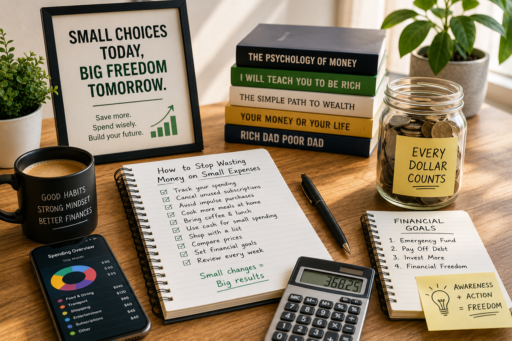
Many people believe that building wealth requires earning a significantly higher income. WhileIf you’re looking for advice on how to stop wasting money on small expenses, it’s important to recognise that while increasing your income can certainly improve your financial situation, many financial experts agree that managing everyday spending is just as important. Small purchases may seem harmless on their own, but when repeated consistently, they can quietly consume a large portion of your monthly budget.
Learning how to stop wasting money on small expenses does not mean eliminating every enjoyable purchase or living an extremely frugal lifestyle. Instead, it means becoming more intentional about where your money goes and recognizing which expenses genuinely improve your life and which simply happen out of habit.
A daily coffee, multiple food deliveries each week, forgotten subscriptions, impulse purchases, or convenience spending may not seem expensive at first. However, when these habits continue month after month, they can delay important financial goals such as building an emergency fund, investing, paying off debt, or saving for major purchases.
In this guide, you’ll learn practical strategies for identifying unnecessary expenses, changing spending habits, and making smarter financial decisions without feeling deprived.
Understand Where Your Money Goes
Before reducing unnecessary spending, you need a clear picture of your current financial habits.
Many people are surprised after reviewing a full month of transactions.
Track your expenses by category, such as:
- Food and dining
- Transportation
- Entertainment
- Shopping
- Subscriptions
- Utilities
- Personal care
Seeing your spending patterns makes it much easier to identify areas where money is quietly disappearing.
Learning how to stop wasting money on small expenses always begins with awareness.
Recognize the Cost of Small Purchases
A single inexpensive purchase rarely causes financial problems.
However, repeated spending often creates significant long-term costs.
Examples include:
- Daily coffee.
- Frequent snacks.
- Food delivery fees.
- Unused subscriptions.
- Impulse online shopping.
Calculating the monthly and yearly total of these expenses often changes how you view everyday spending decisions.
Differentiate Between Convenience and Necessity
Convenience saves time, but it often comes at a financial cost.
Ask yourself:
- Could I prepare this meal at home?
- Do I really need same-day delivery?
- Is this subscription still useful?
- Am I paying for convenience or necessity?
Making this distinction helps reduce unnecessary spending without sacrificing your overall quality of life.
Create a Monthly Spending Plan
A spending plan gives every dollar a purpose.
Instead of wondering where your money went at the end of the month, decide in advance how much you’ll spend in each category.
Include:
- Housing.
- Transportation.
- Groceries.
- Savings.
- Entertainment.
- Personal spending.
A clear plan helps reduce impulsive financial decisions.
Pause Before Making Purchases
Impulse buying is one of the most common causes of unnecessary spending.
Before buying something that wasn’t planned, ask yourself:
- Do I truly need this?
- Will I still want it next week?
- Does this purchase support my financial goals?
Waiting even 24 hours before buying non-essential items often reduces emotional spending.
Review Your Subscriptions
Subscription services are easy to forget because payments happen automatically.
Review every recurring payment regularly.
Cancel services that you:
- Rarely use.
- Forgot about.
- No longer need.
- Can replace with free alternatives.
Removing just a few unused subscriptions can create noticeable monthly savings.
Avoid Shopping Without a List
Entering a store without a plan often leads to unnecessary purchases.
Before shopping:
- Make a list.
- Set a budget.
- Stick to your priorities.
- Avoid browsing aimlessly.
Shopping with intention helps reduce impulsive decisions while controlling expenses.
Bring Lunch More Often
Buying lunch every workday may seem affordable, but the yearly cost can become surprisingly high.
Preparing meals at home often provides:
- Lower costs.
- Healthier options.
- Better portion control.
- More predictable spending.
Even replacing a few restaurant meals each week can significantly improve your monthly budget.
Understand Emotional Spending
Many purchases happen because of emotions rather than actual needs.
Common triggers include:
- Stress.
- Boredom.
- Excitement.
- Frustration.
- Social pressure.
Recognizing emotional spending patterns helps you replace them with healthier financial habits.
Set Meaningful Financial Goals
Saving money becomes easier when you have a clear reason.
Examples include:
- Building an emergency fund.
- Paying off debt.
- Saving for a home.
- Investing for retirement.
- Starting a business.
Strong goals make it easier to resist unnecessary purchases because every dollar has a purpose.
Many people strengthen these habits by applying the lessons from How to Improve Your Relationship With Money, allowing emotional awareness and intentional spending to work together.
Replace Expensive Habits With Affordable Alternatives
Reducing expenses does not always require eliminating enjoyment.
For example:
- Brew coffee at home several days each week.
- Cook more meals yourself.
- Borrow books from the library.
- Exercise outdoors instead of paying for expensive memberships.
- Choose free local activities with family and friends.
Small lifestyle adjustments can reduce expenses without making life feel restrictive.
Focus on Long-Term Financial Benefits
Every unnecessary expense has an opportunity cost.
The money spent today could instead support:
- Savings.
- Investments.
- Debt repayment.
- Emergency funds.
- Future opportunities.
Many financially successful people consistently choose long-term value over short-term convenience.
Many readers also strengthen this mindset by exploring Best Ways to Develop a Wealth Mindset, helping them make spending decisions that support long-term financial growth instead of temporary satisfaction.
Review Your Spending Every Week
Waiting until the end of the month to review your finances often makes it harder to notice unnecessary spending.
Instead, schedule a short weekly review.
During your review:
- Check recent transactions.
- Compare spending with your budget.
- Identify impulse purchases.
- Look for recurring expenses.
- Celebrate successful saving habits.
Regular reviews help you make small adjustments before they become expensive long-term habits.
Learning how to stop wasting money on small expenses becomes much easier when you consistently monitor your financial behavior.
Avoid Shopping Out of Habit
Many purchases happen automatically rather than intentionally.
Examples include:
- Buying snacks during every fuel stop.
- Ordering coffee simply because it’s part of your routine.
- Browsing online stores when bored.
- Purchasing items during every shopping trip.
Breaking these automatic habits often reduces spending without requiring major lifestyle changes.
Use Cash for Personal Spending
Some people spend more carefully when using cash instead of cards.
Consider setting aside a fixed amount each week for discretionary spending such as:
- Coffee.
- Entertainment.
- Dining out.
- Small personal purchases.
Once the cash is gone, wait until the next budget period before making additional non-essential purchases.
Appreciate What You Already Own
Constantly buying new things often creates temporary satisfaction.
Instead, focus on making better use of what you already have.
Examples include:
- Wearing clothes you haven’t used recently.
- Cooking with ingredients already at home.
- Reading books you already own.
- Using existing hobby equipment.
Appreciating your current possessions naturally reduces unnecessary spending.
Avoid Marketing Traps
Modern advertising is designed to encourage impulse buying.
Protect yourself by:
- Unsubscribing from promotional emails.
- Limiting shopping app notifications.
- Avoiding unnecessary browsing.
- Waiting before making large purchases.
Creating small barriers between yourself and impulse purchases often leads to better financial decisions.
Involve Your Family
If you share financial responsibilities with others, work together to reduce unnecessary expenses.
Discuss:
- Shared financial goals.
- Monthly budgets.
- Grocery planning.
- Entertainment spending.
- Saving challenges.
Working together makes it easier to maintain consistent financial habits.
Reward Yourself Responsibly
Saving money should not feel like constant sacrifice.
Instead, celebrate progress occasionally within your budget.
For example:
- Enjoy a planned meal out after reaching a savings milestone.
- Buy a meaningful item after achieving a financial goal.
- Plan an affordable family activity.
Balanced rewards help maintain motivation without damaging your finances.
Common Spending Mistakes
Many people unknowingly waste money through small daily habits.
Examples include:
- Ignoring subscriptions.
- Shopping without a list.
- Making emotional purchases.
- Paying convenience fees unnecessarily.
- Forgetting to compare prices.
- Buying duplicate items.
- Never reviewing monthly expenses.
Recognizing these habits helps you replace them with smarter financial choices.
Continue Improving Your Spending Habits
Managing money is an ongoing process rather than a one-time achievement.
Regularly ask yourself:
- Which expenses add real value?
- Which purchases were unnecessary?
- How can I save a little more next month?
- What financial goal deserves greater attention?
Small improvements repeated consistently often create significant financial progress over time.
Many readers continue strengthening these habits alongside Best Financial Lessons Everyone Should Learn Early, reinforcing practical money management principles that support long-term financial success.
Focus on Intentional Spending
The goal is not to eliminate every enjoyable purchase.
Instead, spend intentionally on the things that genuinely improve your life while reducing expenses that provide little lasting value.
Intentional spending allows you to enjoy your money without losing sight of your long-term financial goals.
Final Thoughts
Learning how to stop wasting money on small expenses is one of the simplest ways to improve your financial health without increasing your income. By understanding your spending habits, identifying unnecessary expenses, and making intentional financial decisions, you can free up more money for saving, investing, and achieving meaningful financial goals.
Remember that financial success is rarely determined by one large decision. It is usually built through hundreds of small choices made consistently over time. Every unnecessary expense you eliminate today creates new opportunities for tomorrow.
Whether your goal is building an emergency fund, reducing debt, investing for the future, or achieving greater financial freedom, managing everyday spending is an important step toward lasting financial security.
Many individuals also strengthen these habits by combining them with How to Build Financial Literacy From Scratch and How to Grow Your Net Worth Over Time, creating a complete financial strategy based on awareness, discipline, and long-term planning.
For additional guidance on budgeting, spending, and improving everyday money habits, you can naturally link to Consumer Financial Protection Bureau using the anchor text money management resources in the section discussing ongoing financial improvement.