
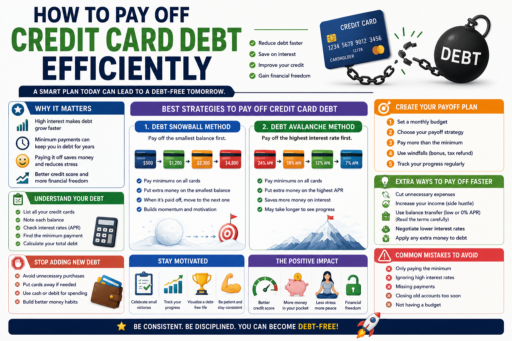
Credit card debt can feel overwhelming, especially when balances continue growing because of interest charges and minimum payments. Learning how to pay off credit card debt efficiently is important because many people struggle to make progress when they do not have a clear repayment strategy.
Fortunately, learning how to pay off credit card debt efficiently can help you reduce financial stress, save money on interest, and regain control of your finances faster.
The key is not simply making random payments — it is using smart strategies consistently over time.
In this beginner-friendly guide, you will learn:
- Why credit card debt becomes difficult
- The best repayment methods
- How interest affects repayment
- How to build a payoff plan
- Common mistakes to avoid
- Ways to stay motivated during repayment
- How to prevent future debt problems
What Is Credit Card Debt in How to Pay Off Credit Card Debt Efficiently?
Credit card debt is money borrowed through credit cards that has not yet been fully repaid.
This debt often grows because of:
- Interest charges
- Late fees
- Overspending
- Minimum payment habits
Unlike some loans with fixed repayment schedules, credit card debt can continue growing if balances are not managed carefully.
Why How to Pay Off Credit Card Debt Efficiently Matters
Paying off debt efficiently can improve many areas of your financial life.
Benefits may include:
- Lower stress levels
- Improved credit scores
- Reduced interest costs
- Better financial flexibility
- More savings opportunities
According to Consumer Financial Protection Bureau, reducing debt and making consistent payments can help consumers regain financial stability.
Understand Your Total Debt Clearly
Before creating a repayment strategy, you need a clear picture of your debt situation.
Write down:
- Total balances
- Interest rates
- Minimum payments
- Due dates
This information helps you prioritize repayment more effectively.
Stop Adding New Debt
One of the most important steps is avoiding additional unnecessary debt while paying off existing balances.
Continuing to overspend can slow repayment progress significantly.
Consider:
- Reducing card usage temporarily
- Using cash for daily spending
- Removing saved cards from shopping apps
- Avoiding impulse purchases
The Debt Snowball Method
The debt snowball method focuses on paying off the smallest balances first.
How It Works
- Pay minimum payments on all cards
- Put extra money toward the smallest balance
- Eliminate the first debt
- Move to the next smallest balance
Benefits of the Snowball Method
- Quick psychological wins
- Increased motivation
- Simplified repayment focus
This method is popular because small victories help many people stay consistent.
The Debt Avalanche Method
The debt avalanche method focuses on paying off the highest-interest debt first.
How It Works
- Pay minimum payments on all debts
- Put extra money toward the highest APR balance
- Reduce expensive interest faster
Benefits of the Avalanche Method
- Saves more money on interest
- Can reduce repayment time
- Financially efficient long-term
Many financially disciplined people prefer this method because it minimizes total interest costs.
Which Repayment Method Is Better?
Both methods can work effectively.
Debt Snowball
Better for motivation and momentum.
Debt Avalanche
Better for reducing interest costs faster.
The best method is usually the one you can follow consistently.
Always Pay More Than the Minimum
Minimum payments may keep accounts current, but they often slow repayment dramatically.
Large balances with high interest may take years to eliminate using minimum payments alone.
Even small extra payments can make a major difference over time.
Create a Monthly Debt Payoff Budget
A repayment plan becomes much easier with a structured budget.
Your budget should include:
- Income
- Essential bills
- Debt payments
- Savings goals
- Flexible spending
If you need help organizing finances, read our guide on Best Budgeting Apps for Beginners 2026 (Free & Easy Options).
Reduce Unnecessary Spending
Cutting unnecessary expenses can free extra money for debt repayment.
Common Areas to Reduce
- Food delivery
- Unused subscriptions
- Impulse shopping
- Entertainment spending
- Online purchases
Small spending cuts may create surprisingly large repayment progress over time.
Use Windfalls Strategically
Unexpected money can accelerate repayment significantly.
Examples include:
- Tax refunds
- Bonuses
- Side income
- Gift money
Applying windfalls toward debt can shorten repayment timelines dramatically.
Avoid Closing Cards Immediately
Some people close cards immediately after repayment.
However, closing accounts may:
- Reduce available credit
- Increase utilization
- Shorten credit history
If a card has no annual fee, keeping it open may help your credit score.
Understand How Interest Works
Interest charges make debt repayment slower and more expensive.
Higher APR rates mean more money goes toward interest instead of reducing principal balances.
If you want to understand interest better, read our guide on How to Avoid Credit Card Interest.
Use Balance Transfers Carefully
Some cards offer promotional balance transfers with lower or 0% APR periods.
These offers may help reduce interest temporarily.
However, review carefully:
- Transfer fees
- Promotional expiration dates
- Regular APR after promotion
Balance transfers work best when paired with a disciplined repayment plan.
Track Progress Regularly
Monitoring progress helps maintain motivation.
Consider tracking:
- Total debt remaining
- Interest saved
- Accounts eliminated
- Monthly repayment progress
Visual progress can make repayment feel more achievable.
How Debt Affects Your Credit Score
High credit card balances may increase credit utilization and lower your credit score.
Paying down balances may improve:
- Credit utilization
- Financial stability
- Lender confidence
Learn more in our article on How to Dispute Credit Report Errors.
Stay Motivated During Repayment
Debt repayment can take time, especially with large balances.
Helpful motivation strategies include:
- Celebrating milestones
- Tracking progress visually
- Setting realistic goals
- Remembering long-term benefits
Consistency matters more than perfection.
Common Mistakes When Paying Off Debt
1. Continuing to Overspend
New debt slows progress significantly.
2. Paying Only Minimum Payments
This increases long-term interest costs.
3. Ignoring Interest Rates
High APR debt may become very expensive.
4. Lacking a Budget
Budgeting helps create repayment consistency.
5. Losing Motivation Too Quickly
Debt repayment is often a long-term process.
Best Beginner Strategy for Paying Off Debt Efficiently
If you are starting your debt payoff journey, focus on these simple steps:
- Stop adding new debt
- Create a monthly budget
- Choose a repayment method
- Pay more than minimums
- Track progress consistently
- Stay patient and disciplined
Small consistent improvements can create major financial changes over time.
Final Thoughts on How to Pay Off Credit Card Debt Efficiently
Learning how to pay off credit card debt efficiently can help you regain financial control, reduce stress, and improve your long-term financial health.
The process may feel difficult initially, but consistent habits make a major difference over time.
The most important steps are usually simple:
- Spend less
- Pay more than minimums
- Stay organized
- Avoid new debt
- Track progress regularly
Most importantly, remember that debt repayment is a journey. Every payment moves you closer to greater financial freedom and stability.