
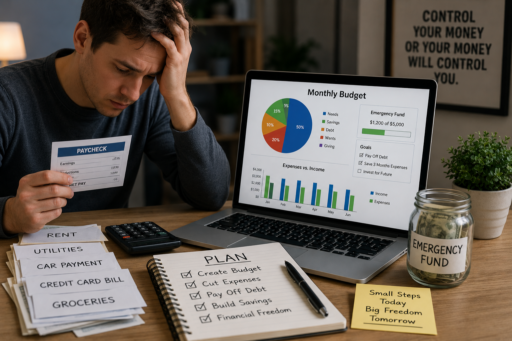
If you want to stop living paycheck to paycheck, you are already taking the first and most important step toward financial freedom. Millions of people work hard every month, yet their money disappears as soon as they get paid. Fortunately, with a practical budget, better saving habits, and a simple financial system, you can break this cycle and build lasting financial stability in 2026.
The good news is that you can learn how to stop living paycheck to paycheck by following a simple and practical system. You do not need a high income to gain financial stability. Instead, you need better money habits, a clear budget, and a step-by-step plan.
According to the Consumer Financial Protection Bureau, creating a written budget is one of the most effective ways to take control of your money and improve long-term financial stability.
Living paycheck to paycheck means relying on your next salary to cover everyday expenses. In many cases, there is little or no money left for emergencies, debt reduction, or future goals. Consequently, financial progress feels slow and frustrating.
However, this cycle can be broken. Once you understand where your money goes and begin making intentional decisions, you can gradually build savings, reduce debt, and create lasting financial security.
In this comprehensive guide, you will learn exactly how to stop living paycheck to paycheck in 2026 using proven strategies that work for beginners, families, students, and freelancers.
To strengthen your financial foundation, you may also find these guides helpful: Best Monthly Budget Template for Beginners (2026), Simple Personal Finance System That Actually Works (2026), Protect Your Online Payments From Fraud (2026 Guide), and Manage Passwords Securely Without Forgetting Them (2026).
What Does Living Paycheck to Paycheck Really Mean?
Living paycheck to paycheck means your current income is almost entirely consumed by monthly expenses. As soon as you get paid, most or all of your money is already committed to bills, groceries, transportation, and debt payments.
In this situation, you may experience:
- Little or no emergency savings
- High credit card balances
- Constant money stress
- Difficulty handling unexpected expenses
- Limited progress toward financial goals
- A feeling that your income is never enough
Although this situation can feel overwhelming, it is often caused by habits and systems rather than income alone. Therefore, changing your financial structure can make a remarkable difference.
Why So Many People Live Paycheck to Paycheck
There are several reasons why even responsible people struggle financially.
1. Lack of Budgeting
Without a written spending plan, it is easy to lose track of where your money goes.
2. Lifestyle Inflation
As income increases, spending often rises at the same pace.
3. High Debt Payments
Interest charges consume money that could otherwise be saved or invested.
4. Irregular Income
Freelancers and commission-based workers face additional challenges.
5. Emergency Expenses
Unexpected costs can disrupt financial progress when savings are limited.
6. Impulse Spending
Small purchases made frequently can add up quickly.
The Emotional Cost of Financial Stress
Money problems affect far more than your bank account. Financial stress can impact sleep, relationships, productivity, and overall mental health.
When you are constantly waiting for the next paycheck, it becomes difficult to think about long-term goals. Instead, all your energy is focused on short-term survival.
Fortunately, every small financial improvement reduces this pressure and builds confidence.
Step 1: Understand Exactly Where Your Money Goes
The first step in learning how to stop living paycheck to paycheck is awareness.
Track every expense for at least one month, including:
- Housing
- Utilities
- Groceries
- Transportation
- Subscriptions
- Dining out
- Shopping
- Debt payments
- Entertainment
Many people are surprised by how much they spend on non-essential categories.
Step 2: Create a Realistic Budget
A budget gives every dollar a purpose. Rather than wondering where your money went, you decide in advance where it will go.
Use categories for:
- Income
- Essential expenses
- Savings
- Debt payments
- Personal spending
The Best Monthly Budget Template for Beginners (2026) is an excellent starting point.
Step 3: Build a Starter Emergency Fund
Even a small emergency fund can break the paycheck-to-paycheck cycle. Start with a goal of $500 to $1,000.
This money protects you from relying on credit cards when unexpected expenses arise.
Step 4: Reduce Unnecessary Expenses
Cutting expenses does not mean eliminating everything enjoyable. Instead, focus on spending that provides little value.
Possible areas to reduce include:
- Unused subscriptions
- Frequent food delivery
- Impulse online purchases
- Premium services you rarely use
- High-interest debt costs
Step 5: Pay Off High-Interest Debt
Credit card debt is one of the biggest obstacles to financial progress. Interest charges reduce the amount available for savings and investing.
Consider using the debt avalanche method, which prioritizes the highest interest rates first.
Step 6: Increase Your Income
Cutting costs is powerful, but increasing income can accelerate progress dramatically.
Ways to earn more include:
- Freelancing
- Remote work
- Selling digital products
- Online tutoring
- Asking for a raise
- Starting a side hustle
Step 7: Automate Your Savings
Set up automatic transfers immediately after payday. This ensures that saving becomes a habit rather than an optional decision.
Step 8: Stop Lifestyle Inflation
When your income rises, avoid increasing spending at the same pace. Instead, direct additional income toward savings, investments, and debt reduction.
Step 9: Prepare for Irregular Expenses
Annual bills such as insurance, gifts, and car maintenance should be included in your budget. Divide the expected annual cost by 12 and save monthly.
Step 10: Set Clear Financial Goals
Goals provide motivation and direction.
- Build a $1,000 emergency fund
- Pay off all credit card debt
- Save three months of expenses
- Invest consistently
- Buy a home
- Achieve financial freedom
Example Budget to Escape the Cycle
| Category | Amount |
|---|---|
| Monthly Income | $4,000 |
| Essential Expenses | $2,500 |
| Debt Payments | $500 |
| Savings | $600 |
| Personal Spending | $300 |
| Remaining Balance | $100 |
How Long Does It Take to Stop Living Paycheck to Paycheck?
The timeline varies depending on income, debt, and spending habits. However, many people notice significant improvement within three to twelve months of consistent action.
Why Small Changes Matter
Financial transformation rarely happens overnight. Instead, it is the result of small, repeated actions that compound over time.
How Technology Can Help
Budgeting apps, automatic transfers, and secure password managers make money management easier and safer than ever.
How to Build a Strong Financial System
One of the most effective ways to stop living paycheck to paycheck is to create a complete money management system. Instead of reacting to bills as they appear, you proactively organize your finances and establish routines that support long-term stability.
A simple financial system should include:
- A monthly budget
- An emergency fund
- Automatic savings transfers
- A debt repayment plan
- Secure digital financial tools
- Regular monthly reviews
When these components work together, financial stress decreases significantly and your confidence grows over time.
How to Handle Unexpected Expenses
Unexpected expenses are one of the main reasons people remain trapped in the paycheck-to-paycheck cycle. Car repairs, medical bills, and home maintenance costs can disrupt even the best intentions.
Fortunately, planning ahead reduces the impact of these events. By maintaining an emergency fund and including sinking funds in your budget, you create a buffer that protects your progress.
Sinking Funds: A Powerful Budgeting Strategy
Sinking funds are small amounts saved each month for predictable future expenses.
- Car maintenance
- Holiday gifts
- Insurance premiums
- Travel
- School expenses
- Home repairs
For example, if you expect to spend $600 on holiday gifts, saving $50 per month makes the expense manageable and stress-free.
How Couples Can Escape the Paycheck-to-Paycheck Cycle
Couples can make faster progress by working as a team. Shared financial goals, regular budget meetings, and open communication reduce misunderstandings and improve accountability.
When both partners understand the plan, saving and debt reduction become much easier.
How to Stop Living Paycheck to Paycheck with Low Income
Even with a modest income, progress is possible. The key is focusing on what you can control.
- Track every expense
- Cut non-essential spending
- Increase income where possible
- Automate savings
- Avoid new debt
Although progress may be slower, consistent action still leads to meaningful improvement.
How Freelancers Can Build Financial Stability
Freelancers face unique challenges due to fluctuating income. Therefore, it is wise to base your budget on your lowest expected monthly income and direct extra earnings toward taxes, savings, and debt reduction.
How Students Can Avoid Financial Stress
Students can benefit greatly from budgeting early. Tracking spending, avoiding unnecessary debt, and building small savings habits create a strong financial foundation for adulthood.
Psychological Shifts That Change Everything
Stopping the paycheck-to-paycheck cycle requires more than numbers. It also involves changing your relationship with money.
- Spend intentionally
- Delay gratification
- Focus on long-term goals
- Measure progress regularly
- View saving as freedom
Digital Security and Financial Stability
Protecting your financial accounts is an essential part of modern money management. Fraud, weak passwords, and insecure cloud storage can undo years of financial progress.
Strengthen your security by reading:
- Protect Your Online Payments From Fraud (2026 Guide)
- Manage Passwords Securely Without Forgetting Them (2026)
- Secure Your Files on Cloud Storage (Google Drive & More) 2026
Best Apps to Help You Manage Money
- YNAB
- Monarch Money
- EveryDollar
- PocketGuard
- Google Sheets
30-Day Action Plan to Stop Living Paycheck to Paycheck
- Track every expense.
- Create a written budget.
- Cut one unnecessary subscription.
- Build a $500 emergency fund.
- Automate savings.
- Use extra income to pay debt.
- Review your progress weekly.
- Set one clear financial goal.
Frequently Asked Questions
How do I stop living paycheck to paycheck?
Create a realistic budget, reduce unnecessary expenses, build an emergency fund, and increase your income over time.
How much should I save first?
A starter emergency fund of $500 to $1,000 is an excellent initial goal.
Can I stop living paycheck to paycheck with low income?
Yes. Progress may be gradual, but consistent budgeting and savings can make a substantial difference.
How long does it take?
Many people see meaningful improvements within three to twelve months.
What is the most important step?
Tracking your spending and creating a written budget are the most important starting points.
Final Thoughts
Learning how to stop living paycheck to paycheck can completely transform your financial future. Although the process requires discipline and patience, the rewards are substantial.
By understanding your spending, creating a realistic budget, building an emergency fund, paying off debt, and increasing your income, you gradually gain freedom and peace of mind.
Remember that financial progress is built one decision at a time. Small improvements made consistently can lead to extraordinary results.
Start today. Even one positive action—tracking your expenses, cutting one unnecessary cost, or saving your first $50—moves you closer to lasting financial stability.
Your next paycheck does not have to disappear immediately. With the right system and consistent habits, you can break the cycle and build a stronger, more secure future in 2026 and beyond.