
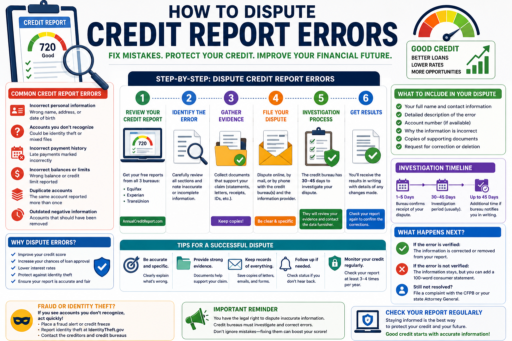
Your credit report plays a major role in your financial life. Learning how to dispute credit report errors is important because inaccurate information can affect loan approvals, credit card applications, interest rates, apartment rentals, and even some job opportunities. However, credit reports are not always perfect.
Many people discover incorrect information on their reports, including accounts they never opened, inaccurate balances, duplicate debts, or payments incorrectly marked as late.
Fortunately, learning how to dispute credit report errors is easier than most beginners expect. Federal laws give consumers the right to challenge inaccurate information and request corrections from credit bureaus.
In this beginner-friendly guide, you will learn:
- What credit report errors are
- Why disputes matter
- Common types of credit report mistakes
- How to dispute errors step by step
- What documents you may need
- How long investigations usually take
- How disputes can affect your credit score
What Are Credit Report Errors in How to Dispute Credit Report Errors?
Credit report errors are incorrect or outdated details appearing on your credit report.
These mistakes may negatively affect your credit score and financial opportunities.
Examples include:
- Incorrect personal information
- Accounts that do not belong to you
- Incorrect late payments
- Wrong balances
- Duplicate accounts
- Fraudulent activity
- Outdated negative information
Even small inaccuracies can sometimes reduce your credit score significantly.
Why How to Dispute Credit Report Errors Matters
Correcting inaccurate information can help:
- Improve your credit score
- Increase loan approval chances
- Reduce loan interest rates
- Protect your financial identity
- Prevent future financial problems
According to Consumer Financial Protection Bureau, consumers have the legal right to dispute inaccurate information on their credit reports.
Common Credit Report Errors
1. Incorrect Personal Information
This may include:
- Wrong name spelling
- Incorrect addresses
- Incorrect phone numbers
- Mixed credit files
2. Accounts You Do Not Recognize
Unknown accounts may indicate:
- Identity theft
- Reporting mistakes
- Mixed files with another consumer
3. Incorrect Payment History
Some reports incorrectly show:
- Late payments
- Missed payments
- Collection accounts
Even one false late payment may hurt your score.
4. Incorrect Balances
Balances may sometimes appear higher than they actually are.
5. Duplicate Accounts
The same debt may accidentally appear multiple times.
6. Outdated Negative Information
Some negative records should automatically disappear after a certain number of years.
How to Get Your Credit Report
Before disputing anything, you need to review your credit report carefully.
You should check reports from all major credit bureaus because errors may appear on one report but not another.
Carefully review:
- Personal information
- Account history
- Payment records
- Balances
- Collections
- Public records
Step 1: Identify the Error Clearly
Before filing a dispute, identify exactly what is incorrect.
Examples:
- Wrong payment status
- Incorrect account balance
- Account not belonging to you
- Duplicate account listing
The more specific your dispute, the easier the investigation process becomes.
Step 2: Gather Supporting Documents
Supporting evidence strengthens your dispute significantly.
Helpful Documents May Include
- Bank statements
- Payment confirmations
- Account statements
- Identity documents
- Letters from lenders
- Police reports for identity theft
Always keep copies of everything you submit.
Step 3: Contact the Credit Bureau
You can usually dispute errors online, by mail, or by phone.
Most experts recommend written disputes because they create a clear paper trail.
Your dispute should include:
- Your personal information
- A clear explanation of the error
- The account involved
- Supporting documents
- Your requested correction
Step 4: Contact the Information Provider
You should also contact the company that reported the incorrect information.
Examples include:
- Banks
- Credit card issuers
- Loan providers
- Collection agencies
Sometimes the provider can correct the issue faster directly.
How Long Credit Report Investigations Take
Most credit bureau investigations are completed within:
- 30 to 45 days
During the investigation:
- The bureau reviews your evidence
- The creditor verifies information
- The bureau decides whether corrections are needed
After completion, you usually receive investigation results in writing.
What Happens if the Error Is Corrected?
If the bureau confirms your dispute:
- The incorrect information is corrected
- The item may be removed completely
- Your credit score may improve
Corrections may take additional time to appear in scoring updates.
What Happens if the Dispute Is Rejected?
Sometimes disputes are denied if the bureau believes the information is accurate.
If this happens, you can:
- Submit additional evidence
- File another dispute
- Add a consumer statement
- Contact regulators if necessary
How Credit Report Errors Affect Your Credit Score
Errors may damage several important scoring factors, including:
- Payment history
- Credit utilization
- Account age
- Total debt levels
For example, an incorrect late payment may lower your score significantly.
Learn more in our guide on How to Improve Your Credit Score Faster.
How to Protect Yourself From Future Errors
Monitoring your credit regularly helps detect problems early.
Helpful Habits Include:
- Checking reports regularly
- Reviewing statements monthly
- Using fraud alerts if needed
- Monitoring suspicious activity
- Keeping records organized
Identity Theft and Fraud Disputes
If you suspect identity theft, act quickly.
Important steps may include:
- Freezing your credit
- Filing fraud alerts
- Reporting identity theft
- Contacting affected lenders
- Documenting all activity
Fast action can reduce long-term financial damage.
How to Read Your Credit Report More Carefully
Many consumers overlook important details.
Focus carefully on:
- Account names
- Payment history
- Balance amounts
- Credit limits
- Collection records
- Personal information
If you need help understanding statements and balances, read our article on How to Read a Credit Card Statement.
Common Mistakes When Disputing Errors
1. Submitting Incomplete Information
Missing details may delay investigations.
2. Not Providing Evidence
Strong documentation improves success rates.
3. Ignoring Investigation Results
Always review the bureau’s response carefully.
4. Failing to Monitor Reports Again
Continue checking reports after corrections.
5. Waiting Too Long
The sooner you dispute errors, the easier they may be to fix.
Best Beginner Strategy for Credit Report Disputes
If you are new to credit reports, keep your process organized:
- Review reports carefully
- Identify incorrect information
- Gather supporting evidence
- Submit disputes clearly
- Track investigation updates
- Monitor reports afterward
Patience and organization are extremely important during the dispute process.
Final Thoughts on How to Dispute Credit Report Errors
Learning how to dispute credit report errors is an important financial skill that can protect your credit score and financial future.
Credit reports are not always perfect, and mistakes can happen more often than many consumers realize.
The good news is that you have the legal right to challenge inaccurate information and request corrections.
The key is staying organized, patient, and proactive.
Most importantly, remember that regularly monitoring your credit report is one of the best ways to protect your financial health long-term.