
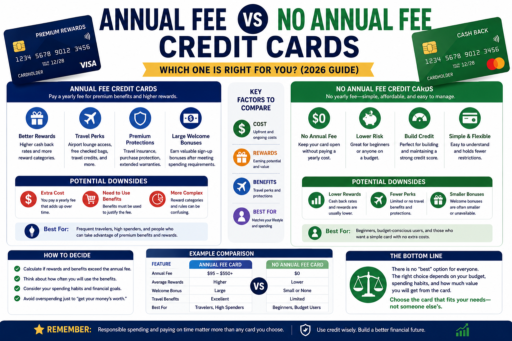
Choosing between annual fee vs no annual fee credit cards can be confusing for many beginners. Some cards charge yearly fees in exchange for rewards and premium benefits, while others focus on simplicity and lower costs.
Understanding the difference between these two types of cards can help you avoid unnecessary expenses and choose a card that matches your financial goals and spending habits.
The truth is that neither option is automatically better for everyone. The best choice depends on how you use your card, how often you spend, and whether the benefits outweigh the costs.
In this beginner-friendly guide, you will learn:
- What annual fee credit cards are
- What no annual fee cards offer
- The benefits and drawbacks of both options
- How rewards compare
- Which option is better for beginners
- How to decide if a fee is worth paying
- Common mistakes to avoid in 2026
What Does Annual Fee vs No Annual Fee Credit Cards Mean?
Annual fee vs no annual fee credit cards refers to comparing cards that charge yearly membership fees against cards that do not require annual payments.
Annual Fee Cards
These cards charge yearly fees in exchange for extra benefits such as:
- Higher rewards
- Travel perks
- Airport lounge access
- Premium protections
- Large welcome bonuses
No Annual Fee Cards
These cards avoid yearly fees and usually focus on:
- Lower costs
- Simplicity
- Basic rewards
- Credit building
Why Annual Fee vs No Annual Fee Credit Cards Matters
Choosing the wrong type of card may lead to unnecessary costs or missed financial opportunities.
The right choice can help:
- Save money
- Maximize rewards
- Build credit responsibly
- Improve financial flexibility
According to Consumer Financial Protection Bureau, consumers should compare card costs, benefits, and terms carefully before applying.
How Annual Fee Credit Cards Work
Annual fee cards charge a recurring fee every year simply for keeping the account open.
Common annual fees include:
- $25
- $95
- $250+
Premium travel cards may charge even higher fees.
However, these cards often provide stronger rewards and premium benefits.
Benefits of Annual Fee Credit Cards
1. Better Rewards Programs
Many annual fee cards offer:
- Higher cash back rates
- Travel rewards
- Flexible points systems
2. Large Welcome Bonuses
Some cards offer valuable sign-up bonuses for meeting spending requirements.
3. Travel Benefits
Premium travel cards may include:
- Airport lounge access
- Travel insurance
- Free checked bags
- Hotel perks
4. Premium Purchase Protections
Some cards include:
- Extended warranties
- Purchase protection
- Fraud protection
Drawbacks of Annual Fee Credit Cards
1. Extra Cost
The annual fee itself is the biggest disadvantage.
If rewards do not exceed the fee, the card may not provide enough value.
2. Overspending Risk
Some users overspend trying to justify rewards or bonuses.
3. Complex Reward Systems
Premium cards sometimes include confusing categories and restrictions.
How No Annual Fee Credit Cards Work
No annual fee cards allow you to keep the account open without yearly membership costs.
These cards are extremely popular among:
- Beginners
- Students
- Budget-conscious users
- Credit builders
Benefits of No Annual Fee Credit Cards
1. Lower Financial Risk
No annual fees mean lower ongoing costs.
2. Easier for Beginners
These cards are often simpler to manage.
3. Helpful for Building Credit
Keeping older no-fee cards open may strengthen credit history over time.
4. Long-Term Flexibility
You can often keep these cards open for years without worrying about annual costs.
Drawbacks of No Annual Fee Cards
1. Smaller Rewards
Rewards are often less valuable compared to premium cards.
2. Fewer Travel Benefits
Most no-fee cards lack premium travel perks.
3. Smaller Welcome Bonuses
Sign-up bonuses may be limited or unavailable.
Which Option Is Better for Beginners?
Most beginners usually benefit more from no annual fee cards.
These cards help users:
- Build credit safely
- Avoid unnecessary costs
- Develop responsible habits
If you are new to credit cards, read our guide on Best Starter Credit Cards for Young Adults.
When Annual Fee Cards May Be Worth It
Annual fee cards may make sense if:
- You travel frequently
- You spend heavily in reward categories
- You use premium benefits regularly
- Rewards exceed the annual fee
Responsible users may earn far more value than the yearly cost.
How to Calculate Whether a Fee Is Worth It
Ask yourself:
- How much rewards will I realistically earn?
- Will I use the premium benefits?
- Can I justify the yearly fee?
If benefits exceed costs, the fee may be worthwhile.
How Annual Fees Affect Your Budget
Annual fees should always fit comfortably within your budget.
Paying expensive fees without fully using benefits may create unnecessary financial waste.
Rewards Should Never Cause Debt
Some people overspend chasing rewards and bonuses.
However, interest charges can easily exceed reward value.
If you want to reduce interest problems, read our article on How to Pay Off Credit Card Debt Efficiently.
Can You Downgrade an Annual Fee Card?
Some issuers allow users to downgrade premium cards into no annual fee versions.
This may help you:
- Avoid future fees
- Keep account history
- Maintain credit utilization benefits
How Multiple Cards Can Help
Some experienced users combine:
- A premium rewards card
- A no annual fee backup card
This strategy may provide rewards while reducing overall costs.
Learn more in our guide on How Many Credit Cards Should You Have.
Common Mistakes Beginners Make
1. Choosing Cards Only for Rewards
Rewards should never outweigh financial responsibility.
2. Ignoring Annual Fees
Fees can become expensive long-term.
3. Overspending for Bonuses
Debt may cancel out reward value quickly.
4. Not Reading Terms Carefully
Important details are often hidden in card agreements.
5. Applying for Premium Cards Too Early
Beginners may not fully benefit from advanced rewards systems.
Best Beginner Strategy for 2026
If you are new to credit cards, a no annual fee card is usually the safest starting point.
Focus on:
- Building credit
- Paying on time
- Avoiding debt
- Learning responsible habits
Once you gain experience and stronger spending habits, premium annual fee cards may become more valuable later.
Best First-Time Credit Cards With No Annual Fee
Many first-time credit card users prefer cards with no annual fee because they provide an affordable way to start building credit. A beginner credit card with no annual fee can help establish a positive credit history without adding unnecessary yearly costs.
When choosing your first credit card, look for features such as credit bureau reporting, spending alerts, account management tools, and beginner-friendly approval requirements. These features can make it easier to build strong financial habits from the start.
For many beginners, a no annual fee credit card is one of the safest and most practical options available in 2026.
Frequently Asked Questions
What is the best first-time credit card with no annual fee?
The best first-time credit card with no annual fee is one that reports to major credit bureaus, has beginner-friendly approval requirements, and helps users build credit responsibly without annual costs.
Are no annual fee credit cards good for beginners?
Yes. Many beginners choose no annual fee credit cards because they reduce costs while helping build credit history over time.
Can a no annual fee credit card help build credit?
Yes. Responsible use, on-time payments, and low balances can help improve your credit profile when the card reports to major credit bureaus.
Should I get a no annual fee credit card as my first credit card?
For many people, a no annual fee credit card is an excellent first credit card because it allows them to build credit without paying yearly fees.
Final Thoughts on Annual Fee vs No Annual Fee Credit Cards
Understanding annual fee vs no annual fee credit cards can help you choose a card that matches your financial goals and spending habits responsibly.
Neither option is automatically better for everyone.
The right choice depends on:
- Your budget
- Your spending habits
- Your financial discipline
- Your reward preferences
Most importantly, remember that responsible credit management matters more than premium rewards or flashy card benefits. Smart financial habits always provide the greatest long-term value.