
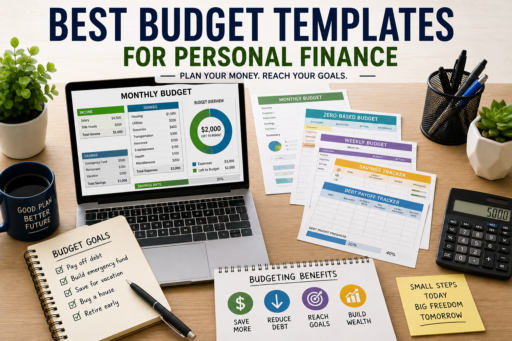
Creating a budget is one of the most effective ways to improve financial health. However, many people struggle because they don’t have a clear system for organizing income, expenses, savings, and financial goals. This is where budgeting templates become extremely useful. Choosing the Best Budget Templates for Personal Finance can simplify money management and help create a more structured financial plan.
In 2026, budget templates are available in many formats, including spreadsheets, printable worksheets, budgeting apps, and digital planners. These templates help users track spending, monitor savings, and make informed financial decisions.
The best budgeting template is not necessarily the most complicated one. Instead, it is the template that matches your financial needs and is easy to use consistently.
In this guide, we’ll explore the best budget templates for personal finance and explain how to choose the right one for your situation.
Why Budget Templates Matter
Many people attempt to budget without a structured system.
This often leads to:
- Inconsistent tracking
- Missed expenses
- Poor financial visibility
- Budgeting frustration
A budgeting template provides a clear framework that simplifies financial management.
What Makes a Good Budget Template?
The Best Budget Templates for Personal Finance typically include:
- Income tracking
- Expense categories
- Savings goals
- Debt tracking
- Monthly summaries
- Financial reports
These elements help users understand their complete financial picture.
Template #1: Monthly Budget Template
The monthly budget template is one of the most widely used budgeting tools.
It tracks:
- Monthly income
- Fixed expenses
- Variable expenses
- Savings contributions
This template works well for most individuals and households.
Advantages
- Simple to use
- Easy to maintain
- Suitable for beginners
Template #2: Zero-Based Budget Template
A zero-based budget assigns every dollar a specific purpose.
Income minus expenses equals zero because every dollar is allocated.
Advantages
- Excellent spending control
- Strong financial awareness
- Goal-oriented budgeting
Disadvantages
- Requires regular updates
- More detailed than basic templates
Template #3: Weekly Budget Template
Some people prefer shorter budgeting periods.
Weekly budgeting templates help monitor spending more frequently.
These templates work particularly well for:
- Freelancers
- Variable income earners
- People improving spending habits
Template #4: Savings Goal Template
Savings templates focus specifically on financial goals.
Examples include:
- Emergency funds
- Vacation savings
- Home purchases
- Education expenses
Goal-focused templates help maintain motivation and track progress.
Template #5: Debt Reduction Template
Debt management templates help organize repayment strategies.
Typical information includes:
- Outstanding balances
- Interest rates
- Monthly payments
- Payoff timelines
These templates improve financial planning and debt reduction efforts.
Template #6: Family Budget Template
Family budgeting templates provide more detailed financial tracking.
They often include:
- Household expenses
- Child-related costs
- Shared financial goals
- Multiple income sources
Families benefit from having a comprehensive financial overview.
Digital vs Printable Budget Templates
Both digital and printable templates offer advantages.
Digital Templates
- Automatic calculations
- Easy updates
- Cloud storage
- Data analysis
Printable Templates
- Simple setup
- No technology required
- Hands-on financial awareness
The best option depends on personal preference.
How Budget Templates Improve Financial Awareness
One of the biggest benefits of budgeting templates is visibility.
They help users identify:
- Spending habits
- Financial leaks
- Savings opportunities
- Budgeting problems
This awareness often leads to better financial decisions.
Choosing the Right Budget Template
The right budgeting template depends on your goals.
- Need simplicity? Use a monthly budget template.
- Want detailed control? Use a zero-based budget.
- Focused on savings? Use a savings tracker.
- Managing debt? Choose a debt repayment template.
The most effective template is the one you will actually use consistently.
Using Spreadsheet Budget Templates
Spreadsheet-based budgeting templates remain among the most popular financial planning tools.
Applications such as Excel and Google Sheets allow users to customize templates according to their needs.
Benefits include:
- Automatic calculations
- Custom categories
- Financial reports
- Savings tracking
- Debt management
Many people prefer spreadsheets because they combine flexibility with detailed financial analysis.
How Savings Tracking Templates Help
Saving money becomes easier when progress is visible.
Savings tracking templates allow users to monitor:
- Emergency funds
- Vacation savings
- Home purchase goals
- Investment contributions
- Major purchases
Visual progress often increases motivation and consistency.
Family Budget Templates and Household Planning
Families often have more complex financial situations than individuals.
Household budget templates help organize:
- Multiple income sources
- Shared expenses
- Children’s expenses
- Household savings goals
- Emergency funds
A structured template can improve communication and financial planning within families.
If you’re managing household finances, you may also enjoy our guide on Best Budgeting Tools for Families.
Budget Templates for Variable Income
Freelancers and self-employed individuals often have fluctuating income.
Budget templates designed for variable income can help:
- Estimate average income
- Prioritize essential expenses
- Manage cash flow
- Build emergency savings
These templates provide flexibility while maintaining financial discipline.
Common Budgeting Template Mistakes
Even the Best Budget Templates for Personal Finance will not be effective if used incorrectly.
Common mistakes include:
- Not updating information regularly
- Ignoring actual spending
- Using overly complex templates
- Failing to review financial reports
- Creating unrealistic budgets
Simplicity and consistency usually produce the best results.
Why Monthly Reviews Matter
A budget template should not be completed once and forgotten.
Monthly reviews help identify:
- Overspending categories
- Savings progress
- Budgeting weaknesses
- New financial priorities
Regular reviews improve long-term budgeting success.
How Budget Templates Support Financial Goals
Budgeting templates help connect daily spending decisions with larger financial objectives.
Examples include:
- Building emergency funds
- Paying off debt
- Saving for retirement
- Funding education
- Purchasing a home
Goal tracking helps maintain focus and motivation.
Combining Templates With Expense Tracking
Budget templates become more powerful when combined with consistent expense tracking.
If you’re looking to improve spending awareness, you may also enjoy our guide on Best Ways to Track Your Daily Expenses.
Together, budgeting and expense tracking provide a complete financial management system.
Budget Templates and Emergency Funds
Many budgeting templates include savings categories specifically for emergency funds.
These categories help ensure emergency savings remain a financial priority.
If you’re building emergency savings, you may also find our guide on Build an Emergency Fund From Scratch helpful.
How Simplicity Improves Success
Many people believe more complex templates are automatically better.
However, simple templates are often easier to maintain consistently.
A budgeting system only works if you continue using it.
Choosing a practical and user-friendly template often produces better long-term results than using complicated financial tools.
Use Trusted Financial Resources
People interested in improving budgeting skills can benefit from trusted educational resources. The Consumer Financial Protection Bureau provides practical guidance on budgeting, saving, debt management, and financial planning.
Combining financial education with effective budgeting tools can improve financial outcomes significantly.
The Long-Term Benefits of Budget Templates
Using budgeting templates consistently can help:
- Increase savings
- Reduce debt
- Improve spending awareness
- Strengthen financial discipline
- Support wealth-building goals
Small improvements repeated over time often create substantial financial progress.
Final Thoughts
The Best Budget Templates for Personal Finance provide a simple but powerful framework for managing money effectively.
Whether you prefer monthly budgets, savings trackers, debt reduction templates, family budgeting systems, or spreadsheet-based solutions, the key is finding a template that matches your financial needs and using it consistently.
By tracking income, monitoring expenses, reviewing progress regularly, and aligning spending with financial goals, budgeting templates can help create greater financial stability and long-term success.