
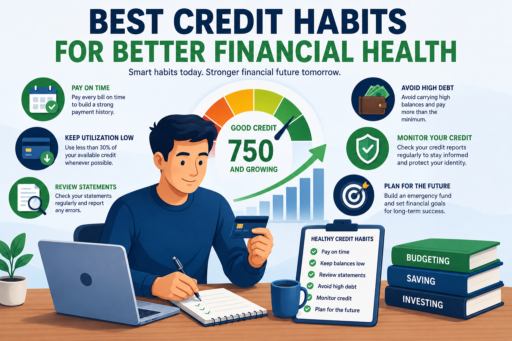
Most people think financial success comes from earning more money. While income certainly matters, many high earners still struggle financially because they develop poor money habits. However, focusing on Credit Habits for Better Financial Health can make a significant difference. On the other hand, some individuals with average incomes build strong financial foundations simply because they consistently practice healthy financial behaviors.
Credit habits are a perfect example. Small decisions made every month—paying bills on time, managing balances responsibly, monitoring accounts, and avoiding unnecessary debt—can have a significant impact on long-term financial health. These habits influence credit scores, borrowing opportunities, financial flexibility, and even stress levels.
Developing the best Credit Habits for Better Financial Health is not about perfection. It is about creating consistent routines that support responsible credit management over time. The good news is that even if your credit situation is not ideal today, improving a few key habits can gradually strengthen your financial position.
In this guide, you’ll learn the most effective credit habits that support stronger credit profiles, healthier finances, and greater long-term financial stability.
Why Credit Habits Matter More Than Most People Realize
Imagine two people earning the same salary.
The first person pays bills late, frequently carries high credit card balances, ignores account statements, and applies for new credit whenever an attractive offer appears.
The second person reviews finances regularly, pays every bill on time, keeps utilization low, and carefully manages credit accounts.
After several years, their financial situations may look completely different.
The difference often comes down to habits rather than income.
Strong credit habits can help:
- Improve credit scores.
- Reduce borrowing costs.
- Increase financial flexibility.
- Support loan approvals.
- Reduce financial stress.
- Create long-term financial opportunities.
Healthy habits may seem small individually, but their combined effect over time can be substantial.
Habit #1: Pay Every Bill on Time
If there is one habit that consistently appears in strong credit profiles, it is paying bills on time.
Payment history is one of the most important factors influencing credit scores. A single late payment may remain on credit reports for years and can negatively affect your financial profile.
Many people miss payments not because they lack money, but because they lack organization.
Simple solutions include:
- Automatic payments.
- Calendar reminders.
- Bank alerts.
- Budgeting apps.
Think about it this way. Lenders are not simply evaluating whether you borrowed money. They are evaluating whether you consistently meet your obligations.
Paying bills on time demonstrates reliability and financial responsibility.
Habit #2: Keep Credit Utilization Low
One of the most overlooked credit habits involves managing credit utilization.
Many consumers focus entirely on making payments while ignoring how much available credit they are using.
Imagine two individuals with identical payment histories.
One uses 10% of available credit.
The other uses 85%.
Even though both pay on time, the first person often presents a stronger credit profile.
Maintaining lower utilization demonstrates financial control and may support healthier credit scores.
Related Article: How Credit Utilization Affects Your Score
Habit #3: Review Credit Card Statements Regularly
Many people only glance at statements long enough to make a payment.
However, reviewing statements carefully can help identify:
- Billing errors.
- Fraudulent charges.
- Subscription increases.
- Unnecessary spending patterns.
- Balance growth.
A monthly statement review often takes only a few minutes but can provide valuable financial insights.
Related Article: How to Read a Credit Card Statement
Habit #4: Avoid Carrying Expensive Credit Card Debt
Credit cards can be powerful financial tools when used responsibly.
However, carrying high-interest balances month after month often creates unnecessary financial pressure.
Imagine carrying a balance that accrues interest every month.
Part of each payment goes toward interest rather than reducing principal.
This slows financial progress and increases borrowing costs.
Whenever possible, focus on paying balances in full or reducing high-interest debt aggressively.
Related Article: How to Avoid Credit Card Interest
Habit #5: Build Credit Gradually and Responsibly
Many consumers become impatient when building credit.
They apply for multiple cards, seek rapid score improvements, or pursue unnecessary financial products.
Strong credit is rarely built overnight.
Instead, it develops through years of responsible borrowing and repayment behavior.
Patience often produces better results than aggressive credit-building tactics.
Related Article: Best Credit Cards for Building Credit
Habit #6: Only Apply for Credit When You Truly Need It
One of the easiest mistakes to make is applying for credit simply because an offer looks attractive.
Perhaps you receive an email promising bonus rewards, a higher credit limit, or cashback incentives. While these offers can be useful in certain situations, applying for multiple accounts within a short period may create unnecessary risk.
Every credit application should have a purpose.
Before applying, ask yourself:
- Do I actually need this account?
- Will it improve my financial situation?
- Can I manage another credit obligation responsibly?
- Am I applying because of a real need or because of marketing?
People with strong credit habits tend to make intentional financial decisions rather than impulsive ones.
Habit #7: Maintain an Emergency Fund
At first glance, an emergency fund may not seem related to credit.
In reality, it is one of the most powerful tools for protecting credit health.
Imagine your car suddenly needs a major repair. Or your air conditioner stops working during summer. Or a medical bill arrives unexpectedly.
Without emergency savings, many people immediately turn to credit cards.
This often leads to:
- Higher balances.
- Increased utilization.
- Growing interest charges.
- Greater financial stress.
Emergency savings provide a financial buffer that helps prevent short-term problems from becoming long-term credit issues.
This is one reason financially healthy individuals often prioritize savings alongside credit management.
Habit #8: Monitor Your Credit Reports
Many consumers only think about credit reports when applying for a loan.
That approach can be risky.
Errors occasionally appear on credit reports. Fraudulent activity can occur. Account information may be reported incorrectly.
Monitoring reports regularly allows you to identify problems before they become serious.
Think of it like checking your vehicle’s dashboard.
You do not wait until the engine fails before paying attention to warning signs.
The same principle applies to credit health.
Regular monitoring helps you stay informed and maintain control over your financial profile.
Habit #9: Create a Monthly Credit Checkup Routine
Many successful investors review their portfolios regularly.
Likewise, financially responsible consumers often review their credit situation every month.
A simple monthly credit checkup may include:
- Reviewing balances.
- Checking utilization percentages.
- Verifying upcoming due dates.
- Reviewing account activity.
- Tracking progress toward financial goals.
This process usually requires less than thirty minutes each month, yet it can prevent many common financial mistakes.
Small issues often become large problems when ignored.
Habit #10: Think Long-Term Instead of Month-to-Month
One of the strongest Credit Habits for Better Financial Health is developing a long-term mindset.
Many people make financial decisions based only on immediate convenience.
For example:
- Making minimum payments indefinitely.
- Maxing out cards temporarily.
- Ignoring future interest costs.
- Applying for unnecessary credit.
While these actions may seem harmless today, they often create larger financial challenges later.
Individuals with strong financial health usually evaluate decisions based on their future impact rather than immediate gratification.
Common Habits That Damage Financial Health
Just as positive habits strengthen credit, negative habits can gradually weaken financial stability.
Some of the most damaging behaviors include:
- Ignoring bills.
- Making late payments repeatedly.
- Maxing out credit cards.
- Overspending regularly.
- Failing to budget.
- Relying heavily on borrowed money.
The challenge is that these habits rarely create instant consequences.
Instead, they slowly erode financial health over time.
This is why many consumers are surprised when credit problems eventually appear.
How Strong Credit Habits Improve Everyday Life
Many people focus exclusively on credit scores.
However, strong credit habits create benefits that extend far beyond a numerical score.
They often contribute to:
- Lower stress levels.
- Greater financial confidence.
- Improved borrowing options.
- Better interest rates.
- Increased financial flexibility.
- More opportunities for future goals.
Imagine applying for a mortgage, auto loan, or new credit card knowing that your financial habits have consistently supported your credit profile.
That confidence comes from years of responsible behavior rather than last-minute attempts to fix problems.
The Connection Between Credit and Overall Financial Wellness
Credit should never be viewed in isolation.
It is part of a larger financial system that includes:
- Income management.
- Budgeting.
- Saving.
- Investing.
- Debt management.
- Long-term planning.
People who develop strong Credit Habits for Better Financial Health often discover that improvements spread into other areas of their finances.
Better organization leads to better saving.
Better saving reduces financial stress.
Lower stress supports better financial decisions.
Over time, these positive effects reinforce one another.
Signs Your Credit Habits Are Improving
How can you tell whether your efforts are working?
Positive signs may include:
- Fewer missed payments.
- Lower credit utilization.
- Improved credit scores.
- Reduced debt balances.
- More consistent saving habits.
- Greater confidence managing money.
Progress often occurs gradually.
Many people do not notice improvements immediately because they focus only on major milestones.
Recognizing smaller improvements can help maintain motivation and encourage long-term consistency.
Additional Resources for Credit Management
Building strong financial habits requires ongoing learning.
For more information about healthy credit habits, the Consumer Financial Protection Bureau provides educational resources covering credit reports, credit scores, borrowing, and responsible financial management.
Related Article: Credit Score Improvement Strategies
Related Article: Best Starter Credit Cards for Young Adults
Final Thoughts
Developing the best Credit Habits for Better Financial Health does not require complicated strategies or financial expertise. In most cases, success comes from consistently practicing a handful of proven behaviors: paying bills on time, keeping utilization low, monitoring accounts, avoiding unnecessary debt, and maintaining a long-term perspective.
The most financially successful people are not always those who earn the most money. Often, they are the people who consistently make responsible financial decisions year after year.
Strong credit habits create stronger financial opportunities. By starting with small improvements today and maintaining them over time, you can build better credit, reduce financial stress, and create a healthier financial future.