
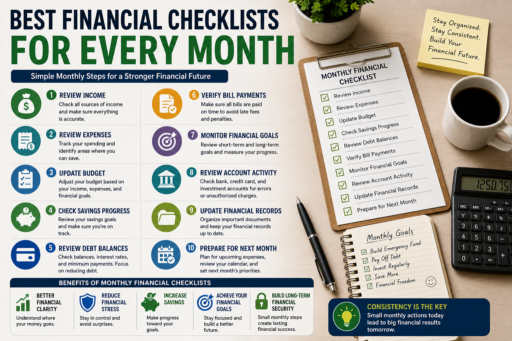
Managing personal finances becomes much easier when important tasks are organized into a simple monthly routine. Many people struggle with budgeting, saving, debt management, and financial planning because they forget critical financial responsibilities. Using the Financial Checklists for Every Month can help individuals stay organized, avoid costly mistakes, and make steady progress toward financial goals.
Monthly financial checklists create structure and consistency. Instead of reacting to financial problems as they arise, you can proactively monitor your finances and make informed decisions throughout the year.
In 2026, financial management has become more complex due to digital banking, subscriptions, online payments, investments, and changing economic conditions. A monthly financial checklist helps ensure nothing important is overlooked.
The Financial Checklists for Every Month can improve financial awareness, strengthen budgeting habits, and support long-term financial success.
Why Monthly Financial Checklists Matter
Financial checklists help transform good intentions into consistent action.
Benefits include:
- Better financial organization
- Improved budgeting accuracy
- Increased savings
- Reduced financial stress
- Greater financial confidence
Consistency is one of the most important factors in long-term financial success.
Task #1: Review Monthly Income
The first step in the Financial Checklists for Every Month is reviewing all income sources.
Check:
- Salary income
- Freelance earnings
- Business revenue
- Investment income
- Other recurring income
Accurate income information provides the foundation for effective financial planning.
Task #2: Review Monthly Expenses
Track where your money was spent during the previous month.
Review categories such as:
- Housing
- Utilities
- Transportation
- Food
- Entertainment
- Subscriptions
Expense reviews often reveal opportunities to reduce unnecessary spending.
Task #3: Update Your Budget
Budgets should evolve as financial circumstances change.
Review:
- Budget categories
- Spending limits
- Savings targets
- Financial priorities
Regular budget updates improve accuracy and effectiveness.
One of the most important parts of Financial Checklists for Every Month is updating your budget regularly to ensure your spending plan remains aligned with current financial goals and responsibilities.
Task #4: Check Savings Progress
Savings goals should be reviewed monthly.
Monitor progress toward:
- Emergency funds
- Vacation savings
- Major purchases
- Retirement contributions
Visible progress often increases motivation.
Task #5: Review Debt Balances
Debt management is an important part of every monthly financial review.
Check:
- Outstanding balances
- Interest rates
- Minimum payments
- Debt reduction progress
Regular monitoring helps maintain momentum.
Task #6: Verify Bill Payments
Review all recurring payments and ensure obligations have been met.
Examples include:
- Utilities
- Insurance premiums
- Loan payments
- Subscriptions
Timely payments help avoid fees and financial complications.
Task #7: Monitor Financial Goals
Goals should remain visible throughout the year.
Examples include:
- Debt reduction
- Emergency savings
- Investment growth
- Retirement planning
Regular goal reviews help maintain focus and accountability.
A key benefit of Financial Checklists for Every Month is that they keep financial goals visible, helping individuals stay motivated and make consistent progress throughout the year.
Task #8: Review Account Activity
Checking account activity helps identify errors and unauthorized transactions.
Review:
- Bank accounts
- Credit card statements
- Investment accounts
Regular monitoring supports both financial organization and security.
Task #9: Update Financial Records
Keeping records organized simplifies future financial decisions.
Maintain updated records for:
- Bank statements
- Tax documents
- Insurance records
- Investment reports
Organized records improve financial efficiency.
Task #10: Prepare for the Next Month
The final step in the monthly checklist is planning ahead.
Consider:
- Upcoming expenses
- Financial goals
- Seasonal costs
- Expected income changes
Preparation helps prevent financial surprises and supports better decision-making.
Common Financial Checklist Mistakes
Even people who use financial checklists sometimes make mistakes that reduce their effectiveness.
Common mistakes include:
- Skipping monthly reviews
- Ignoring small expenses
- Failing to update financial goals
- Not tracking debt progress
- Reviewing finances too infrequently
The Financial Checklists for Every Month only work when they are followed consistently.
Keep Your Checklist Simple
Many people create complicated systems that become difficult to maintain.
A simple checklist often works better because it is easier to follow every month.
The Financial Checklists for Every Month focus on the most important financial tasks without creating unnecessary complexity.
Create a Monthly Financial Review Routine
A structured monthly review can significantly improve financial awareness.
Your review should include:
- Income changes
- Expense trends
- Savings growth
- Debt reduction progress
- Goal performance
People who follow the Financial Checklists for Every Month often identify financial problems before they become serious.
Track Net Worth Monthly
Many individuals focus only on income and expenses while overlooking overall financial progress.
Tracking net worth can help measure:
- Asset growth
- Debt reduction
- Investment performance
- Long-term wealth building
Net worth provides a broader picture of financial health.
Review Subscription Services
Subscriptions can quietly increase monthly expenses.
Review:
- Streaming services
- Software subscriptions
- Memberships
- Mobile applications
Removing unused services can immediately improve cash flow.
Check Emergency Fund Progress
Emergency savings should remain a priority regardless of financial circumstances.
Monthly reviews help ensure progress toward maintaining adequate emergency reserves.
This is one reason why the Financial Checklists for Every Month often include savings reviews.
Monitor Long-Term Financial Goals
Monthly financial management should support long-term objectives.
Examples include:
- Retirement planning
- Investment growth
- Debt freedom
- Financial independence
Long-term goals become easier to achieve through consistent monthly action.
Use Technology to Stay Organized
Financial apps and digital tools can simplify monthly reviews.
Helpful tools may assist with:
- Budget tracking
- Expense monitoring
- Savings goals
- Financial reporting
Technology often improves consistency and financial awareness.
Build Better Financial Habits
Monthly checklists are most effective when combined with strong financial habits.
Examples include:
- Saving regularly
- Following budgets
- Tracking expenses
- Reviewing goals
- Avoiding unnecessary debt
These habits help maximize the value of the Best Financial Checklists for Every Month.
Use Trusted Financial Resources
Individuals interested in improving financial management can benefit from trusted educational resources. The Consumer Financial Protection Bureau provides practical guidance on budgeting, saving, debt management, and financial planning.
Reliable financial education supports stronger financial decisions and better long-term outcomes.
Additional Resources for Better Financial Organization
To strengthen your financial system, consider reading Manage Finances During Difficult Times, Build Better Money Habits, and Save Money Without Feeling Restricted.
These resources complement monthly financial checklists and help improve overall financial management.
The Benefits of Monthly Financial Checklists
Following the Financial Checklists for Every Month can provide:
- Greater financial clarity
- Improved budgeting accuracy
- Stronger savings habits
- Better financial organization
- Long-term financial confidence
Small monthly actions often create significant financial improvements over time.
Final Thoughts
The Financial Checklists for Every Month help transform financial management from a stressful task into a simple routine.
By reviewing income, monitoring expenses, tracking goals, managing debt, updating records, and planning ahead, you can stay organized and make better financial decisions throughout the year.
Remember that financial success is rarely built through major changes alone. Instead, it often comes from small, consistent actions repeated month after month.