
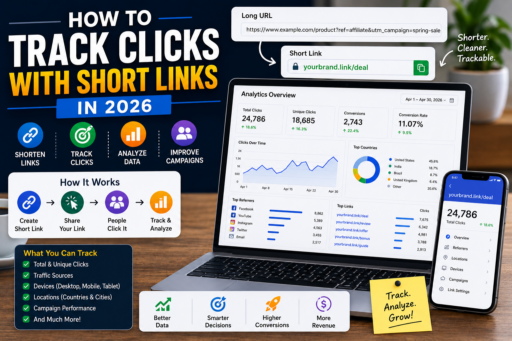
Tracking link performance has become one of the most important aspects of digital marketing. Whether you’re an affiliate marketer, blogger, content creator, social media manager, or business owner, understanding how people interact with your links can provide valuable insights that improve marketing performance. Learning How to Track Clicks With Short Links allows marketers to monitor campaigns, identify traffic sources, and optimize conversions more effectively.
Many marketers focus heavily on creating content and promoting products but fail to measure results accurately. Without proper tracking, it becomes difficult to determine which campaigns are working and which strategies need improvement.
Short links solve this problem by combining link management with analytics. Modern URL shortening platforms provide detailed information about clicks, visitors, devices, locations, and referral sources. This data helps marketers make smarter decisions based on real performance metrics rather than assumptions.
In this guide, you’ll learn how click tracking works, why it matters, which tools provide the best analytics, and how to use short links to improve your marketing campaigns in 2026.
What Is Click Tracking?
Click tracking is the process of monitoring user interactions with links.
When someone clicks a tracked URL, the system records information such as:
- Number of clicks
- Visitor location
- Device type
- Traffic source
- Browser information
- Date and time of click
This information helps marketers understand audience behavior and campaign performance.
Why Click Tracking Matters
Many online marketing decisions become significantly more effective when supported by accurate data.
Without click tracking, marketers often struggle to answer important questions such as:
- Which campaign generated the most traffic?
- Which social platform performs best?
- Which audience segments engage most frequently?
- Which affiliate links generate the most clicks?
- Which geographic locations convert best?
Tracking clicks provides the answers needed to improve future marketing efforts.
How Short Links Work
Short links function by redirecting users from a shortened URL to a destination page.
When a visitor clicks a shortened link, the shortening service records relevant data before forwarding the user to the final destination.
This process happens almost instantly and allows marketers to collect valuable analytics without affecting user experience.
For example:
- Original URL: example.com/product?affiliateid=12345&utm_campaign=spring-sale
- Short URL: brand.link/deal
The shortened version appears cleaner while maintaining full tracking capabilities.
Benefits of Using Short Links
Short links provide several advantages beyond analytics.
- Cleaner URLs
- Improved branding
- Better user trust
- Easier sharing
- Campaign tracking
- Performance measurement
- Centralized link management
These benefits explain why short links remain popular among marketers and content creators.
Popular Click Tracking Metrics
Most URL shortening platforms provide similar reporting metrics.
Important data points include:
Total Clicks
This metric measures the overall number of clicks received by a link.
Unique Clicks
Unique clicks count individual visitors rather than total interactions.
Traffic Sources
Traffic source reporting identifies where visitors originated.
Geographic Data
Location reports reveal which countries and regions generate engagement.
Device Information
Device reports show whether users clicked from desktop computers, tablets, or smartphones.
Using Bitly for Click Tracking
Bitly remains one of the most widely used platforms for shortening URLs and tracking performance.
The platform provides marketers with detailed analytics while maintaining a user-friendly interface.
Step 1: Create a Bitly Account
Create a Bitly account and access the dashboard.
Step 2: Create a Short Link
Paste your destination URL and generate a shortened version.
Step 3: Share the Link
Use the short link in blog posts, social media campaigns, emails, or advertisements.
Step 4: Monitor Analytics
Review click reports directly from the Bitly dashboard.
Marketers can learn more through the official Bitly platform.
Using Rebrandly for Click Tracking
Rebrandly is often recommended in guides about How to Track Clicks With Short Links because it combines branded links with detailed performance analytics and campaign tracking features.
Many affiliate marketers prefer Rebrandly because branded URLs often improve trust and click-through rates.
Analytics reports include:
- Total clicks
- Unique visitors
- Geographic data
- Referral information
- Campaign performance
How Affiliate Marketers Use Click Tracking
Affiliate marketers depend heavily on analytics because every click can potentially generate revenue.
Tracking allows affiliates to identify:
- Best-performing offers
- Highest-converting traffic sources
- Top-performing content
- Audience preferences
- Campaign opportunities
Without tracking, optimizing affiliate campaigns becomes much more difficult.
If you’re still selecting a link shortening platform, you may also find our guide on Best URL Shorteners for Affiliate Links useful.
Understanding Traffic Sources
Traffic source reporting helps identify where visitors originate.
Common sources include:
- Organic search
- Social media
- Email marketing
- Referral websites
- Paid advertising
- Direct visits
Knowing which channels perform best allows marketers to focus resources more effectively.
Tracking Clicks Across Multiple Campaigns
Learning How to Track Clicks With Short Links becomes even more important when many marketers run multiple campaigns simultaneously and need accurate performance data for each campaign.
Using separate short links for each campaign makes performance analysis much easier.
For example:
- Facebook campaign link
- Pinterest campaign link
- Email campaign link
- YouTube campaign link
Each link can be tracked independently, providing clearer performance data.
Why Analytics Should Be Combined With Tracking
Click tracking provides valuable information, but combining it with website analytics often creates a much more complete picture.
Website owners interested in deeper reporting should also explore our guide on Best Website Analytics Tools Compared.
Together, analytics platforms and link tracking tools help marketers understand both click behavior and on-site engagement.
Common Click Tracking Mistakes
Many marketers fail to maximize the value of click tracking.
Common mistakes include:
- Tracking too few links
- Ignoring campaign data
- Failing to compare channels
- Not reviewing reports regularly
- Using inconsistent naming conventions
A structured tracking strategy often produces much better results.
Tracking Devices and User Behavior
How to Track Clicks With Short Links effectively starts with understanding which devices visitors use when interacting with your links, as this data can significantly improve marketing decisions and campaign optimization.
Most modern tracking platforms categorize clicks into:
- Desktop computers
- Mobile phones
- Tablets
This information can influence marketing decisions significantly.
For example, if 85% of clicks come from mobile devices, marketers may choose to prioritize mobile-friendly landing pages and mobile-focused content strategies.
Device analytics also help identify technical issues that could negatively affect user experience.
Tracking Geographic Locations
Location data helps marketers understand where their audiences are located.
Most click-tracking tools provide geographic reports that include:
- Countries
- Regions
- Cities
This information can be extremely valuable for affiliate marketing, advertising campaigns, and content creation.
For example, a campaign may generate substantial traffic from one country while receiving minimal engagement elsewhere.
Marketers can then adjust messaging, promotions, or advertising budgets accordingly.
Using UTM Parameters for Better Tracking
UTM parameters are special tags added to URLs that help identify traffic sources more accurately.
They work particularly well when combined with short links.
Common UTM parameters include:
- utm_source
- utm_medium
- utm_campaign
- utm_term
- utm_content
For example, marketers can create separate tracking links for Facebook, Pinterest, email newsletters, and YouTube campaigns.
This approach provides significantly more detailed reporting.
How Marketers Analyze Campaign Performance
Tracking clicks is only the first step.
The real value comes from analyzing results and making improvements.
Effective campaign analysis often involves reviewing:
- Total clicks
- Unique visitors
- Traffic quality
- Conversion rates
- Audience behavior
- Revenue generated
These metrics help marketers determine whether campaigns are producing meaningful results.
Best Tools for Click Tracking
Several platforms provide excellent click-tracking capabilities.
Bitly
Bitly remains one of the most popular choices because it combines simplicity with powerful analytics.
Rebrandly
Rebrandly excels at branded links while offering detailed performance reporting.
Short.io
Short.io provides advanced targeting options and campaign analytics.
Pretty Links
WordPress users often prefer Pretty Links because of its direct integration with websites.
Dub.co
Dub.co offers modern analytics features designed for creators and marketers.
Understanding Click-Through Rate (CTR)
Click-through rate measures the percentage of users who click a link after seeing it.
CTR can provide valuable insights into audience engagement.
A higher CTR often indicates:
- Relevant content
- Strong calls to action
- Better audience targeting
- Improved trust
Monitoring CTR helps marketers identify opportunities for improvement.
How Branded Links Affect Performance
Branded links often generate higher engagement because they appear more trustworthy.
Instead of sharing generic shortened URLs, marketers can use custom domains that reinforce brand identity.
Examples include:
- brand.com/recommend
- brand.com/offer
- brand.com/tools
These links frequently achieve stronger click-through rates than generic alternatives.
Tracking Social Media Traffic
Social media campaigns often benefit greatly from click tracking.
Platforms such as:
- X
- YouTube
can generate significantly different traffic patterns.
By creating separate short links for each platform, marketers can easily identify their strongest traffic sources.
Tracking Email Marketing Campaigns
Email marketing remains one of the most effective digital marketing channels.
Short links allow marketers to monitor:
- Email engagement
- Click performance
- Campaign effectiveness
- Audience interest
These insights help improve future email campaigns.
How Click Tracking Supports Affiliate Marketing
Affiliate marketers depend heavily on performance data.
Tracking links helps affiliates determine:
- Which offers perform best
- Which traffic sources convert
- Which content generates clicks
- Which campaigns deserve additional investment
This information often has a direct impact on revenue generation.
Combining Click Tracking With SEO
Click tracking and SEO work particularly well together.
SEO generates traffic, while click tracking helps marketers understand how visitors interact with promotional links.
Website owners interested in improving organic traffic should also explore our guide on Best SEO Tools for Bloggers in 2026.
Combining both strategies often produces stronger long-term growth.
Advanced Click Tracking Strategies
Experienced marketers frequently use advanced tracking methods to gain deeper insights.
Examples include:
- A/B testing links
- Tracking individual campaigns
- Segmenting audiences
- Monitoring conversion funnels
- Analyzing seasonal trends
These techniques can reveal opportunities that basic reporting might overlook.
Common Advanced Mistakes
When implementing advanced strategies for How to Track Clicks With Short Links, even experienced marketers sometimes make errors that reduce tracking effectiveness and lead to poor decision-making.
- Using identical links across multiple campaigns
- Ignoring geographic data
- Not reviewing reports consistently
- Overlooking mobile performance
- Failing to test different traffic sources
A disciplined tracking strategy helps avoid these problems.
How Click Tracking Improves ROI
Return on investment improves when marketing decisions are based on accurate information.
Instead of guessing which campaigns work, marketers can invest more resources into proven strategies.
Over time, this approach often leads to better traffic quality, stronger conversions, and higher profitability.
The Future of Click Tracking
Click tracking technology continues evolving rapidly.
Future platforms will likely offer more automation, deeper AI-powered insights, predictive reporting, and enhanced campaign optimization features.
As digital marketing becomes increasingly competitive, data-driven decision-making will become even more important.
Final Thoughts
Learning How to Track Clicks With Short Links is one of the most valuable skills for modern marketers.
Whether you’re managing affiliate campaigns, promoting content, running social media accounts, or growing an online business, click tracking provides essential insights that support better decisions.
Platforms such as Bitly, Rebrandly, Short.io, Pretty Links, and Dub.co make it easier than ever to monitor performance while maintaining professional-looking URLs.
By combining click tracking with website analytics, SEO, and campaign optimization strategies, marketers can gain a clearer understanding of audience behavior and significantly improve marketing results throughout 2026 and beyond.