
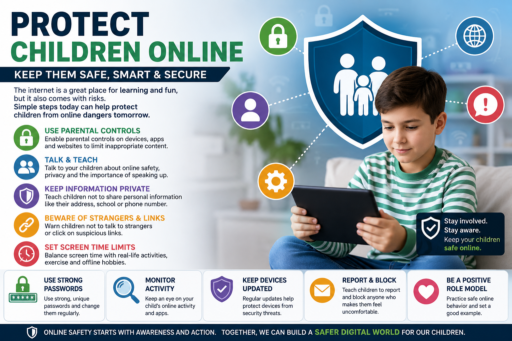
Children spend more time online than ever before through smartphones, tablets, gaming platforms, social media apps, streaming services, and educational websites. Learning how to protect children online can help families reduce risks related to scams, cyberbullying, inappropriate content, privacy threats, and dangerous online interactions in 2026.
Learning how to protect children online can help parents create safer internet habits, improve digital privacy, and reduce cybersecurity risks for children in 2026.
Many parents underestimate how quickly online threats evolve. Because of this, cybersecurity awareness and parental guidance are becoming increasingly important for modern families.
In this beginner-friendly guide, you will learn:
- Why online safety for children matters
- Common online risks affecting children
- How to improve child internet safety
- Ways to protect privacy online
- How parental controls work
- Common mistakes parents make
- How to build safer digital habits
What Does How to Protect Children Online Mean?
Learning how to protect children online means creating safer internet environments that reduce cybersecurity risks, privacy threats, scams, and harmful online interactions.
Online protection may help children avoid:
- Cyberbullying
- Online scams
- Phishing attempts
- Privacy risks
- Inappropriate content
- Dangerous online strangers
Strong digital safety habits are becoming increasingly important for families.
Why How to Protect Children Online Matters
Children may not fully recognize online dangers or suspicious behavior.
Improving online safety may help:
- Protect personal information
- Reduce cybersecurity risks
- Prevent online scams
- Improve digital privacy
According to the Federal Trade Commission (FTC), cybersecurity awareness and safer internet habits help reduce online risks for families.
1. Teach Children Basic Online Safety Rules
Children should understand important internet safety habits such as:
- Not sharing personal information
- Avoiding suspicious links
- Ignoring messages from strangers
- Reporting uncomfortable online situations
Simple conversations about online safety may greatly reduce risks.
2. Use Strong Privacy Settings
Privacy settings may help reduce public exposure of personal information.
Parents should review:
- Social media privacy settings
- Gaming platform privacy settings
- App permissions
- Location sharing options
Limiting unnecessary public visibility improves online safety.
3. Monitor App and Website Usage
Parents should understand which apps, websites, and platforms children use regularly.
Monitoring online activity may help identify:
- Unsafe platforms
- Scam attempts
- Inappropriate content
- Suspicious online behavior
4. Use Parental Controls Carefully
Parental control tools may help:
- Limit screen time
- Restrict inappropriate content
- Monitor app activity
- Improve internet safety
However, communication and education remain extremely important.
5. Teach Children About Phishing Scams
Children may receive fake messages or suspicious links through games, email, or social media.
If you want to improve phishing awareness, read our article on Detect Phishing Emails Instantly.
6. Protect Devices With Strong Passwords
Strong passwords help reduce unauthorized access risks.
Parents should encourage:
- Unique passwords
- Strong password habits
- Two-factor authentication when possible
If you want stronger password protection, read our guide on Best Password Manager Features.
7. Be Careful With Online Gaming Platforms
Online games may expose children to:
- Scammers
- Fake giveaways
- Strangers
- Inappropriate conversations
Parents should review communication settings on gaming platforms regularly.
8. Keep Devices and Apps Updated
Software updates often include important security improvements.
Outdated devices may contain vulnerabilities that cybercriminals exploit.
9. Discuss Cyberbullying Openly
Children should feel comfortable discussing:
- Online harassment
- Threatening messages
- Inappropriate behavior
- Social media problems
Open communication helps parents respond faster to online issues.
10. Secure Home Wi-Fi Networks
Strong Wi-Fi security may help protect connected family devices.
If you want to improve home network protection, read our guide on Secure Your Home Wi-Fi Network.
Common Online Safety Mistakes Parents Make
1. Sharing Too Much Personal Information
Public information may increase privacy risks.
2. Ignoring Privacy Settings
Default settings may expose unnecessary information.
3. Allowing Unsafe App Permissions
Some apps collect large amounts of personal data.
4. Ignoring Warning Signs
Changes in behavior may indicate online problems.
5. Relying Only on Technology
Communication and education are just as important as parental controls.
How Families Can Build Safer Internet Habits
- Discuss online safety regularly
- Use strong passwords
- Review privacy settings
- Monitor online activity responsibly
- Practice safer browsing habits
Simple digital habits may greatly improve online safety for children.
Why Child Online Safety Matters More in 2026
Children are spending more time online through:
- Social media
- Gaming platforms
- Educational apps
- Streaming services
Cybersecurity awareness and online privacy protection are becoming increasingly important for modern families.
Final Thoughts on How to Protect Children Online
Learning how to protect children online can help families improve cybersecurity awareness and reduce digital safety risks.
You do not need advanced technical knowledge to improve online safety for children.
Instead, focus on:
- Communication
- Privacy settings
- Cybersecurity awareness
- Safer browsing habits
- Protecting personal information
Most importantly, remember that building healthy digital habits early may greatly improve online safety for children in the long term.