
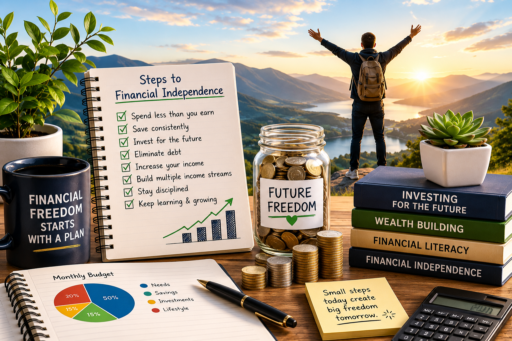
Financial independence is a goal that many people dream about, but far fewer actively plan for. It is often misunderstood as becoming extremely wealthy or retiring at a very young age. In reality, financial independence is about gaining enough financial security to make life decisions based on your goals and values instead of being driven only by financial pressure.
The best ways to build financial independence do not rely on luck, perfect market timing, or earning an unusually high salary. Instead, they focus on developing consistent habits, managing money wisely, increasing savings, investing for the future, and making thoughtful financial decisions over many years.
Every step toward financial independence gives you greater flexibility. Whether you want to change careers, spend more time with family, travel, start a business, or simply reduce financial stress, building long-term financial stability creates opportunities that are difficult to achieve without careful planning.
The journey requires patience, discipline, and continuous learning, but it is achievable for people at many income levels. Small improvements repeated consistently often produce remarkable long-term results.
In this guide, you’ll discover practical strategies that can help you move steadily toward financial independence while building lasting financial confidence.
Define What Financial Independence Means to You
Financial independence looks different for everyone.
For one person, it may mean retiring early.
For another, it could involve:
- Living debt-free.
- Having reliable investment income.
- Building a large emergency fund.
- Owning a home outright.
- Having the freedom to choose meaningful work.
Clearly defining your own version of financial independence helps you create a realistic plan that matches your priorities.
Learning the best ways to build financial independence begins with understanding your personal goals.
Spend Less Than You Earn
Every long-term financial plan depends on maintaining a positive gap between income and expenses.
This gap allows you to:
- Save consistently.
- Invest regularly.
- Prepare for emergencies.
- Reduce financial stress.
Without surplus income, long-term wealth becomes much more difficult to build.
Increase Your Savings Rate
While earning more income is valuable, your savings rate often has a greater impact on financial independence.
Look for opportunities to:
- Reduce unnecessary expenses.
- Increase automatic savings.
- Invest additional income.
- Avoid lifestyle inflation.
Consistently saving a higher percentage of your income accelerates long-term financial progress.
Build an Emergency Fund
Unexpected expenses are unavoidable.
Medical costs, home repairs, job changes, or vehicle maintenance can disrupt financial plans without preparation.
An emergency fund provides security by helping you:
- Avoid high-interest debt.
- Protect investments.
- Maintain financial stability.
- Reduce stress during difficult situations.
Financial independence requires a strong financial foundation.
Invest Consistently
Investing allows your money to work alongside you.
Rather than trying to predict short-term market movements, many successful investors focus on:
- Consistent contributions.
- Diversification.
- Long-term investing.
- Patience.
Compound growth becomes increasingly powerful as time passes.
Eliminate High-Interest Debt
High-interest debt reduces your ability to save and invest.
Prioritize paying off expensive debt because doing so:
- Improves monthly cash flow.
- Reduces financial pressure.
- Creates more investment opportunities.
- Supports long-term stability.
Every dollar no longer spent on interest can instead help build your future.
Continue Learning About Money
Financial education is a lifelong investment.
Continue learning about:
- Budgeting.
- Investing.
- Retirement planning.
- Taxes.
- Insurance.
- Wealth building.
Better financial knowledge often leads to better long-term decisions.
Develop Multiple Income Streams
Depending entirely on one paycheck can increase financial risk.
Additional income sources might include:
- Investments.
- Freelancing.
- Rental properties.
- Digital products.
- Dividend income.
- Online businesses.
Diversifying income creates greater financial flexibility while reducing dependence on a single source.
Avoid Lifestyle Inflation
As income increases, spending often increases too.
Instead of upgrading your lifestyle after every raise, consider using additional income to:
- Increase investments.
- Strengthen savings.
- Pay off debt.
- Build financial security.
Maintaining modest spending habits allows wealth to grow more efficiently.
Create Long-Term Financial Goals
Large financial achievements begin with smaller milestones.
Examples include:
- Saving your first $10,000.
- Paying off debt.
- Investing every month.
- Increasing retirement contributions.
- Reaching specific net worth goals.
Breaking major objectives into smaller goals helps maintain motivation throughout your financial journey.
Many readers strengthen these habits by applying the principles from Best Financial Decisions for Long-Term Stability, allowing each financial decision to support greater long-term security.
Protect Your Financial Progress
Building wealth is only part of financial independence.
Protecting your progress matters equally.
Examples include:
- Maintaining insurance.
- Reviewing investments.
- Keeping emergency savings.
- Securing financial accounts.
- Updating financial plans regularly.
Protecting what you’ve built helps preserve long-term financial freedom.
Many financially successful individuals also reinforce these habits through Best Ways to Develop a Wealth Mindset, allowing disciplined thinking to support sustainable financial independence.
Review Your Financial Plan Regularly
Financial independence is a long-term journey, not a one-time achievement.
Your goals, income, family responsibilities, and investment opportunities will naturally change over time.
Set aside time every few months to review:
- Income.
- Expenses.
- Savings.
- Investments.
- Debt balances.
- Progress toward financial goals.
Regular reviews help you identify opportunities for improvement while keeping your financial plan aligned with your long-term vision.
Learning the best ways to build financial independence becomes much easier when you consistently evaluate your financial progress.
Invest in Your Career
Your career is one of your greatest financial assets.
Improving your skills can increase both your income and your future opportunities.
Consider investing in:
- Professional certifications.
- Industry training.
- Leadership skills.
- Communication abilities.
- Technology skills.
- Business knowledge.
Increasing your earning potential creates additional resources that can accelerate financial independence.
Make Decisions Based on Long-Term Value
Many financial decisions offer immediate satisfaction but reduce long-term opportunities.
Before making major purchases, ask yourself:
- Will this improve my life in the long run?
- Could this money be invested instead?
- Does this purchase support my financial goals?
- Is there a more affordable option?
Thinking beyond today’s convenience helps build stronger financial habits.
Build Healthy Money Habits
Financial independence depends more on consistent habits than occasional extraordinary decisions.
Examples include:
- Saving automatically.
- Investing regularly.
- Tracking expenses.
- Avoiding unnecessary debt.
- Reviewing financial goals.
- Continuing financial education.
Small habits repeated over many years often create remarkable financial outcomes.
Stay Patient During Market Changes
Financial markets naturally rise and fall over time.
Reacting emotionally to short-term changes often leads to poor financial decisions.
Instead, remain focused on:
- Your long-term investment strategy.
- Diversification.
- Consistent contributions.
- Regular portfolio reviews.
Patience allows compound growth to work more effectively.
Avoid Comparing Your Progress
Everyone’s financial journey is different.
Some people begin investing early.
Others start later after overcoming debt or other financial challenges.
Focus on your own progress rather than comparing yourself to others.
Consistent improvement matters far more than trying to match someone else’s timeline.
Continue Expanding Your Financial Knowledge
The financial world continues to evolve.
Continue learning about:
- Retirement strategies.
- Tax planning.
- Real estate.
- Investment diversification.
- Estate planning.
- Business finance.
Every new skill strengthens your ability to make informed financial decisions.
Common Mistakes That Delay Financial Independence
Many people unintentionally slow their financial progress.
Common examples include:
- Spending every salary increase.
- Delaying investing.
- Ignoring budgets.
- Carrying unnecessary debt.
- Chasing quick wealth.
- Failing to review financial goals.
Recognizing these habits early makes them much easier to correct.
Continue Strengthening Your Financial Discipline
Discipline remains one of the greatest predictors of long-term financial success.
Continue strengthening your habits by:
- Reviewing financial progress.
- Increasing savings when possible.
- Investing consistently.
- Learning from financial mistakes.
- Celebrating meaningful milestones.
Small improvements maintained over many years often create extraordinary financial freedom.
Many readers continue strengthening these habits alongside How to Create Better Spending Habits, allowing intentional spending and disciplined saving to work together toward financial independence.
Focus on Financial Freedom, Not Perfection
Financial independence does not require perfect decisions.
It requires consistent progress.
There will always be unexpected expenses, changing markets, and new financial challenges.
The goal is to continue making thoughtful decisions that gradually strengthen your financial position over time.
Every positive step moves you closer to greater freedom.
Final Thoughts
The best ways to build financial independence begin with intentional financial decisions, disciplined saving, consistent investing, and a commitment to lifelong learning. While financial independence may take years to achieve, every thoughtful decision you make today helps create greater flexibility and security for tomorrow.
Remember that financial freedom is not measured only by income or net worth. It is also reflected in your ability to make choices confidently, prepare for unexpected events, and pursue opportunities that align with your values and long-term goals.
Whether you are just starting your financial journey or continuing to build on years of progress, staying consistent with healthy financial habits will steadily move you toward lasting independence and peace of mind.
Many individuals also strengthen these principles by combining them with How to Build Financial Literacy From Scratch and How to Grow Your Net Worth Over Time, creating a balanced strategy centered on education, discipline, and sustainable wealth building.
For additional educational guidance on investing, retirement planning, saving, and long-term financial growth, you can naturally link to Investor.gov using the anchor text financial independence resources in the section discussing lifelong financial education.